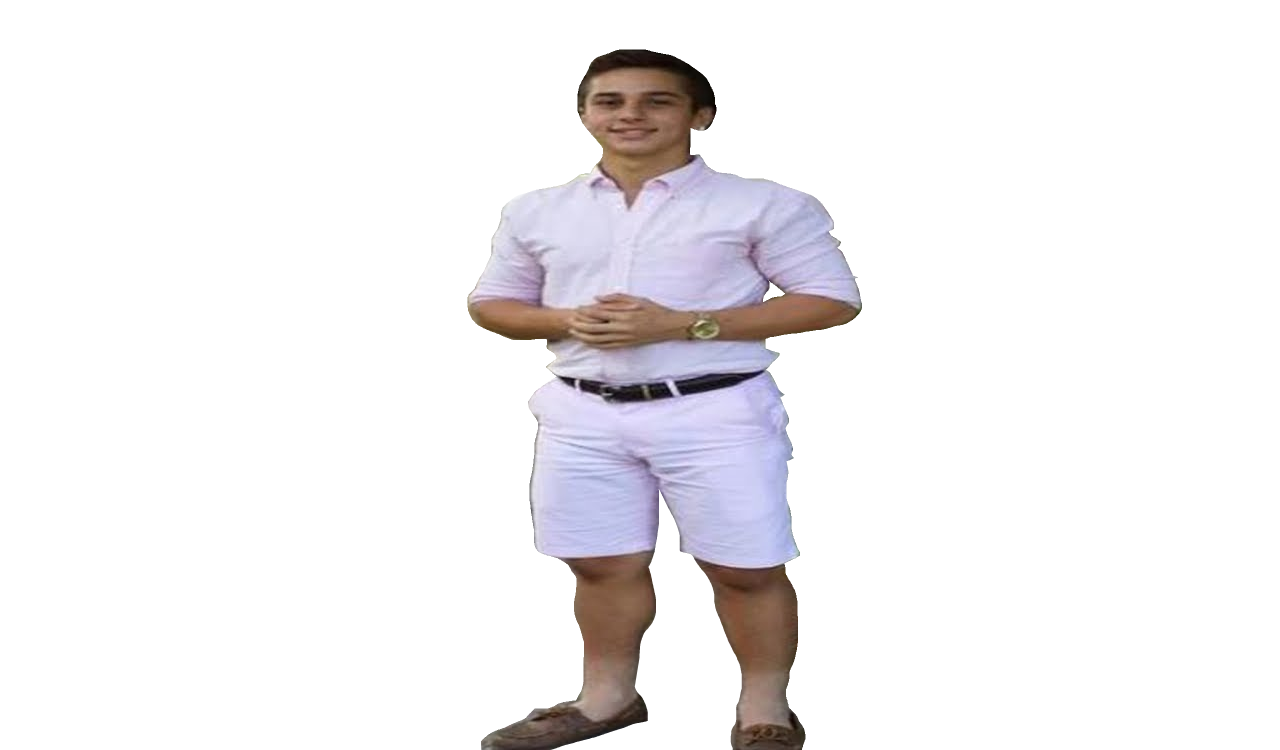
In late summer 2014, a teenager named Lucky Luciano stepped onto a sidewalk in Tampa, Florida. He wore a salmon-colored button-down shirt. His shorts were light blue. He had his hands folded primly in front of his waist. He looked like the physical embodiment of "polite confidence." He posted the photo to Twitter with a caption that would eventually become a permanent fixture of the digital lexicon: You know I had to do it to em.
It didn't go viral immediately. Memes rarely do. They simmer. They wait for the right moment of cultural friction to ignite. For Luciano, that moment came years later when the internet rediscovered the sheer, baffling energy of his pose. Why was he standing like that? Why did he look like a polite valet waiting for a tip, or perhaps a preppy villain in a teen drama? It’s been over a decade, and we are still talking about it.
The image is a masterpiece of suburban aesthetic. The tan lines on his ankles, the pristine sidewalk, the slightly awkward grip of his fingers—it all combined into a visual shorthand for "flexing," but in the most non-threatening way possible. Honestly, it’s the lack of context that makes it work. He wasn't doing anything specific. He was just... doing it to em.
Why the Internet Can't Quit the Lucky Luciano Pose
Memes die fast. Most of them have the shelf life of an open carton of milk in a heatwave. Yet, you know I had to do it to em survived the Great Meme Purge of the late 2010s because it became a template for Photoshop surrealism. It stopped being about a kid in Florida and started being about the geometry of the pose itself.
You’ve seen the edits. People have photoshopped Luciano into historical photos, into Star Wars scenes, and into the backgrounds of Renaissance paintings. There is a specific psychological satisfaction in seeing that rigid, polite stance in a place where it doesn't belong. It’s a "disruptive presence."
When we look at why certain things rank on Google or pop up on your Discover feed years after the fact, it’s usually because of "remixability." Luciano’s photo is the ultimate blank canvas. You can put him anywhere.
The Geography of a Meme
The location itself became a landmark. 12306 Rocky Creek Drive in Tampa. Fans actually started traveling there. They would take photos in the exact same spot, mimicking the pose. It’s sort of like the "Joker Stairs" in the Bronx or the Abbey Road crosswalk, but for people who grew up on Vine and Twitter.
Google Maps even had to deal with people marking it as a historical landmark. It’s funny, but it also shows how digital culture manifests in the real world. A kid takes a photo on a sidewalk and suddenly that specific slab of concrete has more cultural value than the local town hall.
The Dark Side of Viral Fame
It hasn't all been salmon shirts and retweets for Luciano. In 2018, he was arrested on drug-related charges. The internet, being the cruel and ironic beast it is, immediately turned his mugshot into a version of the meme. It was a weird moment where the "character" of the meme crashed into the reality of a young man’s life.
He tried to capitalize on the fame, of course. Who wouldn't? He started a YouTube channel. He sold merchandise. He tried to lean into the "Lucki" persona. But viral fame is a fickle mistress. People love the image, but they don't always care about the person behind it. This is the central tragedy of the modern influencer era—you can be the most recognizable face on the planet and still be completely broke or struggling.
The Evolution of "Doing It to Em"
Language evolves. The phrase you know I had to do it to em eventually detached from the photo entirely. People started saying it whenever they accomplished something minor, or when they wore a particularly nice outfit. It became a verbal "flex."
- It’s used when you win a video game match.
- It’s used when you post a selfie before a date.
- It’s used ironically when you do something objectively terrible.
The grammar of the phrase is fascinating. The "em" is vague. Who are "them"? The haters? The fans? The unsuspecting public? It doesn't matter. The ambiguity is the point. It’s an all-purpose declaration of intent.
The Technical Longevity of the Meme
From an SEO perspective, this meme is a unicorn. It has high "evergreen" value. People search for it because they see a reference and don't get the joke. They search for the "guy in the pink shirt." They search for the "Tampa sidewalk meme."
Most "flavor of the week" memes vanish because they are tied to a specific event—a political gaffe or a movie release. But Luciano’s photo is just a vibe. It’s about a feeling of quiet confidence that everyone has felt (or wanted to feel) at some point. It’s relatable, even if the outfit is a bit dated now.
What This Tells Us About Digital Culture in 2026
We are currently living in an era where "legacy memes" are becoming a thing. We are looking back at the 2010s with a sort of digital nostalgia. You know I had to do it to em is part of that first wave of memes that defined how we communicate today.
Basically, we stopped using words and started using references. If I send you a photo of a sidewalk in Tampa, you know exactly what I’m saying without me typing a single letter. That’s powerful. It’s a shared language that spans across borders and languages.
Kinda crazy when you think about it. One kid, one sidewalk, one salmon shirt.
Actionable Insights for Digital Creators
If you’re trying to understand how to make something stick in the digital age, there are a few lessons to take from Luciano’s accidental empire.
First, don't try too hard. The most successful memes are almost always accidental. If Luciano had tried to look "cool" or "tough," the photo would have been ignored. It was the primness—the folded hands—that made it funny.
Second, embrace the remix. Luciano didn't sue people for using his likeness; he leaned into it. In the modern creator economy, your "IP" is only valuable if people are using it. If you lock it down, it dies.
Third, understand the platform. This meme started on Twitter, moved to Tumblr, hit Reddit, and eventually landed on Instagram and TikTok. Each platform added a new layer of irony. You have to meet the audience where they are, even if they're making fun of you.
Finally, remember that the internet has a long memory but a short attention span. You might be the "it" person for a week, but unless you have a "hook"—like a specific pose or a catchy phrase—you'll be forgotten by next Tuesday. Luciano had both. He had the visual hook and the linguistic hook. That’s the "secret sauce" of staying relevant for a decade.
The next time you’re feeling yourself, and you’ve got the perfect fit on, just remember: you don’t have to say much. Just fold your hands, stand on a sidewalk, and let the world know that you had to do it to em.



