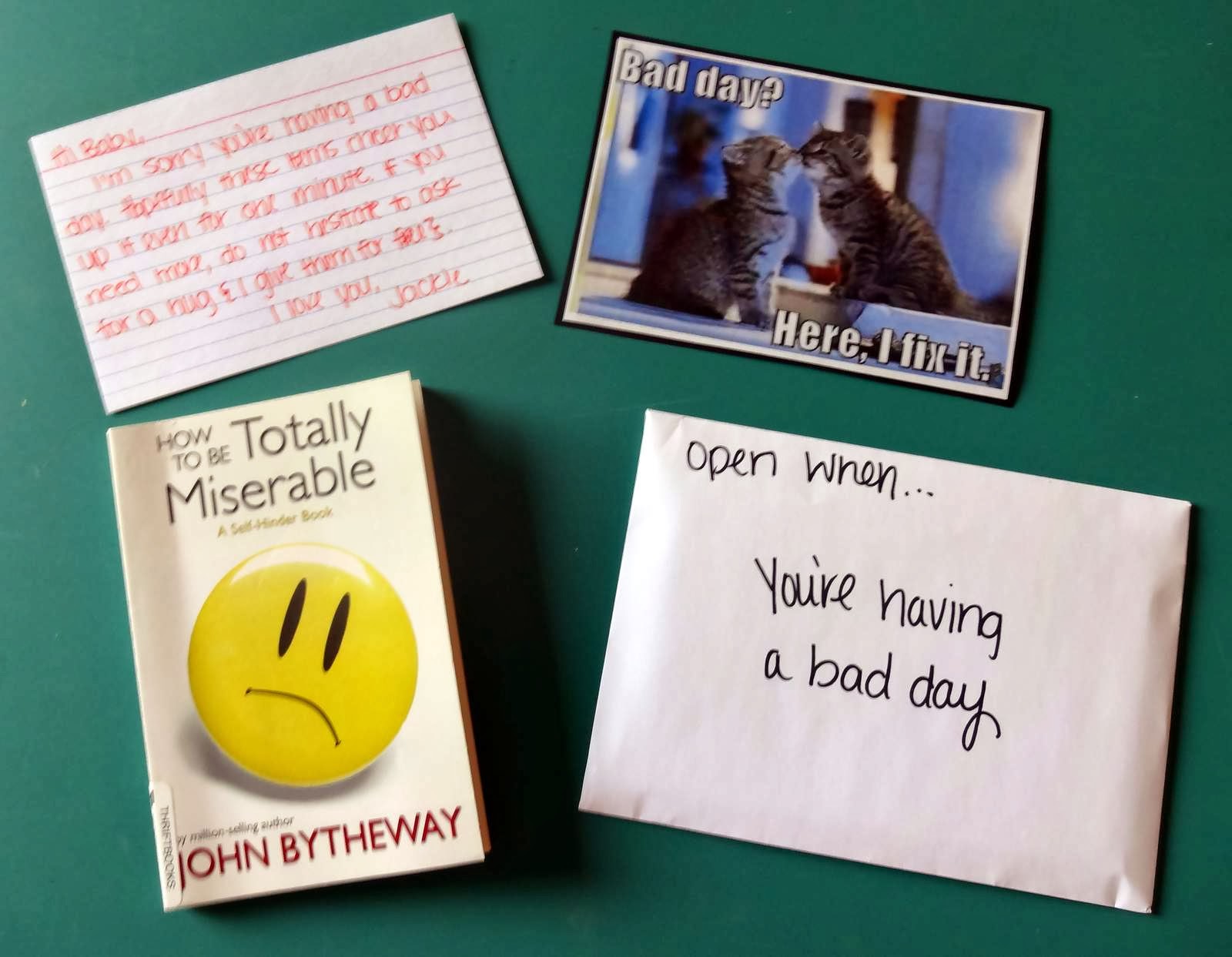
It starts with the alarm clock. Or maybe it’s the coffee you spilled on your white shirt, or that passive-aggressive email from your boss that landed at 8:02 AM. Suddenly, you’re spiraling. You feel it in your chest—a tightening, a sort of heavy fog that settles over everything you do for the next twelve hours. We’ve all been there. Most people just say you had a bad day and wait for sleep to end the misery, but there is actually a fascinating physiological reason why one bad morning can hijack your entire Tuesday.
It isn't just "bad luck."
It is neurobiology.
When something goes wrong, your brain's amygdala—that almond-shaped alarm system—basically flips a switch. It triggers a release of cortisol and adrenaline. Usually, this is great if you're being chased by a predator. It’s significantly less helpful when you’re just trying to navigate a spreadsheet. Once that stress response is active, your prefrontal cortex, which handles logic and emotional regulation, takes a backseat. You literally become less capable of "looking on the bright side." This is why every minor inconvenience after the first one feels like a personal attack from the universe.
The "Negative Priming" Trap
Psychologists call this phenomenon "negative priming." Essentially, once you experience a negative stimulus, your brain starts actively scanning the environment for more negative things to justify how you feel. It’s a confirmation bias loop. If you believe you had a bad day, your brain will ignore the green lights and the polite stranger, focusing instead on the guy who cut you off in traffic.
Dr. Rick Hanson, a psychologist and Senior Fellow of the Greater Good Science Center at UC Berkeley, often notes that the brain is like Velcro for negative experiences but Teflon for positive ones. We are evolutionarily wired to remember the "bad" because the bad used to be what killed us. In 2026, the "bad" is usually just a dead phone battery, but your nervous system hasn't caught up to modern life yet.
Honestly, it’s exhausting.
You find yourself snapping at people you love. You eat food that makes you feel sluggish. You skip the gym. By 7:00 PM, you’re convinced your life is a mess. But here’s the thing: a bad day is rarely a bad life. It’s usually just a series of unregulated stress responses that gained too much momentum.
The Cortisol Hangover
Cortisol doesn't just vanish. It lingers. According to research from the Mayo Clinic, long-term activation of the stress-response system can disrupt almost all your body's processes. Even on a smaller scale—just a single "off" day—that lingering cortisol makes you hyper-reactive.
You ever notice how you’re more sensitive to noise when you’re stressed? Or how the lights seem too bright? That’s your sensory system on high alert. You aren't being "dramatic." Your body is physically braced for a threat that isn't coming.
How to Break the Momentum When You Had a Bad Day
If you want to stop the spiral, you have to do something called "pattern breaking." You can't just think your way out of it because, as we established, your "thinking" brain is currently offline. You have to use your body to talk to your brain.
Change your temperature. This sounds weird, but it works. Splashing ice-cold water on your face or taking a freezing thirty-second shower triggers the mammalian dive reflex. It forces your heart rate to drop and resets the nervous system. It’s like hitting the "restart" button on a frozen laptop.
The physiological sigh. Stanford neurobiologist Dr. Andrew Huberman popularized this. You take a deep breath in, then a second tiny inhale at the very top to fully inflate the alveoli in your lungs, followed by a long, slow exhale. Doing this two or three times is the fastest biologically known way to lower your autonomic arousal. It’s a real-time tool. You can do it in a meeting. You can do it in the bathroom. No one even has to know you're doing "breathwork."
Stop "Venting" (It's Making it Worse)
We’ve been told for decades that venting is healthy. Science actually suggests otherwise. A study published in Cyberpsychology, Behavior, and Social Networking found that people who vented about their problems on social media or to friends often felt worse because they were essentially re-living the stressor.
When you recount every detail of why you had a bad day, you’re just re-triggering that cortisol spike. Instead of venting, try "brief acknowledgment." State the fact: "Work was frustrating today." Then move to a sensory task. Wash the dishes. Fold laundry. Walk the dog. Do something that requires bilateral stimulation (moving both sides of your body), which helps the brain process emotional trauma.
The Myth of "Powering Through"
Culturally, we admire the person who grinds through the misery. We think that if we just work harder, we’ll fix the bad day.
Usually, we just make more mistakes.
Decision fatigue is real. If you’ve been under stress for six hours, your ability to make high-quality choices is shot. This is why you should never make major life decisions or send "honest" emails after 9:00 PM on a day that went sideways. Your brain is essentially intoxicated by stress hormones.
Wait for the morning.
There is a reason things look different in the light. Sleep is the ultimate metabolic "cleanup" crew for the brain. The glymphatic system clears out cellular waste, and your REM cycle helps process the emotional baggage of the day. If you can just get to sleep without causing further damage to your relationships or your bank account, you’ve technically won.
Real Examples of Perspective Shifting
Let’s look at a case study from high-performance sports. When a quarterback throws an interception, they don't have the luxury of saying you had a bad day and moping for the next three quarters. They use a "flicker" technique. They pick a physical object on the sidelines—a blade of grass, a towel, a bench—stare at it for five seconds, and "deposit" the mistake there.
It’s a psychological boundary.
You can do the same when you walk through your front door. Touch the doorframe. Decide that the "bad day" stays on the other side of that wood. You aren't ignoring the problems; you're just compartmentalizing them so they don't ruin your dinner.
Actionable Steps to Reset Right Now
Knowing the science is fine, but it doesn't help when you're currently vibrating with frustration. If you're in the middle of a downward trend, follow this sequence:
- Hydrate and Salt: Stress dehydrates you, and dehydration mimics the feeling of anxiety. Drink a glass of water with a pinch of sea salt or an electrolyte powder. It sounds small, but it stabilizes blood pressure.
- Move for 10 Minutes: Not a "workout." Just a walk. Getting your eyes moving across the horizon (lateral eye movements) has been shown to dampen the amygdala's activity.
- The "Rule of Five": Ask yourself, will this matter in five days? Five weeks? Five months? Five years? Most "bad day" triggers don't make it past the five-week mark.
- Edit Your Environment: If your desk is a mess, clear it. External chaos fuels internal chaos. Pick one square foot of space and make it perfect.
- Low-Dopamine Evening: Avoid the "doomscroll." TikTok and Instagram provide cheap dopamine hits that eventually leave you feeling more depleted. Read a physical book or listen to a podcast that has nothing to do with your current problems.
Bad days are inevitable. They are a feature of the human experience, not a bug. The goal isn't to never have one; it's to shorten the recovery time. By understanding that your brain is simply trying to protect you (albeit poorly), you can stop being a victim of your mood and start being the manager of it.
Get some sleep. The sun comes up at the same time tomorrow regardless of how you feel right now.