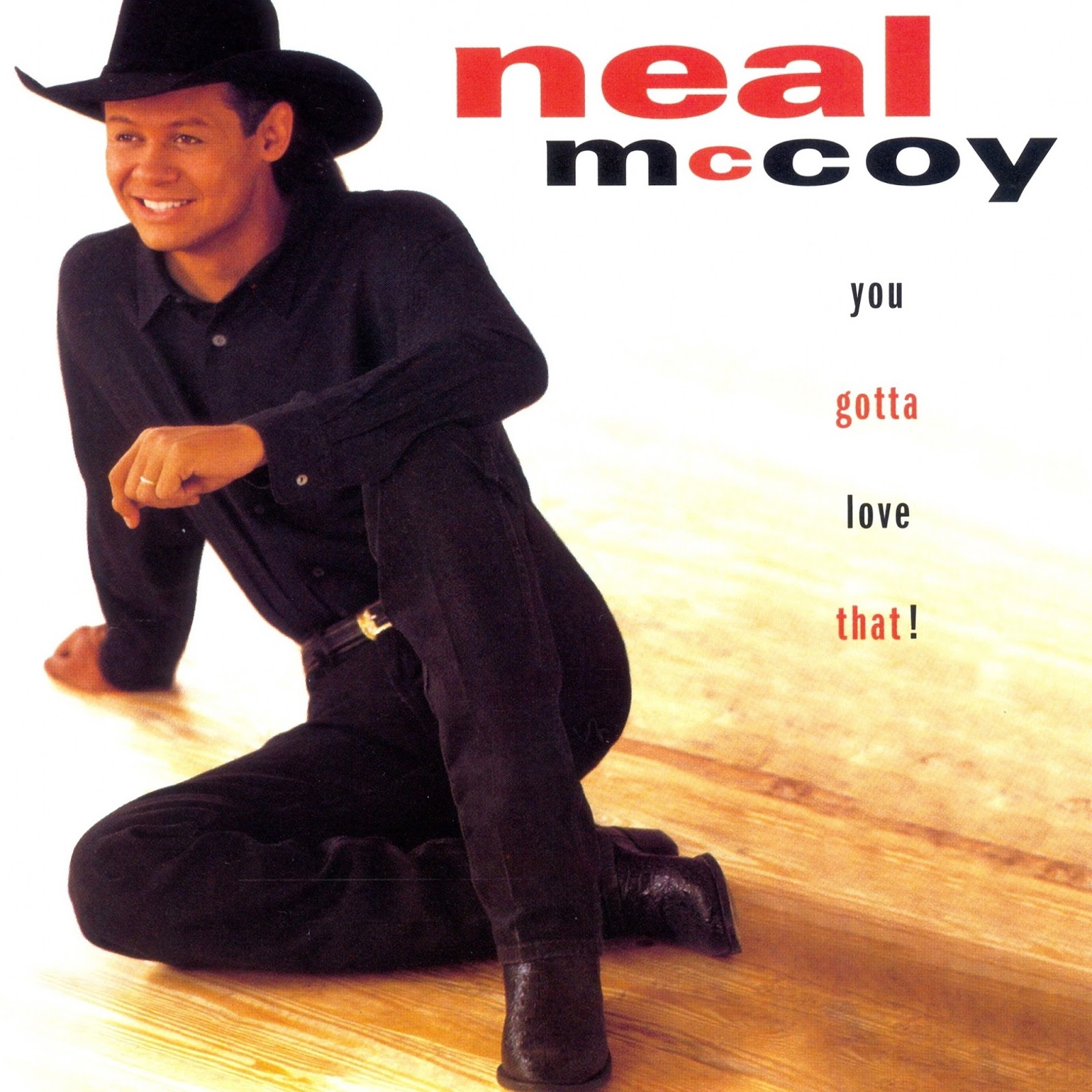
If you walked into a dance hall in 1995, you weren't just hearing country music; you were feeling a specific kind of energy. It was the era of the "hat acts," sure, but one guy stood out because he seemed like he was having ten times more fun than anyone else on stage. That guy was Neal McCoy. When he dropped the album You Gotta Love That, he wasn't just following up a fluke success. He was cementing his place as the ultimate entertainer in a genre that sometimes took itself a little too seriously.
Honestly, the mid-90s were a wild time for Nashville. You had the Garth Brooks explosion, the rise of Shania, and a sudden influx of high-production music videos. Amidst all that gloss, Neal McCoy brought a mix of R&B-influenced soul, pure honky-tonk grit, and a smile that could be seen from the back row of a stadium. You Gotta Love That Neal McCoy energy wasn't just a marketing slogan; it was a legitimate vibe that turned a kid from Jacksonville, Texas, into a platinum-selling powerhouse. Meanwhile, you can find related events here: The Art of the Silent Vow.
The Barry Beckett Magic and the 1995 Breakthrough
By the time 1995 rolled around, McCoy had already tasted the top of the charts with "No Doubt About It" and "Wink." But the pressure to repeat that success is where a lot of artists stumble. To keep the momentum, Neal teamed back up with legendary producer Barry Beckett. If you know your music history, you know Beckett was part of the Muscle Shoals Rhythm Section. He brought a "pocket" to Neal’s sound that other Nashville producers just couldn't replicate.
The album officially landed on January 24, 1995. It didn't just crawl onto the charts; it bolted. It peaked at Number 10 on the Billboard Top Country Albums chart and eventually earned a RIAA Platinum certification. Think about that for a second. Selling a million copies of a country album in the 90s meant you were a household name. You weren't just playing local fairs; you were the main event. To see the bigger picture, we recommend the detailed analysis by Variety.
Why the title track worked so well
The song "You Gotta Love That" itself is a masterclass in 90s country songwriting. Written by Jess Brown and Brett Jones, it’s a fast-paced, wordy, tongue-twister of a track. It’s got that "stop-start" rhythm that Neal excelled at. When he sings about the quirks of a relationship, he does it with a wink—literally and figuratively.
Interestingly, while the song peaked at Number 3 on the charts, it felt like a Number 1 because of how much airplay it got. It was one of those tracks that stayed in "heavy rotation" for what felt like years. People loved the cleverness of the lyrics. It wasn't a "my dog died and my truck broke down" kind of song. It was bright, snappy, and perfect for the line-dancing craze that was sweeping the nation.
Deep Cuts and Fan Favorites: Beyond the Radio Hits
Most people remember the big singles, but if you actually sit down and listen to the full 33-minute runtime of the CD (or cassette, if you’re old school), you find some real gems.
- "They're Playin' Our Song": This was arguably the biggest hit from the record. It's a Bob DiPiero, John Jarrard, and Mark D. Sanders collaboration. It hit Number 3 and became a wedding staple. It captures that universal feeling of hearing "your song" on the radio and having everything else melt away.
- "For a Change": This one showed Neal’s softer side. It’s a mid-tempo ballad that hit Number 3 as well. It proved he wasn't just a "high energy" guy; he could actually interpret a lyric with some real emotional weight.
- "If I Was a Drinkin' Man": A bit more traditional. It’s a classic "what if" country song that peaked at Number 16. It’s got a great steel guitar part by Paul Franklin that grounds the album in traditional roots.
- "Twang": This is the kind of song that defines Neal's style. It’s fun, it’s rhythmic, and it’s unapologetically country.
The musicianship on this record is top-tier. You’ve got Eddie Bayers on drums and Brent Rowan on electric guitar. These were the A-list session players of the time. They gave the album a "slick" feel that worked for radio but kept enough "dirt" on the tracks to satisfy the traditionalists.
What People Get Wrong About Neal McCoy
A lot of folks look back at 90s country and think it was all just cookie-cutter music. They lump Neal in with every other guy wearing a Stetson. But that’s a mistake. Neal McCoy was—and is—one of the most diverse performers in the business.
His mother was from the Philippines, and his father was Irish-American. That heritage gave him a unique perspective and a look that wasn't the "standard" Nashville mold. He brought a theatricality to his live shows that most country singers were too shy to attempt. He’d do James Brown covers, he’d rap (his "Hillbilly Rap" became a legendary part of his live sets), and he’d climb the rafters of the stage.
When people say you gotta love that Neal McCoy spirit, they’re talking about a guy who refused to be put in a box. He wasn't just a singer; he was a world-class entertainer. He won the TNN/Music City News Entertainer of the Year back-to-back in 1998 and 1999, which is a huge deal when you consider he was up against some massive names.
The Legacy of the East Texas Angel Network
You can’t talk about Neal McCoy’s 1995 peak without mentioning what he did with that fame. That same year, he and his wife Melinda founded the East Texas Angel Network (ETAN).
While other stars were buying mansions, Neal was figuring out how to help families with children facing life-threatening illnesses. Over the last 30 years, they’ve raised over $14 million. He’s not a "check-writer" philanthropist; he’s there at the golf tournaments and the benefit concerts. Just this past September 2025, he held his 31st annual benefit with Pam Tillis. That kind of longevity in charity is almost unheard of in the fickle world of celebrity.
Why 1995 Was the Perfect Year for This Album
The country music landscape in 1995 was transitioning. The "Class of '89" (Garth, Clint Black, Alan Jackson) was firmly established, and the "New Traditionalist" movement was starting to blend with pop sensibilities.
You Gotta Love That hit the sweet spot. It was country enough for the old guard but catchy enough for the new fans who were discovering the genre through CMT. It was also the year Neal toured with Alabama, which is basically the country music equivalent of opening for the Rolling Stones. That exposure helped push the album to platinum status.
The Album Credits
For the gearheads and credits-readers, the lineup on this record was essentially a "Who's Who" of Nashville:
- Producer: Barry Beckett
- Steel Guitar: Paul Franklin
- Fiddle/Mandolin: Donny Parenteau
- Background Vocals: John Wesley Ryles, Harry Stinson, Dennis Wilson, Curtis Young
How to Experience Neal McCoy Today
If you’re just discovering him or want to revisit the glory days, don't just stick to the studio recordings. Neal is still touring heavily. His 2025 Your Town Tour has been hitting everything from small theaters to massive festivals like ND Country Fest.
The thing about Neal is that his voice has held up incredibly well. Unlike some of his 90s peers who struggle to hit the high notes now, Neal still sounds remarkably like he did on the original 1995 recordings. Plus, he still does the Pledge of Allegiance every single morning on his Facebook Live—a tradition he’s kept up for years.
Actionable Steps for the Country Music Fan
If you want to dive deeper into this era or this specific artist, here’s how to do it right:
- Listen to the "You Gotta Love That!" album in order. Don't shuffle. The way Beckett sequenced the tracks—from the high-energy opener to the more soulful "Please Don't Leave Me Now"—tells a story of where country music was in 1995.
- Watch the music videos. Search for "They're Playin' Our Song" or "Wink." You’ll see the charisma that made him a star. He wasn't just standing there; he was performing.
- Catch a live show. If he’s playing a theater near you, go. Even if you only know two songs, his ability to work a crowd is a vanishing art form.
- Support the East Texas Angel Network. If you want to see the "human" side of the music, look into the work they do. It’s the real reason he’s stayed relevant in his community for three decades.
Neal McCoy represents a time when country music was about "The Big Tent"—everyone was invited, the songs were catchy, and the artists were accessible. You Gotta Love That isn't just a title; it's a testament to a career built on genuine joy and hard work.



