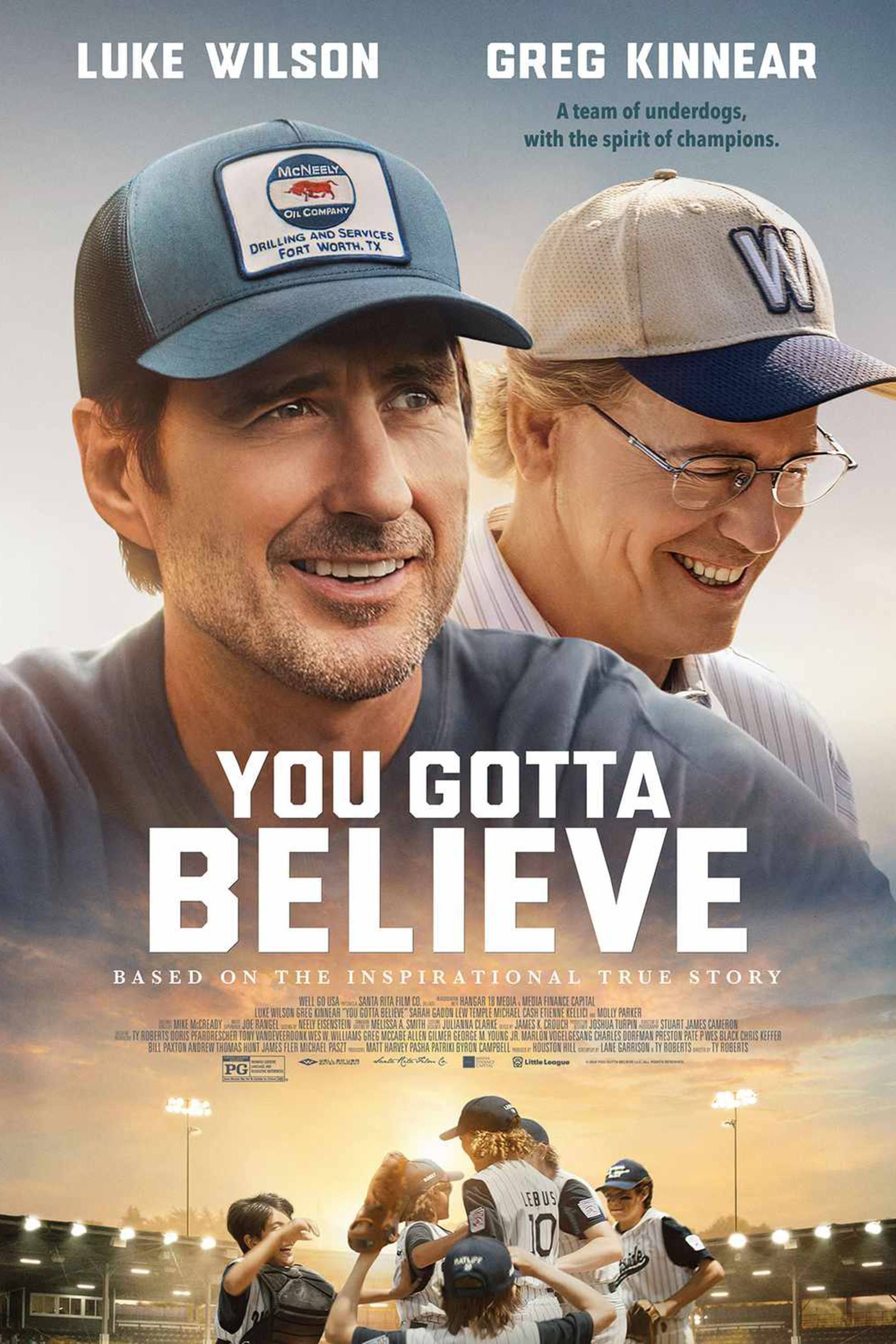
Movies about kids playing baseball usually follow a very specific, tired formula. You know the one. A group of misfits who can't catch a cold somehow find a grumpy coach, learn the power of friendship, and win the big game in the final inning. But the You Gotta Believe movie hits different. Honestly, it's because the "miracle" part of the story isn't actually the most important thing happening on screen.
It’s about a Little League team from Fort Worth, Texas. The Westside All-Stars. Back in 2002, nobody expected these kids to do much of anything, let alone make it to the Little League World Series (LLWS) in Williamsport. But they did. And they did it while their coach’s father, Bobby Ratliff, was dying of cancer.
That’s the hook. It’s not just a sports flick. It’s a tear-jerker that actually happened.
Why the You Gotta Believe Movie Isn't Your Average Sports Biopic
Most people see a poster with Luke Wilson and Greg Kinnear and assume they’re getting The Bad News Bears with a modern coat of paint. They aren't. While the film captures the dusty, sweltering reality of Texas youth sports, the emotional weight is anchored in the relationship between the coaches and the looming mortality of a man the team loved.
Luke Wilson plays Bobby Ratliff. He's the soul of the team. Greg Kinnear steps in as Jon Kelly. The chemistry works because it feels like two guys who have known each other for twenty years, probably because they've both been in the industry long enough to inhabit those "Texas dad" roles effortlessly.
The pacing is deliberate. Director Ty Roberts doesn't rush to the stadium lights. He spends time in the dugouts and the living rooms. You see the grit. You smell the pine tar and the Ben-Gay.
The 2002 Westside All-Stars: Fact vs. Fiction
Let's get into the weeds. If you're a baseball purist, you're looking for accuracy. The You Gotta Believe movie stays surprisingly close to the timeline of the 2002 season.
In real life, the Westside team was an underdog's underdog. They weren't a powerhouse academy. They were just local kids. When Bobby Ratliff was diagnosed with melanoma, the team's mission shifted. It wasn't about the trophy anymore. It was about "You Gotta Believe," a mantra that Bobby lived by and passed on to the players.
One detail the movie nails? The legendary game against Kentucky.
In the 2002 LLWS, Westside played an elimination game that went eleven innings. In Little League, that’s an eternity. It’s basically the equivalent of a 22-inning marathon in the Majors. The kids were exhausted. The pitchers were hitting their limits. It remains one of the longest and most storied games in the history of the tournament. The film recreates this tension without relying on too much slow-motion cheese. It feels raw.
Breaking Down the Cast and the Vibe
The casting of the kids is where most sports movies fail. Usually, they look like 18-year-old models trying to pass for 12. Not here. The production found kids who actually look like they’ve spent a summer eating sunflower seeds and wiping dirt on their jerseys.
- Luke Wilson as Bobby Ratliff: He brings a quiet, dignified sadness to the role. It’s not melodramatic. It’s just... Texas.
- Greg Kinnear as Jon Kelly: He provides the frantic energy of a coach trying to keep it all together while his best friend is fading.
- Sarah Gadon: She plays Patti Ratliff, and honestly, she’s the one who keeps the movie from becoming a "boys' club" vacuum. She represents the families standing on the sidelines holding their breath.
The cinematography uses a lot of warm, amber tones. It feels like a memory. It feels like those long August nights where the sun takes forever to go down and the only thing that matters is the count on the batter.
Is it too "Sentimental"?
Some critics have called it "sentimental." Well, yeah. It’s a movie about a dying father and a group of twelve-year-olds. If you go into this expecting a gritty, cynical deconstruction of the youth sports complex, you’re in the wrong theater.
But it avoids being "saccharine" because it doesn't shy away from the frustration. Baseball is a game of failure. You fail 70% of the time and you're a Hall of Famer. The movie shows the errors. It shows the kids crying. It shows the physical toll of the Texas heat.
The Cultural Impact of the 2002 Run
You have to understand the context of 2002. Little League was peaking in terms of national television coverage on ESPN. The Westside All-Stars became "America’s Team" because of Bobby’s story. They weren't just representing Fort Worth; they were representing a specific kind of American resilience.
When the You Gotta Believe movie was announced, there was some skepticism. Did we need another baseball movie? Maybe not. But we needed a reminder of what the sport looked like before travel ball and $500 composite bats took over everything.
The real-life Robert Ratliff (Bobby's son) was involved in the process. That's a huge green flag for accuracy. When the family is on set, the "Hollywood-ification" tends to get dialed back a notch. They wanted to honor Bobby's legacy, not just sell tickets.
How to Watch and What to Look For
The film had its theatrical run and is now making waves on streaming platforms. If you're watching it for the first time, keep an eye out for the cameos. There are several nods to the original 2002 team members, some of whom are now grown men with families of their own.
- The Gear: Notice the equipment. It’s era-appropriate. The bats, the helmets—it’s a nostalgic trip for anyone who played ball in the early 2000s.
- The Strategy: The movie actually respects the game. You'll see actual Little League strategy—bunts, pitch counts, and the "Texas Leaguer" hits that drive coaches crazy.
- The Sound: The sound design in the stadium scenes is immersive. You can hear the chatter from the stands, the specific "ping" of the aluminum bats, and the wind.
The Real Legacy of Bobby Ratliff
Bobby passed away in 2003, not long after the team's historic run. His impact on Fort Worth youth sports is still felt. The movie serves as a digital monument to a man who believed that a game could be a vessel for something much larger than a scoreboard.
The phrase "You Gotta Believe" became a rallying cry for the city. It wasn't about the win-loss record. It was about the fact that these kids showed up for a man who showed up for them.
What Most People Get Wrong About the Ending
Without spoiling the "how" for those who haven't googled the 2002 LLWS results—people often assume the "miracle" is just about winning a trophy. In reality, the 2002 Westside team didn't win the whole thing. They didn't have to.
The victory was the journey to Williamsport. It was the eleven-inning game. It was the fact that Bobby got to see his son play on the world's biggest stage for a kid. The movie handles the "ending" with a lot of grace, focusing on the emotional resolution rather than just a gold medal around someone's neck.
Why This Movie is Trending Now
We live in a pretty cynical era. Professional sports are dominated by betting lines and contract disputes. Youth sports are often overshadowed by "helicopter parents" trying to secure D1 scholarships for their eight-year-olds.
The You Gotta Believe movie resonates because it takes us back to a time when it was just about the dirt. It’s a palate cleanser. It’s the kind of movie you watch with your kids to show them that it's okay to lose as long as you play for something real.
Actionable Takeaways for Movie Fans and Parents
If you're inspired by the film, there are a few things you can do to dive deeper into the history or even apply the lessons to your own life.
- Watch the original 2002 LLWS highlights. They are available on various sports archive sites and YouTube. Seeing the actual kids—the real Robert Ratliff and his teammates—adds a layer of depth to the performances of the actors.
- Support Local Little League. The movie highlights the importance of community-funded sports. Consider volunteering or donating to a local league that focuses on character building over elite scouting.
- Read "The 2002 Westside Story." There are several long-form articles from Texas newspapers written during that era that provide a day-by-day breakdown of the regional and national tournaments.
- Practice the "Believe" Mindset. It sounds cheesy, but the core message of the film is about perspective. When things are going wrong—on or off the field—focusing on the "why" rather than the "how" can change the outcome.
The You Gotta Believe movie isn't going to win Best Picture, and it doesn't need to. It’s a solid, well-acted, and deeply moving tribute to a specific moment in Texas sports history. It’s about the fact that sometimes, the best way to honor someone is to just keep playing the game.
Whether you're a baseball fan or just someone who needs a good cry, it's worth the two hours. Just make sure you have some tissues ready for the third act. It’s a heavy hitter.
Next Steps for Readers
- Check the Streaming Schedule: Currently, the film is moving through various VOD (Video on Demand) services. Search for it on your preferred platform to see if it’s included in your subscription.
- Research the LLWS Archives: If you want to see the "real" version of the eleven-inning thriller against Kentucky, search for "2002 Little League World Series Westside vs Louisville." It is widely considered one of the greatest games ever played in Williamsport.
- Plan a Family Movie Night: This is one of the few modern PG-rated films that actually tackles heavy themes like grief and loss in a way that is accessible to children without being traumatizing. It’s a great conversation starter for families.



