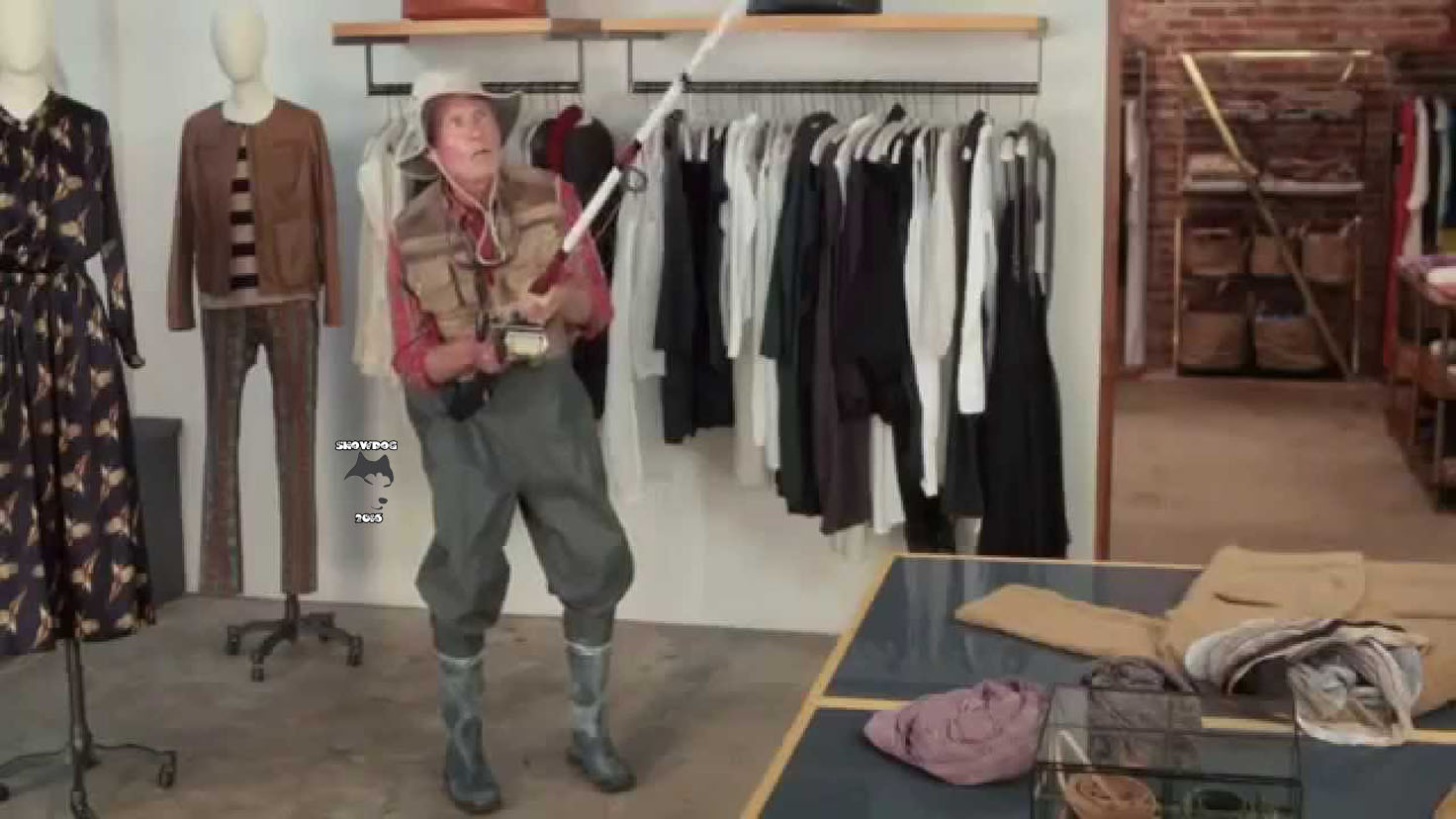
Memes usually have the shelf life of an open gallon of milk in a heatwave. They pop up, everyone uses the same tired joke for seventy-two hours, and then they vanish into the digital graveyard of dead trends. But honestly, you gotta be faster than that is different. It’s been over a decade since a fisherman in a State Farm commercial dangled a dollar bill in front of a woman, and yet, the phrase still rings out in Discord chats, gaming lobbies, and TikTok comments every single day.
Why? Because it taps into a universal human experience. That annoying, playful, slightly smug feeling of snatching something away just as someone else thinks they’ve won.
The Origin Story Nobody Asked For (But Everyone Needs)
Let’s go back to 2011. State Farm released a commercial titled "Fisherman." It wasn’t trying to be high art. It was just a guy in a bucket hat—played by actor Gerry Bednob, who you might recognize from The 40-Year-Old Virgin—holding a fishing pole. Instead of a lure, he had a crisp one-dollar bill tied to the line.
A woman tries to grab the money. Bednob jerks the rod back with the reflexes of a jungle cat and utters the line: "Ooh, you gotta be faster than that!"
It was simple. It was effective. It was annoying. At the time, nobody thought this thirty-second insurance spot would become a permanent pillar of internet culture. But the internet has a weird way of deciding what sticks. The commercial aired during a transition period where TV ads were starting to be consumed as "content" on early YouTube. People started clipping the audio. They started remixing it.
The brilliance of Bednob’s delivery is in the "Ooh." It’s not just a rejection; it’s a taunt. It’s the verbal equivalent of a crossover in basketball that leaves the defender hitting the floor.
Why the Phrase Went Nuclear in Gaming
If you’ve spent any time in a competitive gaming environment—whether it’s League of Legends, Call of Duty, or Valorant—you’ve heard this. You’ve probably said it.
Gaming is built on the "missed opportunity." You almost get the kill. You almost grab the loot. You almost make it to the extraction point. When someone beats you to the punch by a millisecond, you gotta be faster than that is the ultimate psychological warfare. It’s the "get gud" of the 2010s but with a slightly more grandfatherly, mocking tone.
In the world of Dead by Daylight, survivors use the phrase when they successfully loop a killer. In Roblox, kids scream it into their mics when they win a race. The phrase has transcended the commercial to become a shorthand for "I outplayed you, and it wasn't even close."
It’s about the gap. The distance between "I have it" and "I almost had it."
The TikTok Renaissance and Modern Remixes
Just when the meme seemed like it was fading into "elder millennial" territory, TikTok happened. The platform is basically a giant machine designed to chew up old audio and spit it out in new contexts. The State Farm fisherman found a second life.
Creators started using the sound for everything.
- Pranking siblings by pulling a plate of food away.
- Cats missing a jump.
- Dating fails where someone "almost" got a text back.
- Financial commentary about missing a stock dip or a crypto pump.
The audio clip is short. It’s punchy. It fits the sub-seven-second attention span of the modern scroller perfectly. Interestingly, many Gen Z users using the sound have no idea it came from an insurance commercial. They just know the vibe.
The Psychology of the Taunt
There is actually some interesting psychology behind why this specific phrase is so sticky. According to linguistic experts, "catchphrase persistence" often relies on a specific rhythmic meter.
Think about it. Ooh-you-gotta-be-fas-ter-than-that. It’s iambic-ish. It has a bounce. It’s easy to mimic.
More importantly, it’s a "low-stakes" insult. If you call someone a loser, it’s aggressive. If you tell them they gotta be faster than that, it’s playful. It maintains a level of social cohesion while still allowing you to gloat. It’s the "I’m just kidding, but also I totally won" of the English language.
Cultural Impact and Global Reach
While the commercial was American, the sentiment traveled. You see variations of this in UK drill music samples and Australian gaming streams. The idea of the "dangled carrot" is a global trope.
State Farm, for their part, leaned into it. They didn't try to sue the meme out of existence. They realized that having a permanent spot in the lexicon of the internet is the kind of organic marketing you can't buy with a billion-dollar Super Bowl budget. It turned their brand—often seen as "stodgy" or "boring"—into something that felt, if not cool, at least relevant.
Analyzing the "Fisherman" Archetype
Gerry Bednob’s performance is what really sells it. He’s not a villain. He’s just a guy with a dollar. There’s a certain "trickster" energy there that dates back to folklore. The fisherman is essentially the modern-day Puck or Anansi. He’s testing your reflexes. He’s showing you the world isn’t just going to hand you things.
You want the dollar? You want the win? You want the glory?
Well, you gotta be faster than that.
The fisherman represents the friction of life. He’s the person who gets the last PS5 in stock while you’re still refreshing your browser. He’s the driver who zips into the parking spot you were signaling for. He is the physical embodiment of "the early bird gets the worm."
Practical Ways the Phrase Still Shows Up Today
If you pay attention, you’ll see it in places that aren’t even digital.
- Sports Broadcasting: Commentators use it when a goalie makes a save or a shortstop robs someone of a base hit.
- Workplace Banter: Snagging the last donut in the breakroom? You know what someone is going to say.
- Stock Market: Traders use it to describe high-frequency trading (HFT) or missing a "limit order" by a few cents.
It has become a linguistic shortcut. Instead of saying, "You were slightly too slow to achieve your objective, and I find humor in your failure," we just say the line.
Common Misconceptions
People often think the fisherman is "mean." If you watch the original 2011 ad, he’s actually quite cheerful. He’s not mocking the woman’s poverty or her need for a dollar; he’s playing a game.
Another misconception: the quote is "You got to be faster than that." Technically, he says "You gotta be faster than that." The contraction is vital. It adds the "old man" flavor that makes the meme work.
How to Use This Knowledge
If you’re a creator, understanding the longevity of this meme is a lesson in Audio Branding. If you want something to go viral, it needs to be:
- Short (under 3 seconds for the core hook).
- Rhythmic.
- Emotionally resonant (triumph or "trolling").
- High contrast (the silence before the "Ooh").
For everyone else, the phrase is just a reminder that the internet is a weird, wonderful place where a fisherman from a 2011 insurance ad can live forever.
Actionable Takeaways for Modern Internet Usage
If you want to use the meme effectively in 2026 without looking like a "boomer," here is how to navigate it.
- Timing is everything. Only use it when the "miss" is spectacular. If someone is just a little late, it’s not worth the reference. If they literally had their hand on the prize and lost it? Drop the line.
- Keep it playful. The moment it becomes mean-spirited, it loses the charm of the original fisherman. The goal is to make people laugh at their own slow reflexes, not to actually insult them.
- Look for the "Ooh." The "Ooh" is the most important part of the delivery. Without the initial vocalization, the phrase is just a sentence. With the "Ooh," it’s a cultural artifact.
- Understand the platform. On TikTok, the audio is often paired with a "slow-motion" filter that speeds up at the last second. On Discord, it’s usually a reaction GIF. Match the medium to the meme.
Honestly, at this point, you gotta be faster than that isn't even a meme anymore. It's just part of the language. It’s how we communicate the hilarity of a near-miss. And as long as people keep trying—and failing—to grab the metaphorical dollar bill, the fisherman will be there, fishing pole in hand, waiting to pull it away.



