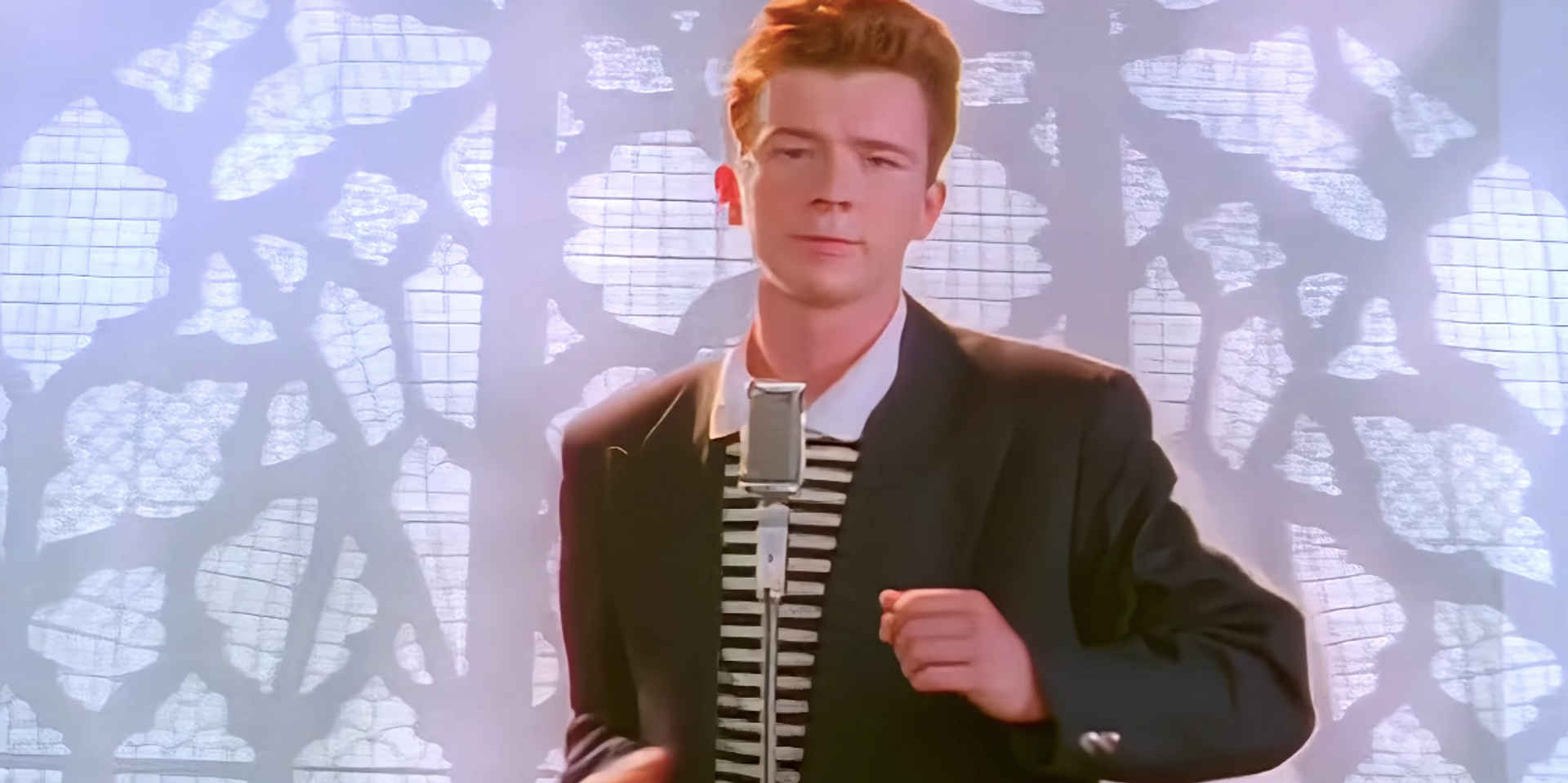
You’re looking for a leaked trailer. Maybe it’s the new Grand Theft Auto or a secret Marvel clip. You click a link on Reddit or X, expecting a massive reveal, but instead, those iconic 80s synth drums kick in. Rick Astley starts shuffling. You realize, with a mix of annoyance and weird respect, that you got rick rolled. It’s the bait-and-switch that simply refuses to die. While most memes have the shelf life of an open carton of milk, Rickrolling has survived for nearly two decades. Honestly, it’s kind of a miracle.
Most people think it’s just a joke from the 2000s, but the mechanics of why it works—and why it still catches people today—are actually pretty fascinating. It isn’t just about a catchy song. It’s about the psychology of the "click," the evolution of the early internet, and how a British pop star from 1987 became the face of global trolling.
Where the Hell Did This Come From?
Before we had Rick, we had the duck. Back in the early days of 4chan, around 2006, there was a meme called "duckrolling." The site’s founder, Christopher "moot" Poole, set up a word filter that changed the word "egg" to "duck." Eventually, people started posting bait links that led to a picture of a duck on wheels. It was stupid. It was simple. It was the blueprint.
Then came 2007. The first trailer for Grand Theft Auto IV was about to drop, and the Rockstar Games website crashed under the weight of millions of gamers. This was the perfect storm. A user on 4chan posted what they claimed was a mirror link to the trailer. Thousands clicked. Instead of Liberty City, they got Rick Astley’s "Never Gonna Give You Up."
The transition from "duckrolling" to "Rickrolling" was instantaneous. By the time 2008 rolled around, the prank had escaped the dark corners of image boards and hit the mainstream. On April Fools' Day that year, YouTube redirected every single featured video on its homepage to the Rick Astley music video. That was the moment the world collectively realized that if you were online, you got rick rolled at some point. There was no escape.
Why Rick Astley?
There is something specific about "Never Gonna Give You Up" that makes it the perfect weapon. First, there's the intro. Those drums are loud, immediate, and unmistakable. You know exactly what’s happening within 0.5 seconds. Then there's Rick himself. In 1987, he was a 21-year-old with a voice that sounded like it belonged to a 40-year-old soul singer. The contrast between his youthful, boy-next-door look and that deep baritone creates a surreal energy.
Rick Astley didn't actually mind. For a long time, he stayed quiet about it, which was probably the smartest move he could have made. If he had sued or complained, the internet would have eaten him alive. Instead, he leaned into it. In 2008, he showed up at the Macy’s Thanksgiving Day Parade and Rickrolled the entire country by jumping out of a float and lip-syncing the song. It was a masterclass in how to handle becoming a meme.
The Greatest Hits: When the World Got Rolled
Rickrolling isn't just for teenagers in their basements anymore. It has been used by massive corporations, politicians, and even religious groups. It’s the universal "gotcha."
- The Westboro Baptist Church: When they showed up to protest a Foo Fighters concert in 2015, Dave Grohl and the band drove by in a truck blasting Rick Astley, effectively Rickrolling the protesters.
- SpaceX: During a live stream for a Falcon 9 launch, the internal "Starman" car’s radio was rumored to be playing the track.
- The White House: Even the official White House X (then Twitter) account got in on the action in 2011, responding to a user's complaint about a boring thread with a link to the video.
- The 4K Remaster: A few years ago, an AI-upscaled 60fps version of the music video went viral. It was terrifyingly crisp. It made the experience of being pranked feel weirdly high-def and modern.
People keep trying to "fix" the prank, but you can’t fix what isn't broken. The core of the joke is the deception. You think you’re getting something valuable or exciting, and instead, you get a wholesome 80s love song. It’s a "prank" in the gentlest sense of the word. Nobody gets hurt. You just feel a little bit silly.
The Technical Side of the Prank
If you want to know how people are still falling for this in 2026, look at link shorteners. Services like Bitly or TinyURL are the Rickroller’s best friends. They hide the destination URL, making it impossible to see youtube.com/watch?v=dQw4w9WgXcQ (the infamous video ID).
Experienced internet users have memorized that ID. They see "dQw4" and they close the tab before the page even loads. But the pros have evolved. They use different uploads of the song, or they embed the video 30 seconds into a different clip. They’ve even started using QR codes in the physical world. Imagine scanning a menu at a restaurant and getting hit with that synth line. It's happened.
Is Rickrolling Dead?
Short answer: No.
Long answer: It’s transformed into a piece of digital heritage. Most memes die because they get too popular and "normies" ruin them. But Rickrolling is different. It’s more like a rite of passage. If you’ve never been Rickrolled, do you even use the internet?
Interestingly, the song has over 1.5 billion views on YouTube now. A significant chunk of those aren't from people wanting to hear the song; they are from people who got tricked. Rick Astley is essentially the only person in history whose career was revived by a prank. He’s released new albums since then—50 and Beautiful Life—and they actually did quite well. He’s a genuinely talented guy who just happened to become the internet’s favorite punchline.
How to Avoid Getting Rick Rolled (and How to Do It Better)
If you're tired of being the victim, you need to develop a "link-first" mentality. Never click a raw link from a stranger on a forum. Hover your mouse over the link to see the destination in the bottom corner of your browser. If you see "dQw4," run.
But if you’re looking to carry on the tradition, remember that the best Rickrolls are the ones with high stakes. Don't just post the link randomly. Build a narrative. Tell people it’s a leaked photo of a new console or a secret ending to a movie. The more the victim wants to see the content, the better the payoff when they realize you got rick rolled.
Actionable Takeaways for the Modern Internet User
- Memorize the Code: Learn to recognize
dQw4w9WgXcQ. It is the most important string of characters in internet history for anyone trying to avoid the prank. - Verify Before You Click: Use a link unshortener if you’re suspicious. Sites like "Unshorten.it" will show you where a redirected link actually goes before you land there.
- Appreciate the Craft: If you get caught, don't be salty. It’s a harmless piece of internet culture. Watch the whole video. It’s actually a pretty good song.
- Stay Creative: If you’re the one doing the rolling, don't use the obvious links. Find a version of the song that starts five seconds in to bypass the silence at the beginning.
Rickrolling works because it’s a shared experience. It’s one of the few things that connects the "old web" of the early 2000s to the algorithmic, AI-driven web of today. It reminds us that no matter how advanced our technology gets, we’re all still susceptible to a simple, well-timed joke. The next time you see a link that looks too good to be true, just remember: it probably is. And Rick is waiting for you.



