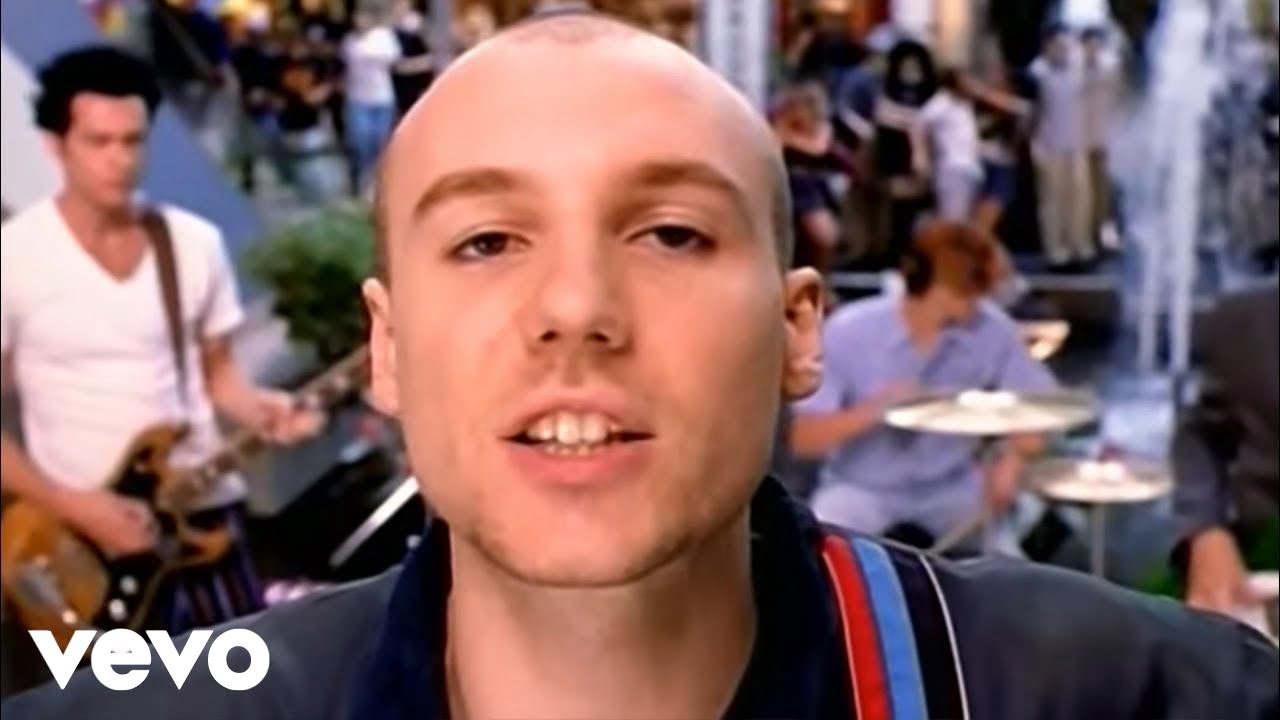
It was 1998. The radio was a mess of boy bands, nu-metal angst, and the dying gasps of Britpop. Then came that rattling tambourine and a piano riff that felt like sunshine hitting a windshield. Gregg Alexander, a guy in a bucket hat who looked like he hadn't slept in three days, started shouting about fashion shoots and health insurance. It shouldn't have worked. It was messy. It was cynical yet desperately hopeful. But "You Get What You Give" by the New Radicals didn't just work; it became a permanent fixture of the cultural subconscious. Honestly, if you grew up in the late 90s, that song is probably hard-coded into your DNA.
But here’s the thing. Most people remember it as a "one-hit wonder" upbeat pop song. They're wrong. It’s actually one of the most structurally complex, politically charged, and oddly influential tracks of the last thirty years. It’s a song that shouldn't exist in the corporate pop machine, yet it conquered it.
The Weird Genius of Gregg Alexander
To understand why "You Get What You Give" matters, you have to look at the man behind the curtain. Gregg Alexander wasn't some manufactured pop star. He was a veteran of the industry who had already released two solo albums that went nowhere. He was frustrated. He was tired of the "fake" nature of Hollywood. When he formed the New Radicals, it wasn't really a band. It was a rotating door of session musicians centered around his singular, somewhat manic vision.
The song itself is a masterclass in tension. It starts with that iconic "1, 2... 1, 2, 3, 4" count-in, signaling a raw, live energy that was becoming rare in an era of increasingly digital production. Alexander’s vocals are strained. He’s pushing his voice to the absolute limit, almost cracking on the high notes. It feels urgent. It feels like he has to say this right now or he might explode.
That Infamous Outro
You can't talk about the New Radicals without talking about the bridge and the outro. While the chorus is pure melodic bliss—preaching about not giving up and having the music in you—the end of the song takes a sharp, jagged turn.
Alexander starts naming names.
"Fashion shoots with Courtney Love, 40 ounces freely flowing..."
And then the big ones: Hanson, Marilyn Manson, and Billy Corgan. He threatened to "kick their asses" in. At the time, this was a massive scandal. Media outlets obsessed over the "feud." Marilyn Manson reportedly said he wasn't mad about being mentioned, but he was offended to be in the same sentence as Courtney Love. Billy Corgan was less amused. But Alexander later admitted the whole thing was a social experiment. He wanted to see if the media would focus on the political lyrics about health insurance and corporate greed or the celebrity gossip.
The media chose the gossip. Every single time. He proved his point, even if it cost him some industry friends.
Why the Song Never Actually Left
Most bands would kill for a hit like this. They’d tour for a decade, release four more albums, and milk the cow dry. Not Gregg Alexander. Less than a year after the song blew up, and just as the second single "Someday We'll Know" was hitting airwaves, he quit. He disbanded the New Radicals. He hated the promotional grind. He hated the "hats and the interviews." He just wanted to write songs in a room.
He disappeared into the shadows, writing hits for other people—like Santana’s "The Game of Love"—but "You Get What You Give" refused to fade away.
- The Political Connection: In 2020, the song became the walk-on anthem for Doug Emhoff during the Biden-Harris campaign. It was also a favorite of the late Beau Biden. In a surreal moment of cultural full-circle, the New Radicals actually reunited for the first time in 22 years to perform the song for the 2021 virtual inaugural parade.
- The Soundtrack Staple: From Surf's Up to Click, the song has been used to signify a "turning point" in dozens of films. It’s the universal cinematic shorthand for "everything is going to be okay if you just try."
- The Artistic Respect: Edge from U2 famously said he was "jealous" of the song. Joni Mitchell, notoriously hard to please, praised it. It has a pedigree that transcends its "pop" label.
Decoding the Lyrics: It’s Not Just a Pep Talk
When you really sit with the lyrics of "You Get What You Give," the "New Radicals" name starts to make sense. It’s a protest song disguised as a radio hit.
The opening verses are surprisingly dark. He talks about "flat on your face" and "looking for a bright light." He’s addressing a generation that felt sold out by the promises of the 90s economic boom. When he shouts "Wake up kids, we've got the dreamers' disease," he isn't being cynical. He's saying that the world tries to cure you of your dreams like they're a sickness.
Then there’s the line: "Health insurance rip off lying FDA big bankers buying." In 1998, putting a line about the FDA and predatory banking into a Top 40 hit was borderline revolutionary. It predated the populist anger of the 2008 crash by a decade. Alexander was looking at the structure of American life and seeing the cracks while everyone else was busy watching TRL.
The Production Secrets
Musically, the song is a bit of a Frankenstein’s monster. It borrows the soulful strut of Todd Rundgren and the pop sensibilities of Hall & Oates, but it layers them over a drum beat that feels almost like a breakbeat from a hip-hop record.
The "wall of sound" approach makes it feel massive. There are layers of acoustic guitars buried under the electric ones. There’s a constant shimmering percussion that keeps the momentum moving forward. It never lets you breathe. If the song slowed down for even a second, the artifice might crumble, but it keeps that freight-train energy from the first second to the last.
What We Can Learn from the New Radicals Today
There is a lesson in the way Gregg Alexander handled his fifteen minutes of fame. In an era where everyone is trying to build a "personal brand" and maximize their "engagement," he did the opposite. He made something great, said what he wanted to say, and walked away before the industry could ruin it.
He preserved the integrity of the song by not overstaying his welcome. Because there isn't a mediocre third or fourth New Radicals album, "You Get What You Give" remains untarnished. It exists in a vacuum of late-90s perfection.
Actionable Takeaways for the Modern Creative
If you’re a creator, musician, or just someone trying to make a mark in a noisy world, there are real insights to be gleaned from the New Radicals' brief explosion:
- Prioritize the Work Over the "Hustle": Alexander’s decision to quit at the height of his fame proves that the "grind" isn't mandatory. If the promotional side of your work is killing your soul, you’re allowed to stop. Your peace is worth more than a press junket.
- Subvert the Medium: You can deliver a heavy message inside a light package. If you want to talk about big issues—politics, corporate greed, mental health—sometimes the best way to get people to listen is to wrap it in a melody they can't stop humming.
- Risk the "Cringe": The lyrics of this song are earnest. They are almost painfully sincere. In a world of irony and "meta" commentary, being genuinely hopeful is a radical act. Don't be afraid to tell your audience "don't give up," even if it feels cheesy.
- Value Over Volume: One incredible thing is better than ten mediocre things. We remember the New Radicals because that one album, Maybe You've Been Brainwashed Too, was a singular, focused vision.
The world will always try to tell you that you’re "crazy" for having high expectations or for wanting more out of life than just "getting by." But as the song reminds us, the globe is spinning and the world is mine. You just have to decide what you’re willing to give to get what you want.
Stop worrying about whether your ideas are "cool" enough for the current trend cycle. Focus on whether they are true. The New Radicals didn't fit in 1998, and they don't fit now. That’s exactly why we’re still talking about them. Go listen to the track again—really listen to the drums and the bass line this time—and then go make something that feels just as urgent.



