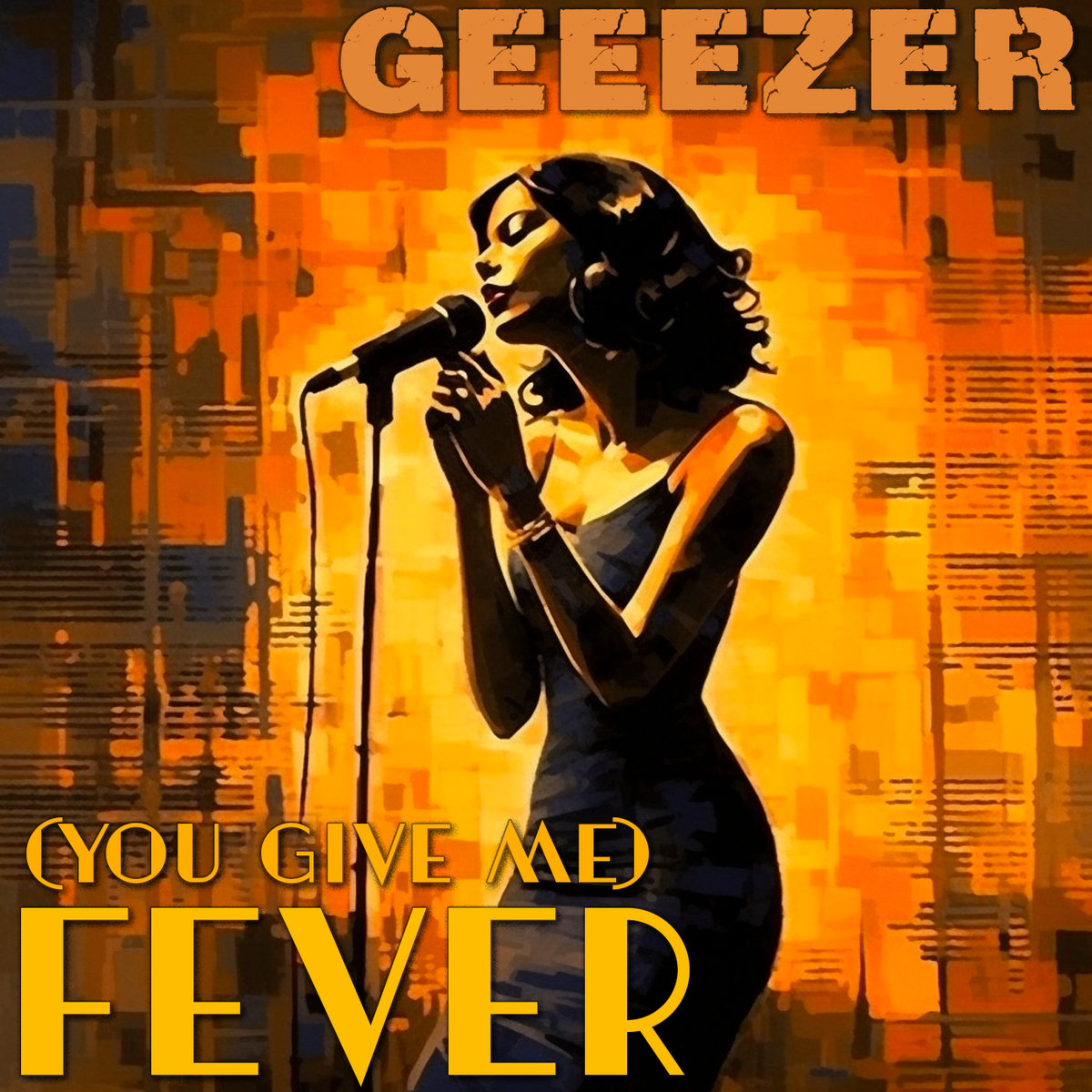
Music is weirdly obsessed with illness. We’ve all heard it. That scratchy, soulful delivery of you gave me fever—it’s a line that has echoed through recording studios for nearly seventy years. But why? Honestly, if someone actually gives you a fever, you're usually looking for a Tylenol and a nap, not a dance floor. Yet, in the lexicon of American pop, jazz, and R&B, "Fever" isn't a medical diagnosis. It's a shorthand for a specific kind of overwhelming, slightly dangerous desire.
It started long before the TikTok era. Meanwhile, you can explore related stories here: The Art of the Silent Vow.
When Otis Blackwell and Eddie Cooley sat down to write what would become one of the most covered songs in history, they weren't thinking about the flu. They were thinking about a feeling. The original 1956 version by Little Willie John is gritty. It’s raw. It has this nervous energy that makes you feel like the walls are closing in. Then Peggy Lee got her hands on it in 1958, stripped away the excess, added those iconic finger snaps and a walking bassline, and turned a frantic R&B hit into a cool, late-night anthem of restraint.
The Anatomy of the Fever Metaphor
So, what are we actually talking about when we say you gave me fever? To understand the complete picture, check out the excellent analysis by Deadline.
In songwriting, a fever represents a loss of homeostasis. Your body is out of whack. Your heart rate is up. You're sweating. Usually, in a song, this is triggered by a "femme fatale" or a "bad boy" archetype. It’s the physiological manifestation of an emotional state. It’s a way to describe being "lovesick" without sounding like a Victorian poet.
Peggy Lee’s version added historical and literary weight to the phrase. She didn't just sing about her own heat; she dragged Captain Smith and Pocahontas into the mix. She mentioned Romeo and Juliet. By doing that, she suggested that this "fever" wasn't just a temporary crush. It was a universal human condition that has been ruining—and completing—lives since the dawn of time.
It’s about the heat.
Musicologists often point to the "Fever" bassline as a masterclass in tension. It never resolves quite how you want it to. It keeps looping, mimicking the obsessive nature of a crush. When a singer tells an audience "you gave me fever," they are inviting the listener into that state of agitation. It’s intimate. It’s almost uncomfortably close.
Why Every Generation Reinvents the Heat
You’ve seen it happen. Every decade, a new artist decides they need to tackle this trope.
- The 1950s/60s: Little Willie John brought the soul, Peggy Lee brought the cool, and Elvis Presley brought the swagger in 1960. For Elvis, the phrase was a way to lean into his "Elvis the Pelvis" persona—it was suggestive, edgy, and just barely escaped the censors of the time.
- The 1990s: Madonna took the phrase and drenched it in club culture. Her 1992 cover (and the various remixes) turned the fever into something sweat-soaked and electronic. She removed the jazz club smoke and replaced it with strobe lights.
- The 2000s and Beyond: Beyoncé has performed it. Michael Bublé did the classic crooner version. Even Ray Charles and Natalie Cole took a swing.
The phrase has become a "standard." In the music industry, a "standard" is a song that is so fundamentally sound in its structure that it can be bent into any genre without breaking. The reason "you gave me fever" works in 2026 just as well as it did in 1956 is that the physical sensation of attraction hasn't changed. Our tech changed. Our dating apps changed. But the "fever"? That’s hardwired.
The Psychology of Musical Obsession
Psychologically, why does this specific lyric resonate?
Humans are wired to respond to rhythmic repetition. When a song uses the "fever" metaphor, it often employs a "heartbeat" rhythm. It’s primal. Dr. Daniel Levitin, a neuroscientist and author of This Is Your Brain on Music, often discusses how certain rhythms can trigger the release of dopamine. A "fever" song isn't just telling you about a feeling; it’s trying to induce it.
There's also the "forbidden" element. Fever implies something you caught. Something you didn't necessarily want but can't get rid of. It’s a lack of control. In a world where we try to curate and control every aspect of our public image, the idea of a "fever" that just takes over is incredibly cathartic.
It’s messy. It’s loud. It’s inconvenient.
Beyond the Song: The Cultural Footprint
The influence isn't just in the lyrics. You see the "Fever" aesthetic everywhere.
Think about cinematography. When a director wants to show a character falling for someone they shouldn't, they use warm filters. They use close-ups. They use "feverish" editing. The song set a template for how we visualize desire in Western media. It’s the red dress. It’s the humid room. It’s the beads of sweat on a glass of bourbon.
Honestly, the phrase has become a bit of a cliché, but it’s a "load-bearing cliché." It supports the weight of the entire "sultry" genre. Without it, we’d have to find much more clinical ways to describe being hot and bothered. And "you gave me a significant increase in my core body temperature due to a sympathetic nervous system response" just doesn't have the same ring to it.
Common Misconceptions About the Lyrics
People often get the history of these songs wrong.
Many believe Peggy Lee wrote it. She didn't, though she did rewrite some of the lyrics to include the historical references. Some think it was a blues song first. It was actually a pop-leaning R&B track. There’s also a common mistake where people conflate the song "Fever" with other "fever" songs, like Aerosmith’s "Fever" or the disco-heavy "Night Fever" by the Bee Gees.
While they all use the same central metaphor, the "Fever" of the 50s is about a slow burn. The disco "Fever" of the 70s is about an explosion. It’s a different kind of heat. One is a candle; the other is a forest fire.
How to Use This Trope Today (Without Being Cringe)
If you're a songwriter or a content creator, using the "fever" angle is risky. It’s been done. A lot.
To make it feel fresh in 2026, you have to subvert it. Maybe the fever isn't for a person. Maybe it’s for a goal, a city, or a digital ghost. The modern "fever" is often more about anxiety than it is about pure romance. We live in a high-cortisol world. A modern take on you gave me fever might focus more on the "shaking" and the "chills" of uncertainty than the "glow" of a 1950s fireplace.
Look at how Billie Eilish or Olivia Rodrigo handle these themes. They don't always use the word, but the "fever" is there in the production—the whispered vocals, the distorted bass, the feeling of being slightly unwell.
Actionable Insights for Music Lovers and Creators
If you want to truly appreciate the depth of this musical phenomenon, don't just stick to the radio hits. Dig deeper.
- Listen to the "Fever" Evolution: Put on the Little Willie John original, then Peggy Lee, then Madonna, then the 2015 Elvis/Michael Bublé virtual duet. Notice how the "heat" changes from desperate to sophisticated to synthetic.
- Analyze the Instrumentation: Look for the "walking bassline." It’s a specific pattern that mimics a person walking (or a heart beating). Try to identify it in modern pop songs; you’ll be surprised how often it’s hidden in the mix to create that "feverish" tension.
- Watch the Visuals: Look up old clips of Peggy Lee performing. Notice her stillness. The irony of "Fever" is that it’s often performed by people who are completely still, forcing the audience to do the mental work of feeling the heat.
- Check the Credits: Always look at the songwriters. Learning about Otis Blackwell—who also wrote "Great Balls of Fire" and "All Shook Up"—gives you a better understanding of how the DNA of rock and roll was built on these metaphors of heat and fire.
The next time you hear someone sing about how you gave me fever, don't just dismiss it as another love song. It's a piece of cultural technology designed to make you feel a very specific, very old, and very human thing. It's the sound of our bodies losing the fight against our feelings. And honestly? That's never going out of style.
The heat is here to stay.
To understand the full impact, pay attention to the silence between the notes. That's where the fever actually lives. It's in the anticipation of the next beat, the next breath, and the next time that iconic bassline kicks in. Whether it's 1956 or 2026, the temperature remains exactly the same.



