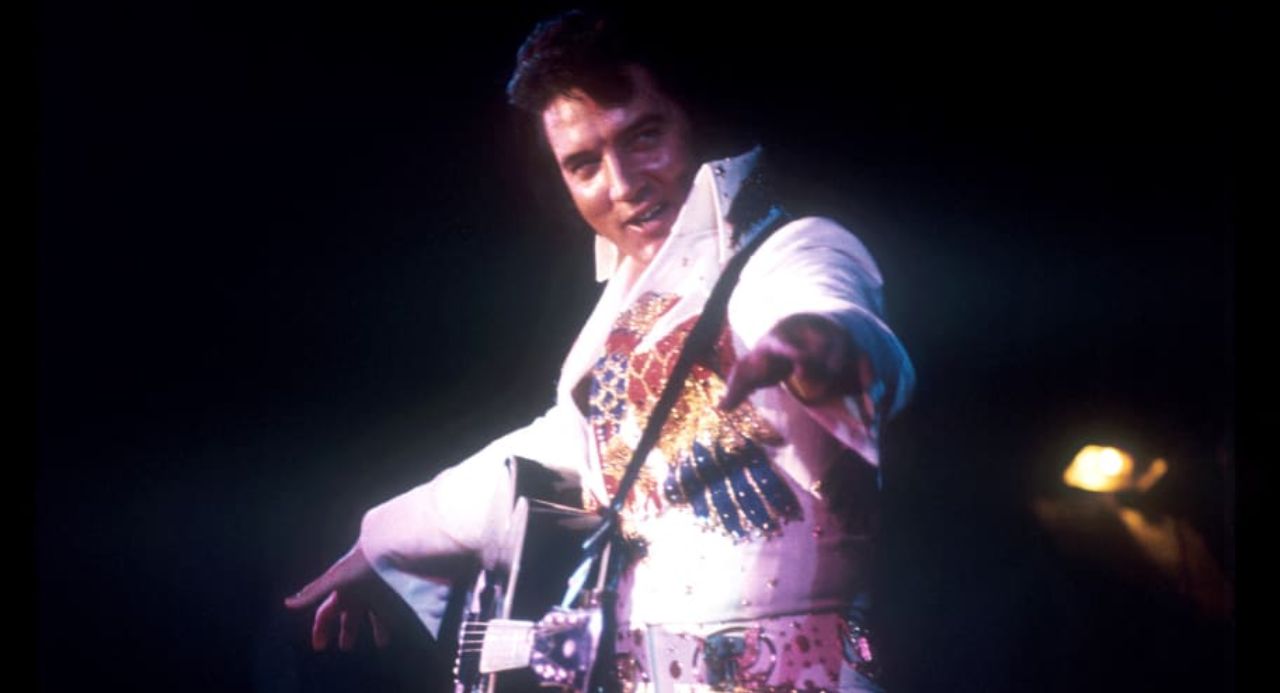
Music has this weird way of capturing things we can’t say in therapy. Honestly, You Gave Me a Mountain is exactly that kind of song. It isn’t just some old-school country-pop standard. It’s a heavy, almost suffocating narrative about a man who just keeps getting kicked by life until he hits a breaking point. Most people know the Elvis Presley version from his 1970s "jumpsuit era," where he’d belt it out with enough power to shake the rafters of the International Hotel in Vegas. But the song has roots that go way deeper than a shiny cape and a backing orchestra.
It was actually written by Marty Robbins.
If you know Robbins, you probably think of "El Paso" or gunslinger ballads. This was different. This was personal. Published in 1969, the lyrics describe a series of personal catastrophes: the death of a mother during childbirth, a cold father, a stint in prison, and finally, the loss of a wife and child. It’s a lot. Maybe too much for some. But it resonated because, at its core, it’s about that universal feeling that the universe has a personal vendetta against you.
The Man Who Wrote the Mountain
Marty Robbins didn't just pull these lyrics out of thin air. While he didn't live every single tragedy mentioned in the song—he wasn't actually in prison for a crime he didn't commit—the emotional weight was real. Robbins grew up in a fractured home in Arizona. His father struggled with alcohol. Poverty was a constant shadow. When he wrote You Gave Me a Mountain, he was tapping into a lifetime of feeling like he had to climb just to reach level ground.
He recorded it himself first. His version is great. It’s classic Marty—smooth, controlled, and undeniably country. But the song didn’t stay "country" for long. It was too big. The melody had this climbing, operatic quality that practically begged for a singer with massive lungs.
Frankie Laine took a crack at it in 1969 and actually had a massive hit with it. Laine was known for that "big" sound, and his version reached number 24 on the Billboard Hot 100. It even topped the Adult Contemporary charts. For a minute there, it was his song. Laine brought a certain grit to it, a mid-century masculinity that made the lyrics feel like a confession over a stiff drink.
Why Elvis Presley Made it Immortal
Then came Elvis.
If you want to understand why You Gave Me a Mountain is still talked about today, you have to watch Elvis perform it in the 1973 Aloha from Hawaii satellite broadcast. By the early 70s, Elvis’s personal life was, frankly, a mess. He was dealing with a grueling tour schedule, health issues, and a very public, very painful divorce from Priscilla.
When Elvis sang about his wife taking his child and leaving him, he wasn't acting.
He started performing the song regularly in 1972. It became a staple of his live sets. There is a specific recording from the Hampton Roads Coliseum that fans obsess over. You can hear his voice cracking slightly under the weight of the lyrics. For Elvis, the "mountain" wasn't just a metaphor for general hardship. It was the crushing pressure of being the biggest star on the planet while his private world turned to ash.
The arrangement used by the TCB Band was massive. You had the driving drums of Ronnie Tutt, the soaring backing vocals of the Sweet Inspirations and J.D. Sumner & the Stamps Quartet, and James Burton’s precise guitar work. It turned a sad song into a spiritual battle. Elvis would stand there, feet planted, literally shouting at the ceiling. It was raw.
Breaking Down the Lyrics: Is it About God?
The song is framed as a prayer. Or maybe a confrontation.
The narrator lists his grievances to the "Lord." He talks about losing his mother at birth—the "hill" he had to climb. Then his father's rejection—the "hill" became a "mountain." Finally, the legal system and the loss of his family. It’s a cumulative trauma.
- "But this time, Lord, you gave me a mountain..."
That line is the hook. It suggests that while the narrator could handle the small stuff, this latest blow—the loss of love—is the one that might finally break him. There is a lot of debate among musicologists and fans about whether the song is pessimistic or hopeful. Some see it as a man giving up. Others see the act of singing it as a form of survival. You’re still standing, even if you’re just standing at the foot of a mountain you can't climb.
Interestingly, the song avoids being "preachy." It’s more of a Job-like lament. Why me? Why now? It doesn't offer a clean Sunday school answer. It just presents the pain as it is.
The Technical Difficulty of the Song
Let’s talk about the vocals for a second. This isn’t a song you sing at karaoke after three beers unless you want to embarrass yourself.
The range required is deceptively wide. It starts low and conversational, almost mumbled. But by the time you hit the bridge and the final chorus, you’re hitting sustained high notes that require serious diaphragm control. Most singers who cover You Gave Me a Mountain fail because they try to "pretty it up."
You can’t.
It needs a certain amount of dirt and desperation. If it’s too polished, it loses the "man on the edge" vibe that Robbins wrote into it. This is why Elvis’s later versions, even when his health was failing, are often considered the best. The exhaustion in his voice actually added to the authenticity of the performance.
Cultural Impact and Other Notable Versions
While Robbins, Laine, and Presley are the "big three" for this track, it’s been covered by dozens of artists across genres.
- Gene Watson: Brought it back to its pure country roots with a version that highlights the storytelling.
- Eddy Arnold: Gave it a "Nashville Sound" polish that made it feel more like a classic pop standard.
- Ray Price: Used his legendary "shuffling" style to give it a different rhythmic energy.
It’s one of those songs that stays in the repertoire of "singer's singers." It’s a litmus test. If you can handle the emotional and technical demands of this track, you’ve officially made it.
The "Mountain" in Modern Context
Why does a song from 1969 still show up on streaming playlists and in documentaries?
Kinda because we’re living in an era of "sad girl" and "sad boy" music, but we forget that the 60s and 70s had their own version of high-drama emotional venting. You Gave Me a Mountain is the grandfather of the modern power ballad. It deals with themes that haven't aged a day: parental trauma, the feeling of being wronged by the system, and the sheer agony of a breakup.
Social media often portrays life as a series of wins. This song is the opposite. It’s a public acknowledgment of a losing streak. There’s something deeply therapeutic about that. When you feel like you’re drowning, hearing Elvis or Marty Robbins yell about their own mountains makes yours feel a little more manageable. Or at least, it makes you feel less alone in the climb.
How to Listen to the Best Versions
If you’re just discovering the song, don't just click the first YouTube link you see. You have to experience the progression.
- Start with Marty Robbins (1969): Listen to the songwriter’s intent. It’s humbler. The "mountain" feels more like a personal cross to bear.
- Move to Frankie Laine: Hear how it became a pop phenomenon. This version is more about the "vocal" than the "story," but it’s still powerful.
- The Aloha from Hawaii Version (Elvis, 1973): This is the gold standard. Watch the video if you can. The way he interacts with the band during the build-up is masterclass level showmanship.
- The "Rapid City" Recording (Elvis, 1977): Warning—this is tough to listen to. It was recorded just weeks before he died. He’s tired, he’s struggling, but the way he pushes through the final notes is a haunting testament to his connection to the lyrics.
Actionable Insights for Music Lovers
If you're a musician or a dedicated listener looking to dive deeper into this style of songwriting, here’s how to actually appreciate the craft behind it:
- Study the Narrative Arc: Notice how the song doesn't start with the biggest problem. It builds. It’s a "stacking" narrative. When writing your own stories or analyzing lyrics, look for that "and then it got worse" structure. It creates tension.
- Compare the Mixes: Listen to the 1969 mono vs. stereo versions of Laine’s hit. You’ll hear how engineers in the late 60s used reverb to create that sense of "vast space" (the mountain) around the singer.
- Vocal Dynamics: If you’re a singer, practice the transition from the "spoken-style" verses to the "belted" chorus. The key is the "vocal cry"—a slight break in the voice that signals genuine emotion.
The song is a reminder that no matter how big the mountain is, the act of singing about it is a way of claiming power over it. It’s not just about the struggle; it’s about the fact that you’re still there, looking at the peak, and finding the breath to tell the story.
Check out the Marty Robbins original first to see the blueprint, then let the Presley versions show you how far a song can be pushed emotionally.
Key Takeaway: You Gave Me a Mountain remains a masterclass in emotional storytelling, blending gospel-style fervor with country music's "three chords and the truth" philosophy. Whether you see it as a religious lament or a secular cry for help, its staying power lies in its refusal to sugarcoat the hardest parts of being human.
Next Steps for Deep Listening:
- Compare the live 1972 Madison Square Garden version by Elvis to the 1973 Hawaii version to see how his interpretation changed in just one year.
- Research the "Nashville Sound" era of the late 60s to understand why songs like this were produced with such theatrical flair.
- Look up the lyrics to "El Paso" by Marty Robbins to see the contrast between his fictional storytelling and the raw, personal nature of the Mountain.



