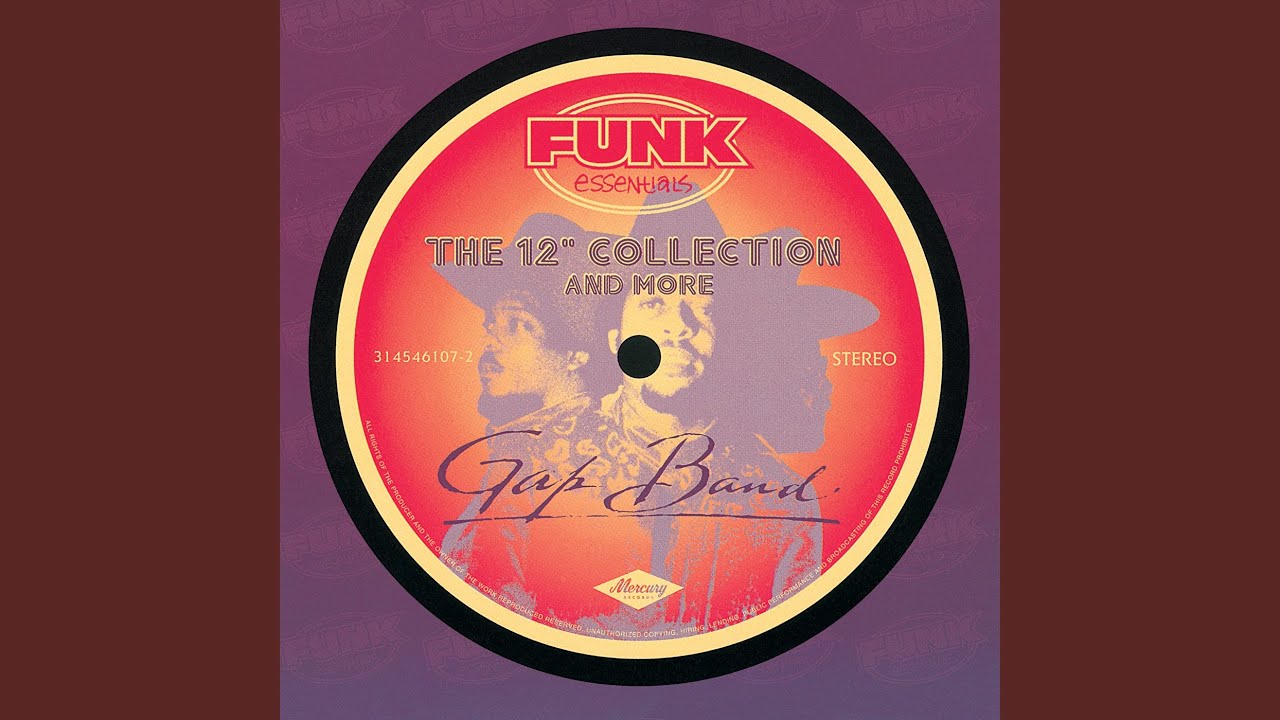
That high-pitched, whistling descent. You know the one. It sounds like a cartoon projectile falling from the stratosphere before everything explodes into a thick, synth-driven groove. You Dropped a Bomb on Me isn't just a song; it's a permanent fixture of the American psyche. If you’ve been to a wedding, a backyard BBQ, or a professional sporting event in the last forty years, you’ve heard it. You've probably even done the little shoulder shimmy that goes with it.
Released in 1982 by The Gap Band, the track basically redefined what post-disco funk could sound like. It was loud. It was aggressive. It was weirdly mechanical yet incredibly soulful. Charlie Wilson, the lead singer whose voice is basically velvet wrapped in sandpaper, delivered a performance that made a literal metaphor for heartbreak sound like a tactical military strike.
But there’s a lot more to this track than just a catchy hook and some 80s sound effects.
The Tulsa Roots of the Gap Band Sound
To understand why "You Dropped a Bomb on Me" sounds so gritty, you have to look at where the Wilson brothers came from. Ronnie, Charlie, and Robert Wilson grew up in Tulsa, Oklahoma. The name "Gap Band" isn't just some random catchy phrase. It’s an abbreviation of three streets in the historic Greenwood district: Greenwood, Archer, and Pine.
This is heavy. Greenwood was the site of the 1921 Tulsa Race Massacre, often called "Black Wall Street." By naming themselves after these streets, the brothers were carrying the history of their community into every disco and club in the world. It gave their music a weight that some of their more "bubblegum" contemporaries lacked.
By the time 1982 rolled around, the band had already found success with hits like "Burn Rubber on Me (Why You Wanna Hurt Me)" and "Outstanding." However, they needed something to cement their legacy in the shifting landscape of the early 80s. Disco was "dead" (or so the radio programmers claimed), and synth-pop was taking over. The Gap Band decided to just do both.
That Iconic "Whistle" and the Tech Behind the Boom
If you ask anyone what they remember about "You Dropped a Bomb on Me," they’ll mention the bomb sound. It’s the ultimate 80s audio gimmick. It was achieved using a Minimoog synthesizer, a piece of gear that Ronnie Wilson mastered. They didn't just sample a sound; they crafted a frequency sweep that mimics the Doppler effect of a falling object.
It’s actually a bit of a sonic marvel.
The song relies heavily on the Linn LM-1, the first drum machine to use digital samples of real drums. This gave the track a "stiff" but powerful rhythm that sat perfectly under Robert Wilson’s bubbling bass lines. Charlie Wilson’s vocals provide the human contrast to all that cold, hard machinery. He’s pleading. He’s hurt. He’s "snatched up," as he says in the lyrics.
Most people don't realize how much this song influenced the future of music. You can hear the DNA of this track in early West Coast G-Funk. When Dr. Dre and Snoop Dogg started dominating the 90s, they weren't just inventing a new sound; they were mining the heavy synth-bass foundations laid down by the Gap Band a decade earlier.
Why the Lyrics Are Kinda Dark (If You Think About It)
"You were my nuclear love."
"You lit a fuse in my heart."
On the surface, it’s a standard "you broke my heart" song. But the military metaphors are relentless. The 1980s were the height of the Cold War. The threat of nuclear annihilation was a literal daily conversation in the news. Taking that existential dread and turning it into a funk anthem about a girl who left you is honestly a genius move.
It turns a global fear into a personal tragedy. It makes the heartbreak feel massive—apocalyptic, even.
The songwriting credits belong to Charlie Wilson, Lonnie Simmons, and Rudy Taylor. Simmons was the founder of Total Experience Records and a savvy businessman who knew exactly how to market the "tougher" side of R&B. He wanted a sound that worked in the clubs but also blasted out of truck speakers. They hit the bullseye.
Chart Performance and Cultural Longevity
Despite being one of the most recognizable songs of the era, "You Dropped a Bomb on Me" never actually hit #1 on the Billboard Hot 100. It peaked at #2 on the Billboard R&B charts and #39 on the Hot 100.
But charts are liars.
History has been much kinder to the Gap Band than the 1982 radio charts were. The song has been featured in everything from Grand Theft Auto: San Andreas to South Park. It’s become a shorthand for "the party has started."
The Music Video: A Time Capsule of 1982
If you haven't watched the music video lately, go do it. It’s a trip. It features the band performing in what looks like a military hangar, complete with camouflage gear and Charlie Wilson looking incredibly cool in a flight suit.
There’s a specific energy in that video—a mix of high-budget ambition and DIY charm. It was the early days of MTV, and Black artists were still fighting for airtime. The Gap Band forced the issue by making visuals that were impossible to ignore. They weren't just "funk musicians"; they were rock stars.
Common Misconceptions About the Track
A lot of people think the song is about a literal explosion or war. It's not. It’s strictly metaphorical. There's also a persistent rumor that the song was banned in certain markets due to its "violent" imagery, but there's very little historical evidence to support a widespread ban. If anything, the controversy only helped its popularity.
Another thing? People often confuse The Gap Band with Cameo or The Ohio Players. While they all shared that heavy-bottomed funk sound, the Wilsons had a specific gospel-trained vocal tightness that set them apart. Charlie Wilson’s "Uncle Charlie" persona, which he adopted later in his career while working with Kanye West and Tyler, The Creator, started right here. He brought a church-honed vibrato to a song about a bomb.
That’s the secret sauce.
How to Listen Like an Expert
If you want to truly appreciate the craftsmanship here, don't listen to it on your phone speakers. You need something with a subwoofer.
- Focus on the Bass: Robert Wilson’s bass playing is doing a lot of heavy lifting. It’s not just playing the root notes; it’s dancing around the beat.
- The Layered Vocals: Listen to the "bombs" shouted in the background. They aren't all the same pitch. They’re harmonized.
- The Percussion: There’s a cowbell in there. It’s subtle, but once you hear it, you can’t unhear it. It keeps the "robotic" drum machine feeling human.
The song is a masterclass in tension and release. The "whistle" creates the tension, and the heavy bass drop provides the release. It’s a psychological trick that works every single time.
Actionable Takeaways for Funk Lovers
If "You Dropped a Bomb on Me" is your gateway into 80s funk, don't stop there. The genre is deep and influential.
- Check out the "Gap Band IV" album: This is where the track lives, and it’s arguably one of the best funk albums of the decade. "Outstanding" is on the same record, which is the total polar opposite—smooth, soulful, and laid back.
- Explore Charlie Wilson’s Collaborations: See how his sound evolved by listening to his work with Snoop Dogg on "Beautiful" or his features on Kanye West’s "Bound 2." He is the bridge between old-school soul and modern hip-hop.
- Learn the "Step" : If you’re going to a wedding anytime soon, learn the basic four-step hustle. This song is the unofficial anthem of the "Electric Slide" generation, even if it has its own specific groove.
The legacy of the Gap Band is one of resilience. From the streets of Tulsa to the top of the charts, they proved that you could take the hardest parts of life—and the hardest sounds of technology—and turn them into something that makes the whole world want to dance.
The bomb dropped in 1982, and we’re still feeling the shockwaves.



