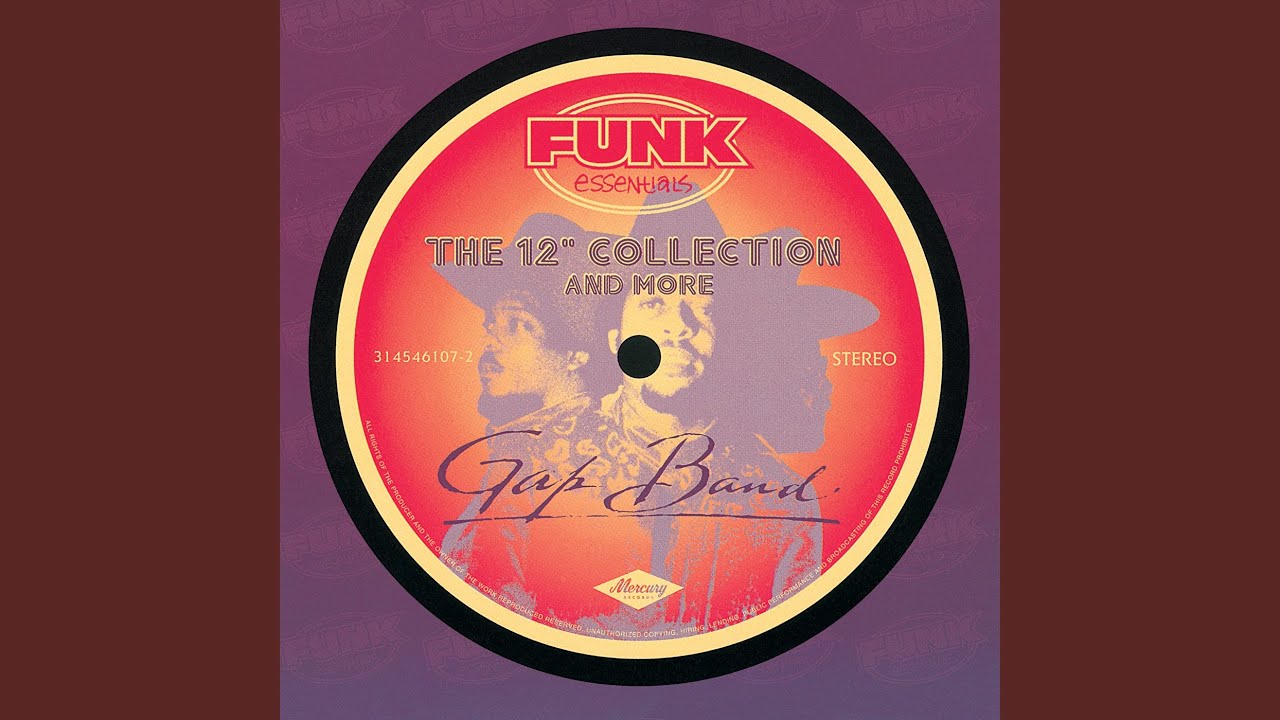
It starts with that whistle. A high-pitched, descending slide that mimics a falling shell before the synth bass kicks you right in the chest. If you grew up in the eighties, or even if you just frequent wedding receptions and old-school funk nights, you know exactly what’s coming. The Gap Band’s You Dropped a Bomb on Me isn't just a song; it's a structural masterpiece of the post-disco era. It’s loud. It’s aggressive. It’s surprisingly dark if you actually look at the metaphors.
Honestly, it’s one of those tracks that feels like it’s always existed. Released in 1982 on the Gap Band IV album, it arrived at a pivot point in music history. The shimmering strings of the 70s were being traded in for the grit of the Minimoog and the Talkbox. The Wilson brothers—Charlie, Ronnie, and Robert—weren't just making "dance music." They were crafting a blueprint for what R&B would become for the next forty years.
The Sound That Defined an Era
What makes You Dropped a Bomb on Me so distinct is the sheer weight of the production. Lonnie Simmons, who produced the track, understood something fundamental about the early 80s: people wanted to feel the bass in their teeth.
The song relies heavily on the Minimoog synthesizer. While many bands were using synths to sound "futuristic" or "spacey," the Gap Band used them to sound heavy. Robert Wilson’s bass lines were usually played on a physical bass guitar, but on this track, the electronic layering creates a thumping, industrial heartbeat. It’s relentless. You can hear the influence of Parliament-Funkadelic, but it’s more streamlined. It’s funk for the MTV generation.
Charlie Wilson’s vocals are the secret sauce. He has this incredible ability to sound gritty and smooth at the same time. When he shouts "You dropped a bomb on me, baby!" it doesn't sound like a cheesy pickup line. He sounds genuinely shell-shocked.
That Famous Whistle
We have to talk about the sound effects. In 1982, incorporating "found sounds" or literal interpretations of lyrics into a mix was a bit of a gamble. It could easily have turned into a novelty record. Instead, the "whistle" sound of the bomb falling became one of the most recognizable audio signatures in pop history.
Legend has it that the band used a specialized synthesizer patch to get that specific frequency. It wasn't a sample—sampling was still in its infancy and incredibly expensive via the Fairlight CMI. They had to build that sound from scratch using oscillators. It provides a sonic tension that breaks up the groove and forces the listener to pay attention.
Why the Metaphor Hits So Hard
The lyrics are essentially about a sudden, life-altering romantic betrayal or a crush that hits with the force of an explosion. "You were my nuclear device," Charlie sings. It’s hyperbole, sure. But in the early 80s, Cold War imagery was everywhere. The threat of "the bomb" was a literal, daily anxiety for people.
Taking that global fear and shrinking it down to the size of a broken heart was a stroke of genius. It gave the song a weight that "I'm sad you left me" just couldn't carry. It’s aggressive. It’s "lifestyle" funk that acknowledges the intensity of human emotion.
- Release Date: June 1982
- Chart Position: Peaked at #2 on the Billboard R&B chart and #39 on the Hot 100.
- The "Gap" Name: It stands for Greenwood, Archer, and Pine—three streets in the historic Black Wall Street district of Tulsa, Oklahoma.
The history of the band adds a layer of depth to the "bomb" metaphor that many casual listeners miss. The Wilson brothers grew up in Tulsa. They were keenly aware of the 1921 Tulsa Race Massacre, where the Greenwood district was literally firebombed from the air. While the song is officially about a woman, that underlying cultural trauma of "bombs dropping" on their community gives the track a haunting, subconscious resonance.
The Gap Band vs. The World
The 80s were crowded. You had Prince. You had Rick James. You had Michael Jackson turning into a global deity with Thriller. How did three brothers from Tulsa manage to hold their own?
Nuance.
While Rick James was "Punk Funk" and Prince was "Minneapolis Sound," the Gap Band was the bridge between the two. They were tight. They were disciplined. If you listen to the drum programming on You Dropped a Bomb on Me, it’s incredibly precise. It’s a "dry" sound. There isn't a lot of reverb. It’s right in your face.
This precision is why the song became a cornerstone for Hip-Hop. Producers like Dr. Dre and DJ Quik spent the 90s trying to replicate that specific low-end punch. When the "G-Funk" era exploded, it was basically a love letter to the Gap Band and P-Funk.
The Evolution of Charlie Wilson
You can't talk about this song without acknowledging the "Uncle Charlie" phenomenon. Charlie Wilson didn't just fade away into the "Where Are They Now?" bin. He became a mentor and a go-to collaborator for Kanye West, Tyler, the Creator, and Snoop Dogg.
Why? Because his voice on tracks like You Dropped a Bomb on Me represented a level of "cool" that never expired. He wasn't trying too hard. He was just that good. His ability to navigate the melody while the synths are crashing around him is a masterclass in vocal control.
The Technical Breakdown of the Groove
Musicians often cite this song as a "perfect" funk track because of its simplicity. It’s mostly a one-chord or two-chord vamp.
In music theory, funk thrives on "The One." You hit the first beat of the measure as hard as possible, and then you "play with" the rest of the beats. You Dropped a Bomb on Me is a textbook example. The downbeat is massive. Everything else—the handclaps, the synth stabs, the guitar scratches—spirals around that central gravity.
It’s actually quite difficult to play correctly. If the drummer or the synth player gets ahead of the beat, the whole thing loses its "stink." It needs to be slightly behind the beat, what musicians call "in the pocket."
Impact on Pop Culture and Beyond
You’ve heard it in Grand Theft Auto: San Andreas. You’ve heard it in Brooklyn Nine-Nine. It’s been in countless commercials.
The song has survived because it’s "vibe-proof." It doesn't matter if the current trend is EDM, mumble rap, or indie folk; a heavy bass line and a catchy hook are universal. It’s a song that works at a 5-year-old’s birthday party and a 50-year-old’s class reunion.
But it’s also a reminder of the Black excellence coming out of Oklahoma. The Wilson brothers’ father was a minister, and they got their start in the church. You can hear that gospel call-and-response in the way the backing vocals interact with Charlie. It’s a secular "holy ghost" moment on the dance floor.
Common Misconceptions
People often think this was a #1 hit on the Billboard Hot 100. It wasn't. It barely broke the top 40.
At the time, radio was still incredibly segregated. "Black music" (as it was categorized then) struggled to get airplay on mainstream pop stations unless it was a crossover juggernaut like "Billie Jean." The fact that You Dropped a Bomb on Me is now considered a definitive 80s anthem shows how much more influential it was than the songs that actually outranked it on the charts in 1982.
Actionable Takeaways for Music Fans
If you want to truly appreciate the depth of this track and the era it spawned, don't just stop at the greatest hits.
- Listen to the full "Gap Band IV" album. It’s a cohesive piece of art. "Outstanding" is on the same record, which is the polar opposite of "Bomb"—smooth, soulful, and melodic. It shows the band’s range.
- Compare the original to the 12-inch extended mix. The 12-inch versions of 80s funk songs were designed for club DJs. They often have longer "breakdowns" where you can hear the individual synth layers. It’s a great way to "deconstruct" how the song was built.
- Check out the live performances. Search for their 1982 Soul Train appearance. Seeing them play these parts live—balancing the electronic elements with physical instruments—is a revelation.
- Explore the "Greenwood" connection. Understanding the history of the Wilson brothers’ hometown of Tulsa gives their music a different weight. It turns a dance track into a testament of resilience.
The Gap Band may have officially stopped touring as a full unit years ago, and we lost Ronnie and Robert, but Charlie keeps the flame alive. Every time that whistle blows, a new generation gets introduced to the "bomb." It’s a reminder that truly great music doesn't just sit on a shelf. It explodes. Over and over again.



