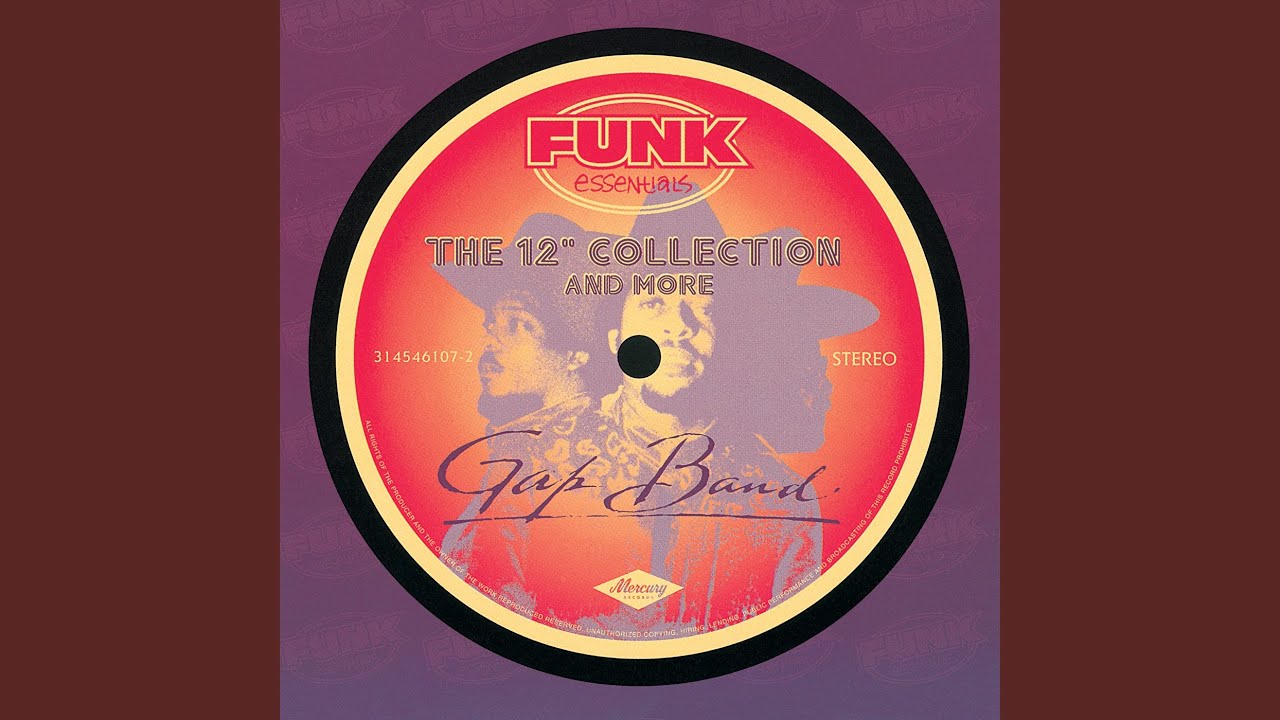
That high-pitched whistle. You know the one. It starts like a firework launching into the night sky before descending into a thick, synth-driven bassline that basically defines the early 1980s. You Dropped a Bomb on Me isn't just a song; it’s a physical experience. Released in 1982 by The Gap Band, it remains one of the most recognizable funk anthems ever recorded, yet the story behind its creation and its lasting impact on pop culture is way deeper than most people realize.
Honestly, if you grew up in the 80s, or even if you just spend a lot of time at weddings and sporting events, this track is part of your DNA. But why does it still work? How did three brothers from Tulsa, Oklahoma, manage to create a sound that felt both like a party and a tactical strike?
The Tulsa Roots of a Funk Revolution
The Gap Band wasn't some manufactured group put together by a label. It was the Wilson brothers—Charlie, Ronnie, and Robert. The name itself is actually an acronym for Greenwood, Archer, and Pine. Those are the streets in the historic North Tulsa neighborhood famously known as Black Wall Street.
There's a grit to their music that comes from that heritage. By the time they recorded You Dropped a Bomb on Me for the album Gap Band IV, they had already been grinding for years. They had transitioned from a more traditional backing band for artists like Leon Russell into a powerhouse that was rivaling the likes of Parliament-Funkadelic and Earth, Wind & Fire.
Charlie Wilson, often called "Uncle Charlie" by the hip-hop generation, has one of those voices that shouldn't exist. It’s soulful, raspy, and incredibly precise all at once. When he sings about a woman blowing his mind—using the metaphor of a literal explosion—he isn't just performing. He's selling a feeling of total, overwhelming attraction.
The Sound of the Bomb
Let's talk about that whistle. It’s the most iconic part of the song. In an era before digital sampling was as easy as clicking a button, the band had to get creative. They used a synthesizer—specifically an Arp 2600—to create that falling pitch. It was meant to mimic the sound of a bomb falling from a plane.
It was risky.
Using war metaphors in a dance track could have gone south quickly, especially in the early 80s. But the groove was so undeniable that people didn't care about the literal interpretation. They cared about the bass. The synth-bass line in You Dropped a Bomb on Me is a masterclass in "the pocket." It doesn't overplay. It just sits there, heavy and menacing, forcing your feet to move.
Why the Song Almost Didn't Happen
Success wasn't a straight line for the Wilson brothers. They had to deal with the changing tides of the music industry. Disco was "dead" by 1982, and funk was evolving into something more electronic and slick. Lonnie Simmons, the producer and founder of Total Experience Records, pushed them to embrace the technology of the time.
Charlie Wilson has mentioned in various interviews over the decades that they were constantly trying to one-up the competition. If Cameo had a hit, the Gap Band wanted a bigger one. If Rick James was dominating the charts, they wanted to reclaim their throne. This competitive spirit is what led to the aggressive, almost industrial sound of the track. It wasn’t soft funk. It was hard.
It reached Number 2 on the Billboard R&B charts and crossed over to the Billboard Hot 100, peaking at Number 31. While that might not sound like a massive pop hit by today's standards, its "long tail" is legendary. It has outlasted almost every other song that was in the Top 10 that year.
The Cultural Longevity of the Gap Band
You can’t talk about You Dropped a Bomb on Me without talking about its second life in hip-hop and gaming.
- Grand Theft Auto: San Andreas: For an entire generation of gamers, this song is synonymous with driving through a virtual version of 1990s Los Angeles. It was a standout track on the "Bounce FM" radio station.
- Sampling: Everyone from Ice Cube to Snoop Dogg has looked to the Gap Band for inspiration. The "G-Funk" sound of the 90s owes everything to the synth-heavy foundations laid by the Wilson brothers.
- Sporting Events: It’s a staple in NFL and NBA arenas. Why? Because it’s high energy and everyone knows the "whistle" cue.
The song has this weirdly universal appeal. It works at a 5-year-old's birthday party and a 50th-anniversary celebration. That’s rare. Most "dance" music is tied very specifically to its era, but the Gap Band's production was so forward-thinking that it doesn't feel dated in a way that makes you cringe. It feels "retro-cool."
The Tragic Loss and the Solo Rebirth
The story of the band isn't all gold records and parties. Robert Wilson, the "Godfather of Bass," passed away from a heart attack in 2010. Ronnie Wilson, the group's founder and multi-instrumentalist, passed in 2021.
Charlie Wilson, however, has had one of the most incredible second acts in music history. After a period of homelessness and drug addiction in the 90s—a dark chapter he is very open about—he got sober and became a darling of the modern R&B world. Kanye West, Pharrell Williams, and Tyler, The Creator all treat him like royalty. When Charlie performs You Dropped a Bomb on Me today, he’s not just a legacy act. He’s a survivor.
Breaking Down the Lyrics: Is It Just About Love?
On the surface, yeah. It’s a song about a guy who gets stunned by a girl. "You were my light / Now you are my night." It’s pretty standard pop songwriting.
But there’s a subtext of intensity. The 80s were a time of Cold War anxiety. Using "bomb" imagery was everywhere in pop culture. The Gap Band took that cultural fear and turned it into a dance floor celebration. It was a way of reclaiming the "explosion" and making it something joyful rather than terrifying.
Maybe I'm overthinking it. Maybe it’s just a killer hook. But the best art usually operates on a couple of levels at once, even if the artists don't realize they're doing it at the time.
How to Experience the Song Today
If you’ve only ever heard this on a tinny phone speaker or through a PA system at a stadium, you’re missing out. To truly appreciate what the Gap Band did, you need to hear it on a system that can actually handle the low end.
- Find a Vinyl Copy: If you can get an original 12-inch single, do it. The dynamic range on those old pressings captures the synth-bass much better than a compressed Spotify stream.
- Watch the Live Performances: Go to YouTube and look up their 1982/1983 televised performances. The outfits alone—a mix of cowboy hats, sequins, and marching band uniforms—are a masterclass in funk aesthetics.
- Listen to the G-Funk Connection: Queue up "You Dropped a Bomb on Me" and then immediately play a track like "Dope Man" by N.W.A. or something from Snoop's Doggystyle. You will hear the DNA of the Gap Band vibrating through the decades.
Common Misconceptions
People often confuse the Gap Band with Cameo or The Bar-Kays. While they all occupied a similar space in the early 80s "Electro-Funk" scene, the Gap Band was distinct for their gospel-inflected vocals. Charlie Wilson grew up singing in church, and you can hear that "preacher" energy in the way he shouts and ad-libs throughout the track.
Another myth is that the song was banned in some places because of the "bomb" references. While some radio stations were cautious during periods of international tension, there was never a widespread ban. In fact, the music video—which features the band in what looks like a military hangar with a literal "Gap Band" jet—was a huge hit on early MTV.
You Dropped a Bomb on Me stands as a testament to the power of a simple, heavy groove. It proved that funk could evolve, that Tulsa had something to say to the world, and that the Wilson brothers were absolute titans of the studio.
To get the most out of your 80s funk journey, your next step is to explore the Gap Band's other major hits like Burn Rubber on Me (Why You Wanna Hurt Me) and Outstanding. While "Bomb" is the high-energy peak, "Outstanding" is arguably one of the most sampled songs in history and shows the smoother, more melodic side of the brothers' genius. Check out the Gap Band IV album in its entirety to understand how they bridged the gap between old-school soul and the digital future.



