The year was 1982. If you walked into a club in London, New York, or Tulsa, you weren't just hearing music. You were feeling a physical assault from the speakers. It started with that whistling, descending synthesizer pitch—a literal sonic representation of a falling shell—and then, the beat dropped.
You Dropped a Bomb on Me by The Gap Band didn't just climb the charts; it redefined how we thought about the marriage of funk and the emerging electronic landscape.
It’s weird to think about now, but the Wilson brothers—Charlie, Ronnie, and Robert—weren't always the synth-heavy masters of the dance floor. They started as a gritty, church-reared funk outfit from Oklahoma. Named after Greenwood, Archer, and Pine streets in Tulsa, their very name was a tribute to the resilience of a community that had survived the 1921 Tulsa Race Massacre. By the time 1982 rolled around, they had transitioned from the organic horns of "Shake" to something much more mechanized and aggressive.
The Sound That Defined an Era
Lonnie Simmons, the producer and founder of Total Experience Records, knew they needed something that sounded like the future. He wasn't wrong.
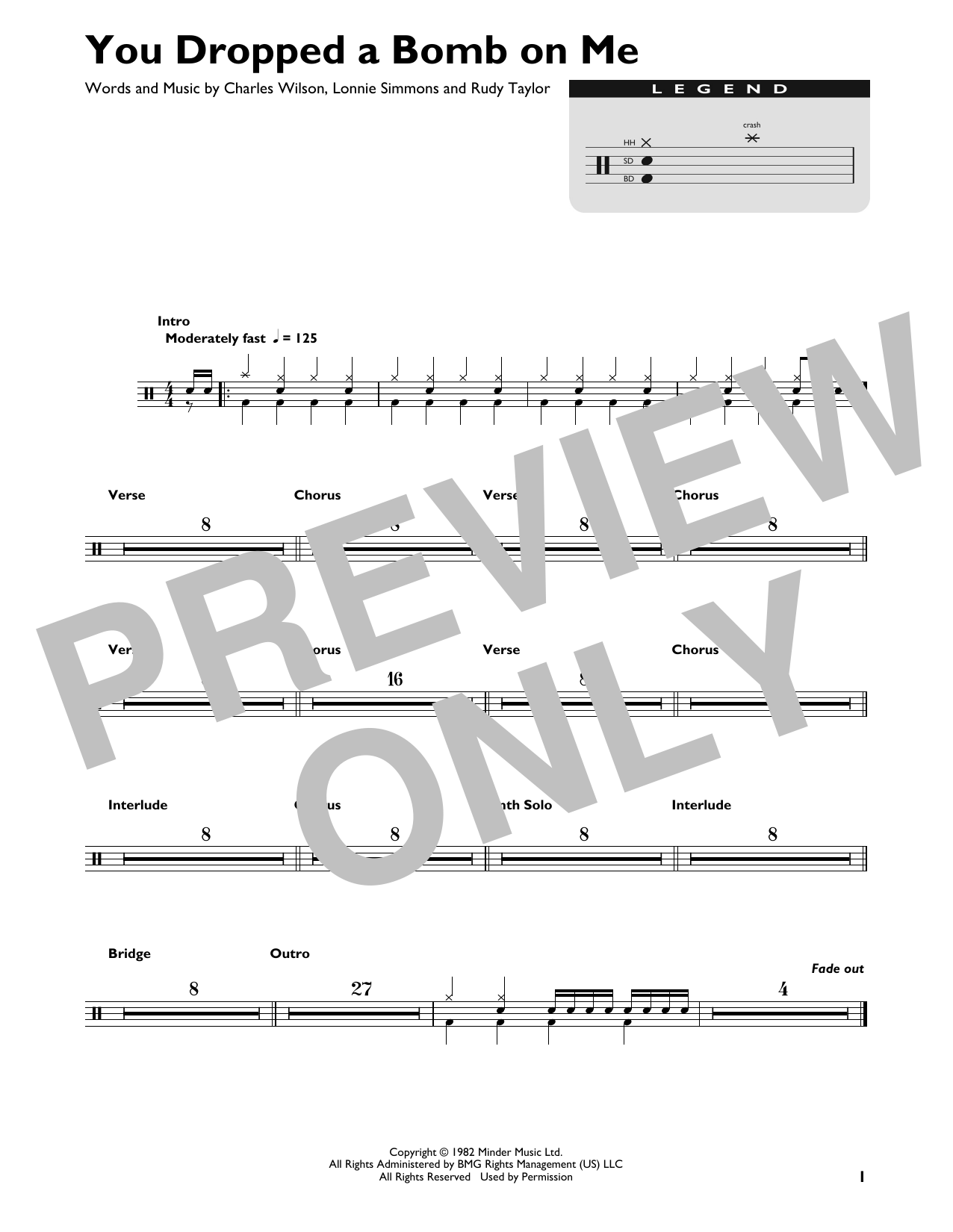
The track is built on a foundational Moog bassline that feels like it’s vibrating your teeth. Most people focus on Charlie Wilson’s iconic, raspy vocals, but the real star of You Dropped a Bomb on Me is the drum machine. It was a Linndrum, one of the first to use digital samples of real drums. This gave the track a rigidity that worked perfectly against the fluid, gospel-inflected ad-libs Charlie threw over the top.
Listen closely to the arrangement. It’s actually quite sparse.
There is a huge amount of "air" in the mix. This wasn't the wall-of-sound approach used by Earth, Wind & Fire. This was lean. It was mean. It was designed to play loud in a car or a cavernous warehouse. The lyrics themselves are a giant metaphor for heartbreak, comparing a sudden breakup to a military strike. It's dramatic. It's kinda over-the-top. Honestly, that’s exactly why it worked.
The "bomb" sound effect itself was a stroke of genius. It wasn't just a gimmick. It served as a structural marker in the song, resetting the energy every time the groove threatened to become too repetitive.
Why the Gap Band You Dropped a Bomb on Me Transcended the 80s
You can’t talk about this song without talking about the music video. In 1982, MTV was still in its infancy and notoriously slow to play Black artists. The Gap Band was one of the few funk groups to break through that barrier with a high-concept video. It featured the band in aviator gear, military aesthetics, and, of course, that desert landscape.
It felt big.
But the longevity of the track isn't just about nostalgia or a cool video. It’s about the DNA of the song. If you listen to West Coast G-Funk from the 90s, you hear Charlie Wilson everywhere. Snoop Dogg and Dr. Dre didn't just respect the Gap Band; they treated Charlie like royalty. He became the "Uncle" of the hip-hop movement.
The influence is everywhere. Basically, if you remove this song from history, you lose a massive chunk of the foundation for modern R&B and hip-hop production.
Breaking Down the Composition
Musically, the song sits in the key of D minor, which gives it that slightly moody, "dangerous" edge compared to the bright, major-key disco that was dying out at the time. The interplay between the synth stabs and the guitar licks provides a syncopation that makes it impossible not to move.
The bridge is where the musicianship really shines. While the song is driven by technology, the Wilson brothers’ vocal harmonies are pure church. That’s the secret sauce. You take the coldest, most "robotic" technology of the early 80s and you pour warm, soulful, soulful vocals over it.
The Cultural Footprint
Is it a "wedding song" now? Yeah, sort of. You’ll hear it at every reception, usually right after "September" and before "Cupid Shuffle."
But don’t let the ubiquity fool you into thinking it’s soft. When it first hit the R&B charts, it peaked at number 2. On the Billboard Hot 100, it only reached 31. That’s a wild statistic. It shows the massive divide in radio airplay at the time. Despite not being a Top 10 pop hit, its cultural impact was ten times greater than most of the songs that actually sat at number one that year.
Technical Legacy and Production Notes
If you're a producer today, you can still learn a lot from how this record was put together.
- Frequency Management: The kick drum and the synth bass are perfectly slotted. They don't fight for the same space.
- Vocal Layering: Charlie Wilson often tracked his vocals multiple times to get that thick, choral sound that still cut through the heavy instrumentation.
- The Hook: The hook isn't just the chorus. The whistle is a hook. The drum fill is a hook. Every four bars, there’s a "reward" for the listener.
The Gap Band's ability to evolve was their greatest strength. They moved from the 70s funk era into the 80s electro-funk era without losing their soul. A lot of their peers tried to go electronic and ended up sounding thin or dated. The Wilsons just sounded heavier.
What Most People Get Wrong
People often lump The Gap Band in with "one-hit wonders" of the 80s. That’s a huge mistake.
They had a string of hits including "Early in the Morning," "Burn Rubber on Me," and "Outstanding." The latter is actually one of the most sampled songs in the history of music. To view them through the lens of just one "bomb" is to miss the breadth of their contribution to the American songbook.
They were a family band. They were tight. They were professional. And they were, quite frankly, better musicians than most of the people trying to emulate them today.
Modern Resonance
Even in 2026, the track holds up. In a world of over-compressed, digitally perfect pop, the raw energy of You Dropped a Bomb on Me feels incredibly human. It has mistakes. It has grit. It has a swing that you can't quite program into a modern DAW without it feeling forced.
Whether it's appearing in video games like Grand Theft Auto or being used in major motion picture soundtracks, the song remains a shorthand for "the party has started."
Key Actionable Insights for Fans and Creators
If you want to truly appreciate the depth of this track or apply its lessons to your own creative work, keep these points in mind:
- Study the Transition: Listen to the Gap Band's self-titled 1977 album and then jump straight to Gap Band IV. Notice how they kept their "Tulsa Sound" while adopting synthesizers. It’s a masterclass in brand evolution.
- Focus on the Low End: If you’re a musician, try to transcribe that bassline. It’s not just about the notes; it’s about the "ghost notes" and the timing. It sits just behind the beat, giving it that "heavy" feel.
- Vocal Texture: Pay attention to Charlie Wilson's use of "growls" and "shouts." He uses his voice like a percussion instrument.
- Embrace the Metaphor: When writing, don't be afraid of big, bold metaphors. Comparing love to a bomb could have been cheesy, but they committed to it so fully that it became iconic.
The Gap Band didn't just drop a bomb on the charts; they dropped a blueprint for how to stay relevant across decades. They proved that no matter how much the technology changes, soul and rhythm are universal languages. Keep that whistle in your head. It's not going anywhere.
Next Steps for Deepening Your Knowledge
To get the full picture of the Gap Band's influence, listen to the 12-inch extended mix of the track. It reveals layers of the percussion and synthesizer work that are often buried in the radio edit. Additionally, look into the history of the Total Experience Records label to understand how independent Black-owned labels shaped the sound of the early 80s. Understanding the connection between the Wilson brothers and the city of Tulsa provides the necessary context for the grit and determination found in their music. Finally, explore Charlie Wilson's solo career and his collaborations with artists like Kanye West and Tyler, The Creator to see how his vocal style continues to shape the modern landscape.



