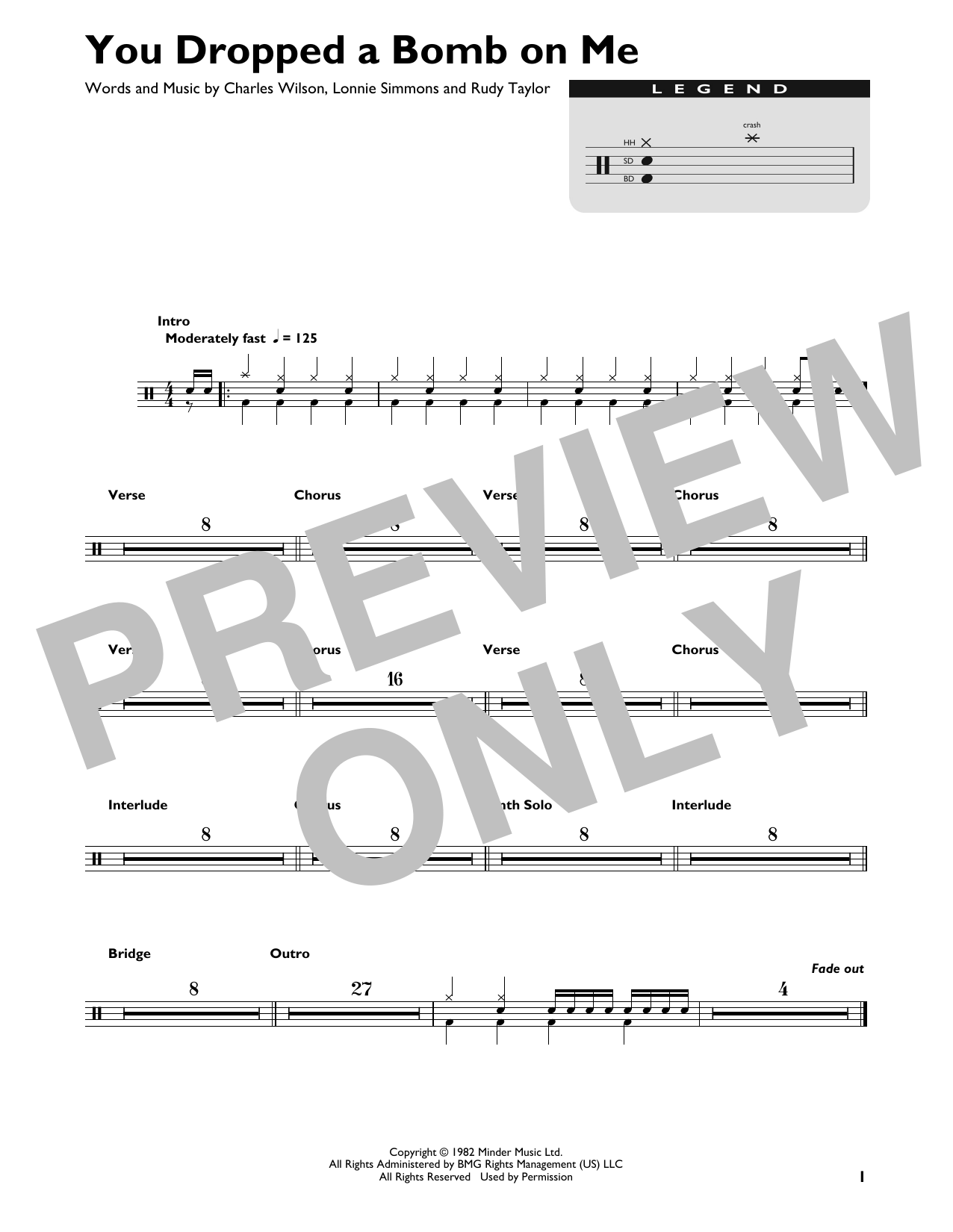
The year was 1982. Ronald Reagan was in the White House, and the dance floor was a sweaty, neon-lit war zone. Suddenly, a synthesizer whistled like a falling mortar shell. Whishhhhh-BOOM. If you were there, you remember it. If you weren’t, you’ve definitely heard it at every wedding, BBQ, or old-school set since. We’re talking about "You Dropped a Bomb on Me" by The Gap Band. It wasn't just a hit; it was a sonic shift.
The Wilson brothers—Charlie, Ronnie, and Robert—didn’t just make music. They made thunder. Growing up in Tulsa, Oklahoma, they took the gospel energy of their father’s church and smashed it into the gritty, electronic future of the early 80s. But there is a massive misconception that The Gap Band was just another disco-adjacent group that got lucky with a catchy hook.
That couldn't be further from the truth.
Honestly, the story of The Gap Band is one of survival, brotherly tension, and a weirdly specific connection to a dark chapter in American history that most people completely gloss over. You think you know the song. You probably don't know the gravity behind the name.
The Tulsa Connection and the "Gap" in History
Most people assume "Gap" refers to the clothing store. It doesn't. Not even close.
The band's name is actually an acronym for three streets in the historic Greenwood district of Tulsa: Greenwood, Archer, and Pine. This wasn’t just a random choice. These streets were the heart of Black Wall Street, the affluent African American community that was decimated during the 1921 Tulsa Race Massacre. By naming themselves The Gap Band, the Wilson brothers were carrying the weight of their hometown’s trauma and resilience into every stadium they played.
It’s heavy stuff.
Think about that for a second. While people were doing the Roger Rabbit to "Burn Rubber on Me," the band was literally walking around with a tribute to a destroyed neighborhood on their jackets. They were funk historians disguised as pop stars.
Why "You Dropped a Bomb on Me" Actually Works
From a technical standpoint, the track is a masterclass in tension. It shouldn't work. It’s got a whistle that mimics a falling bomb—which, in the middle of the Cold War, was a risky move—and a bassline that feels like it’s trying to punch through the floorboards.
Charlie Wilson’s vocals are the glue. "Uncle Charlie," as the hip-hop world later dubbed him, has a voice that shouldn't be possible. He can growl like a bluesman and then pivot to a silky-smooth tenor that makes modern R&B singers look like they’re trying too hard. He didn't just sing the lyrics; he attacked them.
The production was handled by Lonnie Simmons, who helped the band transition from the horn-heavy funk of the 70s into the synth-heavy "electro-funk" of the 80s. They used the Prophet-5 synthesizer to create those jagged, aggressive stabs. It felt industrial. It felt dangerous. It felt like the future.
But let’s be real: the "bomb" sound effect is the star. That sound was created by a synthesizer filter sweep, and it became an instant Pavlovian trigger for DJs. You hear that whistle, you run to the dance floor. Period.
The Legacy Beyond the 80s
You can't talk about The Gap Band without talking about hip-hop. If you’ve listened to G-funk, you’ve listened to The Gap Band. Snoop Dogg, Dr. Dre, and Ice Cube didn't just admire them—they basically lived in their discography.
Snoop, in particular, viewed Charlie Wilson as a mentor. This wasn’t just a "let’s sample a loop" relationship. Charlie appeared on countless tracks, bringing that 80s soul to the 90s West Coast sound. Without the foundations laid by tracks like "Outstanding" or "Early in the Morning," the entire soundscape of 90s rap would have been much thinner, much less "expensive" sounding.
The Gap Band's influence is everywhere.
- Bruno Mars' "Uptown Funk"? It owes a massive debt to the Wilson brothers.
- Guy and the New Jack Swing movement? Direct descendants.
- Every funk synth lead you've heard in the last 40 years? Probably trying to replicate Ronnie Wilson’s keyboard work.
What Most People Get Wrong About the Breakup
The band didn't just fade away. Like many family bands, the friction was real. Ronnie, Robert, and Charlie had different visions, and the industry was changing. Robert Wilson, the "Godfather of Bass," died in 2010, which effectively ended any chance of a true reunion. Ronnie passed in 2021.
Charlie, however, defied the odds. Most 80s funk stars ended up on "where are they now" specials, struggling with addiction or bankruptcy. Charlie went through his own hell—homelessness and substance abuse—but he came out the other side. His solo career in the 2000s and 2010s was nothing short of miraculous. He became the elder statesman of soul, proving that the Gap Band’s sound wasn't a fluke of the 80s; it was a timeless mastery of groove.
How to Appreciate the Gap Band Today
If you’re just getting into them, don’t stop at the hits. Sure, "You Dropped a Bomb on Me" is the entry point, but it's the tip of the iceberg.
To really understand what made them special, you have to look at the transition between Gap Band III and Gap Band IV. That’s where they found the perfect balance between the organic "stink" of live funk and the clinical precision of the 80s digital age.
- Listen to "Outstanding" for the phrasing. Notice how Charlie hangs behind the beat. That’s jazz training applied to pop.
- Check the bassline in "Burn Rubber on Me." It’s a workout. If you’re a musician, try to play it without cramping. It’s harder than it looks.
- Observe the "whistle." In "You Dropped a Bomb on Me," that sound isn't just a gimmick; it’s a rhythmic marker that dictates the energy of the entire song.
The Gap Band wasn't just a "party band." They were Tulsa’s finest, turning a history of struggle into a symphony of celebration. They proved that you could be deeply political in your identity while being undeniably fun in your delivery.
Actionable Steps for the Funk Curious
- Go beyond the Greatest Hits. Listen to the full album Gap Band IV. It’s widely considered their masterpiece and holds up better than almost any other funk record from 1982.
- Study the "Uncle Charlie" vocal technique. If you’re a singer or producer, pay attention to his use of ad-libs. He fills the space without cluttering it—a rare skill.
- Research the Tulsa origins. Understanding the history of Greenwood, Archer, and Pine adds a layer of depth to the music that makes the listening experience much more profound. It turns a dance track into a statement of existence.
- Watch live footage from the early 80s. The energy was different. They were a powerhouse live act, often outperforming the headliners they opened for.



