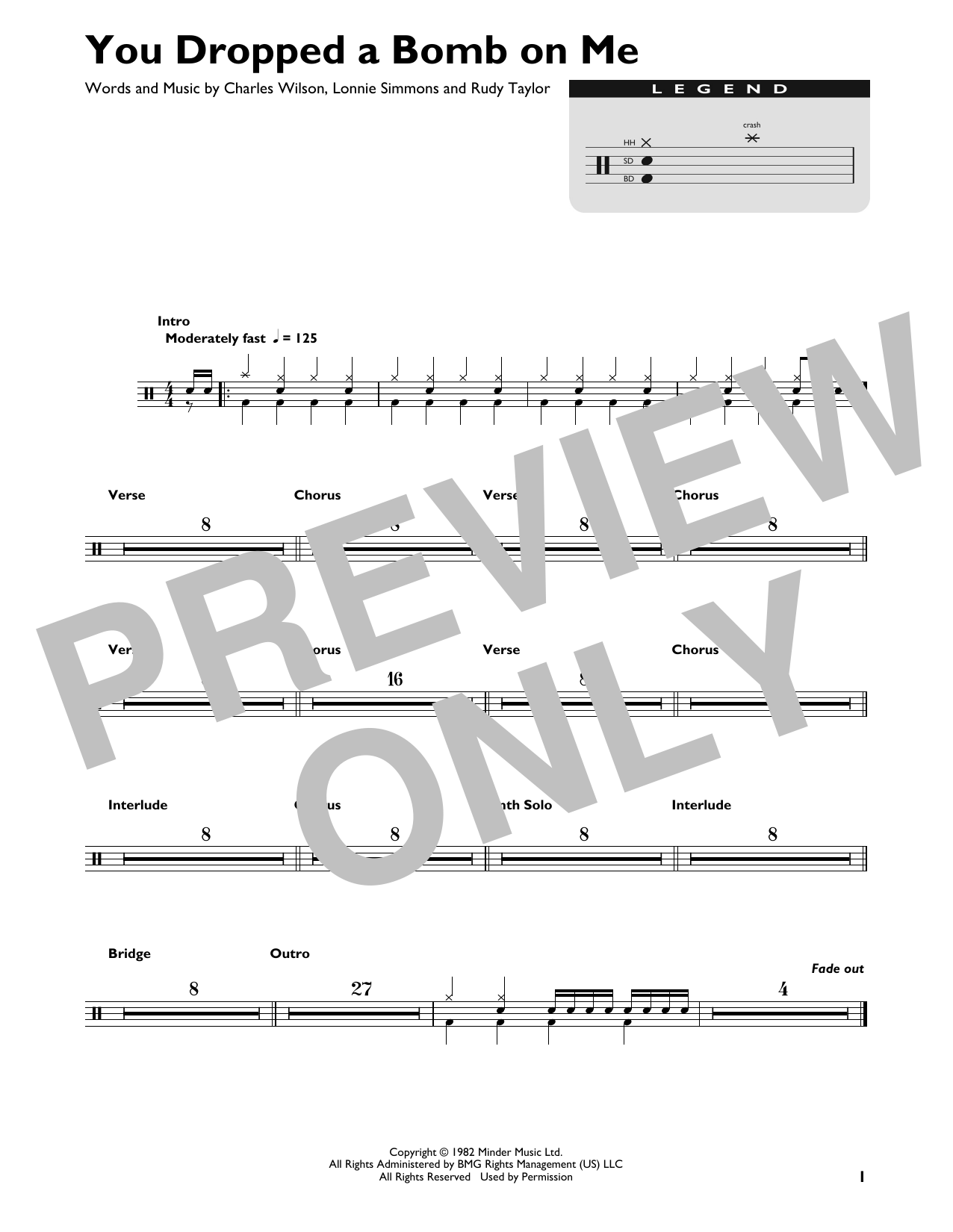
That synth bass hits and suddenly every wedding reception, backyard BBQ, and retro club night in the world just... shifts. It is visceral. When the Gap Band released "You Dropped a Bomb on Me" in 1982, they weren't just putting out another R&B track; they were launching a sonic assault that would basically redefine how we think about the dance floor. Honestly, it’s one of those rare songs where you can recognize the artist within the first three seconds. No warm-up needed.
The Sound of 1982 and the Gap Band Magic
The early 80s were a weird, transitionary time for music. Disco had technically "died" (at least according to the radio consultants of the era), and the gritty, raw funk of the 70s was being smoothed out by new digital toys. Enter the Wilson brothers—Charlie, Ronnie, and Robert. Coming out of Tulsa, Oklahoma, they brought a specific kind of Midwestern grit that was more "stomp" than "glide."
"You Dropped a Bomb on Me" was the centerpiece of their Gap Band IV album. It reached number two on the Billboard R&B charts, and it’s kinda funny looking back that it didn't hit number one, because it’s easily the most enduring track from that entire year. The song is built on a foundation of early synthesizer tech that, quite frankly, sounded like it was coming from a different planet.
That Iconic Synthesizer Bass
Lonnie Simmons, the producer and Total Experience Records founder, knew they had something different here. Most funk bands were still relying heavily on the electric bass guitar as the primary driver. But on this track, they leaned hard into the Prophet-5 and the Minimoog. It’s heavy. It’s thick. It’s got that signature "wobble" that would eventually influence an entire generation of West Coast G-funk rappers.
Charlie Wilson’s vocals are the glue. "Uncle Charlie," as he’s affectionately known now, has a voice that can go from a gritty growl to a gospel-inflected soaring high note in a heartbeat. In "You Dropped a Bomb on Me," he plays it cool. He’s playful, he’s rhythmic, and he treats the lyrics—which are basically one giant extended metaphor for being blindsided by love—with just the right amount of swagger.
Why the Bomb Metaphor Actually Worked
The song starts with that literal whistling sound of a falling bomb followed by a synthesized explosion. It’s a gimmick, sure. But it’s a gimmick that works because the song has the musical weight to back it up.
In the lyrics, the "bomb" isn't about war. It’s about that moment someone walks into your life and completely wrecks your composure. You didn't see it coming. You were minding your own business, and then—boom. It’s relatable. Everyone has had that "dropped a bomb on me" moment in their personal lives, even if they weren't wearing sequins and leather pants when it happened.
The 1980s were also the peak of the Cold War, and while the Gap Band was definitely more about the party than the protest, there’s an interesting tension in using that kind of imagery. It turned a cultural fear into a dance floor anthem. It reclaimed the noise.
The Impact on Hip-Hop and Modern Pop
If you listen to 90s West Coast rap, you are basically listening to the Gap Band’s DNA. Dr. Dre, DJ Quik, and Snoop Dogg didn't just like this music; they studied it. The way the synthesizer lead in "You Dropped a Bomb on Me" snakes through the arrangement is a direct ancestor to the "whiny" synth sounds you hear on The Chronic.
Sampling the Legend
Producers have been digging into the Gap Band’s crates for decades. Specifically:
- George Michael famously sampled the song’s drum beat and vibe for his track "I Want Your Sex."
- Ice Cube and several other N.W.A. affiliates utilized the rhythmic structure of the Wilson brothers' work to build the G-funk empire.
- Mark Ronson and Bruno Mars clearly took notes on the Gap Band’s horn arrangements and synth stabs when they were putting together "Uptown Funk."
It isn't just about direct samples, though. It’s about the "pocket." In music terms, the pocket is that sweet spot where the rhythm section sits just slightly behind the beat, creating a groove that feels heavy and unstoppable. The Gap Band were masters of the pocket. Robert Wilson’s actual bass playing (when he wasn't using synths) and the drumming on their records provided a masterclass in R&B physics.
The Tragedy and Resilience of the Wilson Brothers
Behind the hits, the story of the Gap Band—and specifically Charlie Wilson—is one of incredible highs and devastating lows. While "You Dropped a Bomb on Me" was making them superstars, the brothers were dealing with the pressures of the industry and personal demons.
Charlie eventually fell into a deep struggle with addiction and even experienced homelessness in the early 90s. It’s a part of the story most people forget when they’re dancing to the hits. But his comeback is legendary. With the help of his wife, Mahin, and the support of younger artists like Kanye West and Snoop Dogg, he reinvented himself as a solo powerhouse.
When you hear him perform "You Dropped a Bomb on Me" today, it sounds just as fresh. He hasn't lost a step. It’s a testament to the song’s construction that it doesn't feel like a "dusty" oldie. It feels like a living, breathing piece of funk history.
Breaking Down the Production
If you’re a gear head, this song is a goldmine. The production used a lot of "doubling" on the vocals to give Charlie that massive, wall-of-sound feel. The claps are crisp—likely a combination of real handclaps and a LinnDrum or similar early drum machine.
The arrangement is surprisingly sparse if you really listen for it. There isn't a lot of "clutter." You have the bass, the drums, the occasional synth stab, and the vocals. This space is what allows the groove to breathe. It’s a lesson in restraint. Modern producers often over-layer their tracks, but the Gap Band knew that if the foundation is strong enough, you don't need to hide it under twenty layers of percussion.
The Music Video Legacy
We have to talk about the video. It’s peak 80s. You’ve got the band in these sort of futuristic military outfits, the literal "bomb" graphics, and enough charisma to power a small city. It was the early days of MTV, and the Gap Band was one of the few black funk acts that managed to get significant airplay, breaking down doors for others.
The Gap Band’s Tulsa Roots
The name "Gap Band" isn't just a random choice. It’s an acronym for Greenwood, Archer, and Pine. These are the three main streets in the historic Black Wall Street district of Tulsa, Oklahoma.
This is important because it grounds the music in a specific history. The Greenwood district was the site of the 1921 Tulsa Race Massacre, one of the darkest chapters in American history. By naming their band after these streets, the Wilson brothers were carrying their heritage with them to the top of the charts. They were representing a community that had been destroyed and rebuilt.
When they sang about "dropping a bomb," there was a subconscious weight to it that perhaps a lot of the pop audience didn't fully grasp at the time. It was music born of resilience.
Why it Still Works Today
The song is a staple at sporting events. Go to any NBA game and wait for a big play; there’s a high chance you’ll hear that whistling descent and the ensuing explosion. It has become a universal shorthand for "something big just happened."
It’s also a "generational bridge" song. It’s one of the few tracks that a 20-year-old and a 60-year-old can both enjoy without it feeling forced. It has a tempo that works for almost any kind of dance—from the "Electric Slide" crowd to modern freestyle.
Common Misconceptions
People often think the Gap Band was a one-hit wonder or just a "funk" band. In reality, they had a massive string of hits like "Outstanding," "Burn Rubber on Me," and "Early in the Morning." They were incredibly versatile, shifting between hard funk and some of the smoothest ballads in R&B history.
Another misconception is that the "bomb" sound was a real field recording. It was actually a clever bit of synthesis and studio engineering. They wanted something that cut through the radio speakers, and boy, did they find it.
How to Appreciate the Gap Band Today
If you really want to dive into the genius of this track, don't just listen to the radio edit. Find the 12-inch extended mix. The way they let the groove ride out, giving the bass more room to "talk," is where the real magic happens.
You should also check out Charlie Wilson’s Tiny Desk Concert. Seeing him perform these songs in a stripped-back setting shows just how much of the "funk" was in the performance and not just the studio tricks.
Actionable Insights for Music Fans and Creators
- Study the "Space": If you’re a producer, listen to how few instruments are actually playing during the verses of "You Dropped a Bomb on Me." It proves that a great bassline and a solid vocal are often all you need.
- Acknowledge the Roots: Recognize that the Gap Band came from a specific cultural place (Tulsa’s Greenwood District). Understanding the history of the artists makes the music resonate on a deeper level.
- Embrace the Gimmick (If It Fits): The "bomb" sound could have been cheesy, but it worked because it was integrated into the rhythm. Don't be afraid of bold sonic choices if they serve the song's energy.
- Explore the Discography: Don’t stop at the hits. Dive into the album Gap Band IV and Gap Band V to see how they evolved their synth-heavy sound.
- Support the Living Legend: Charlie Wilson is still touring. Seeing him live is the best way to understand the energy that created these records over forty years ago.
The Gap Band didn't just drop a bomb on the charts; they left a permanent crater in the landscape of popular music. Every time you hear a synth-heavy bassline or a singer with a gritty, soulful rasp, you’re hearing the echoes of what the Wilson brothers started in a Tulsa garage and took to the world. It’s loud, it’s proud, and it’s never going away.



