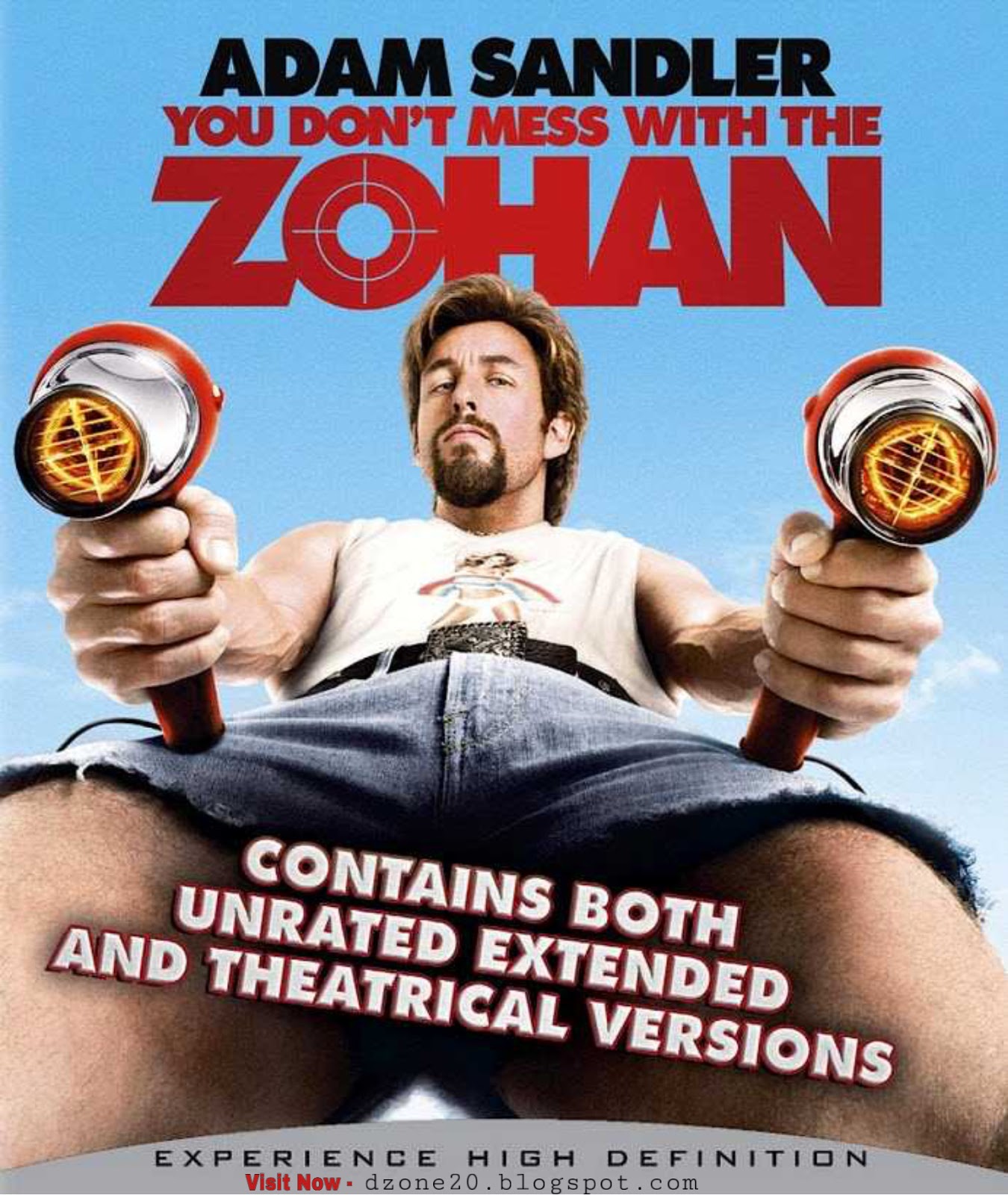
Adam Sandler has a weirdly specific superpower. He can take the most volatile, radioactive geopolitical conflicts on the planet and turn them into a movie about hair gel and hummus. It sounds like a recipe for a career-ending disaster. Yet, somehow, You Don't Mess with the Zohan 2008 didn't just survive its release; it became a cult phenomenon that people still quote while buying shoes or eating falafel.
Most comedies from the late 2000s have aged like milk in a hot car. They’re cringe-inducing for all the wrong reasons. But Zohan is different. It’s a movie that leans so hard into its own absurdity that it bypasses the typical expiration date of "topical" humor. It’s a film about an Israeli Counter-Terrorist commando who fakes his own death to become a hairstylist in New York City. That sentence alone is ridiculous. But in 2008, it was a massive swing that actually connected with a global audience. Also making waves in this space: Why Jeremy Clarkson Health Battle Matters More Than Ever.
The Weird Genius of the Zohan Premise
When you look at the credits, the DNA of this movie explains everything. You've got Adam Sandler, obviously. But then you have Robert Smigel—the man behind Triumph the Insult Comic Dog—and Judd Apatow. This was the peak of the Apatow era, but Smigel’s influence brought a surrealist, almost "Saturday Night Live" sketch energy to the feature-length runtime.
The plot is basically a fairy tale for adults. Zohan Dvir is a superhuman. He catches bullets with his nostrils. He swims like a dolphin. He’s the pride of the IDF. But he’s tired. He’s burnt out on the endless cycle of "eye for an eye" violence. His true passion? Making people’s hair "silky smooth." To do this, he has to flee to America, hide his identity, and rename himself "Scrappy Coco." More details into this topic are detailed by E! News.
It’s stupid. It’s genuinely, intentionally stupid. But beneath the jokes about Zohan’s "physique" and his obsession with Fizzy Bubblech (the fictional bright blue soda), there’s a surprisingly sharp commentary on the immigrant experience. It’s about the desire to shed the baggage of the "Old Country" and reinvent yourself in a place where nobody cares who your ancestors were fighting.
Why the Middle Eastern Humor Worked (and Stayed Relevant)
Comedy about the Middle East is a minefield. Usually, Hollywood handles it with the grace of a wrecking ball. However, You Don't Mess with the Zohan 2008 did something clever: it made both sides equally ridiculous while making them fundamentally the same.
The Israeli characters and the Palestinian characters in the film are basically mirror images. They both love the same food. They both scream at their electronics. They both have overbearing families. They both live in the same neighborhood in Manhattan, separated only by a street. The "enemy" isn't the guy across the road; it's the history that keeps them from realizing they’re the same person.
Take the character of Salim, played by Rob Schneider. He’s a Palestinian taxi driver who is obsessed with getting revenge on Zohan because Zohan once took his goat. It’s a petty, personal grudge that stands in for the larger, impersonal war. The movie suggests that the conflict is often fueled by people who aren't even on the front lines anymore—like the guys in the back of the electronics shop trying to "support the cause" by buying outdated explosives on the internet.
The film doesn't solve the Middle East. It doesn't try to. It just points out that when you put an Israeli and a Palestinian in a room together in Queens, they’re probably going to end up arguing over who has the better knock-off Sony headphones.
The "Scrappy Coco" Effect: Action Meets Absurdity
We have to talk about the action sequences. They are legitimately well-choreographed. Usually, Sandler movies are flatly shot. They look like they were filmed in a weekend at a friend's house. But Zohan had a $90 million budget. You can see it. The opening sequence on the beach, where Zohan is playing hacky sack with a grenade and grilling fish with his bare hands, looks like a legitimate action blockbuster.
This high-production value makes the comedy land harder. When a guy who looks like a CrossFit god starts doing pelvic thrusts while cutting an elderly woman's hair, the contrast is what generates the laugh. It’s the "commitment to the bit" that defines the 2008 era of comedy. Sandler didn't wink at the camera. He stayed in character. He kept that thick, exaggerated accent consistent for two hours.
The Impact of the 2008 Context
The year 2008 was a weird time for movies. We were right in the middle of the "frat-pack" comedy boom. Step Brothers came out that same year. So did Pineapple Express. You Don't Mess with the Zohan was part of a wave of movies that felt like they had no limits.
Critics at the time were split. Roger Ebert actually gave it a positive review, noting that it was "a lot of things, but one thing it isn't is boring." Others found it offensive. But looking back, the "offensiveness" is evenly distributed. It’s an equal-opportunity offender. It mocks the machismo of the Israeli military just as much as it mocks the incompetence of the would-be terrorists.
In a weird way, the movie felt more optimistic than the news. In the movie, the neighborhood eventually unites against a common corporate enemy—a developer who wants to replace their shops with a mall. It’s a classic 80s movie trope, but it works here because it gives the characters a reason to finally put down the goat-related grudges.
Factual Details and Production Trivia
- The Script: It took years to get made. The initial draft was written in 2000, but after the events of September 11, the producers felt the timing was wrong for a comedy centered on Middle Eastern tensions.
- The Hair: To prepare for the role, Sandler actually trained with real hairstylists. He learned how to hold the scissors and blow-dryer properly, though he probably didn't practice the "sensual" hair-cutting techniques shown in the film.
- The Language: Much of the "Hebrew" spoken in the movie is actually a mix of real Hebrew, gibberish, and inside jokes. The term "Fizzy Bubblech" became so popular that some fans actually tried to find it in real Middle Eastern grocery stores. It doesn't exist.
- The Cameos: It’s a quintessential Happy Madison production. You’ve got Chris Rock, Kevin James, John Turturro (who is incredible as "The Phantom"), and even a bizarre appearance by Mariah Carey playing herself.
Is Zohan Still "Silky Smooth" Today?
If you watch it now, some of the CGI looks dated. The physics of Zohan jumping across buildings are clearly "early 2000s" digital effects. But the core humor—the physical comedy and the social satire—holds up surprisingly well.
The reason it works is that it’s not mean-spirited. It’s vulgar, yes. It’s "immature," sure. But it has a genuine heart. It likes its characters. It wants Zohan to succeed in his dream of making Paul Mitchell proud.
Most importantly, it’s one of the last times a major studio spent nearly $100 million on an R-rated (well, PG-13 but pushed to the limit) original comedy that wasn't a sequel or a superhero movie. We don't get movies like this anymore. Everything is too safe now. Zohan was anything but safe.
Actionable Takeaways for Movie Lovers
If you’re planning a rewatch or seeing it for the first time, keep these things in mind to get the most out of the experience:
- Watch for the Background Gags: The signs in the Hebrew and Arabic neighborhoods are filled with jokes that aren't mentioned in the dialogue. Look at the store windows.
- Compare it to "The Dictator": If you like Zohan, watch Sacha Baron Cohen’s The Dictator. It’s interesting to see how two different comedians approached the "Middle Eastern fish-out-of-water" trope.
- Appreciate John Turturro: His performance as The Phantom is a masterclass in comedic villainy. He plays it completely straight, which makes his obsession with opening a Muppet-themed restaurant even funnier.
- Check the Soundtrack: The movie uses a lot of infected Mushroom and Middle Eastern pop music that gives it a high-energy, authentic feel that most American comedies lack.
Don't go into this expecting a high-brow political treatise. It’s a movie where a guy uses a cat as a loofah. But if you can handle the absurdity, you'll find a surprisingly sweet story about why we should all probably just stop fighting and go get a haircut.
Next Steps: Go find a bottle of hummus (don't use it as toothpaste, despite what the movie suggests) and fire up your favorite streaming service. Pay close attention to the scene where Zohan is working at "Salon G" for the first time; it's a textbook example of Sandler's physical comedy timing. If you've already seen it, look up the "behind the scenes" featurettes on how they filmed the urban parkour scenes—most of it involved more practical wirework than you'd expect for a comedy.



