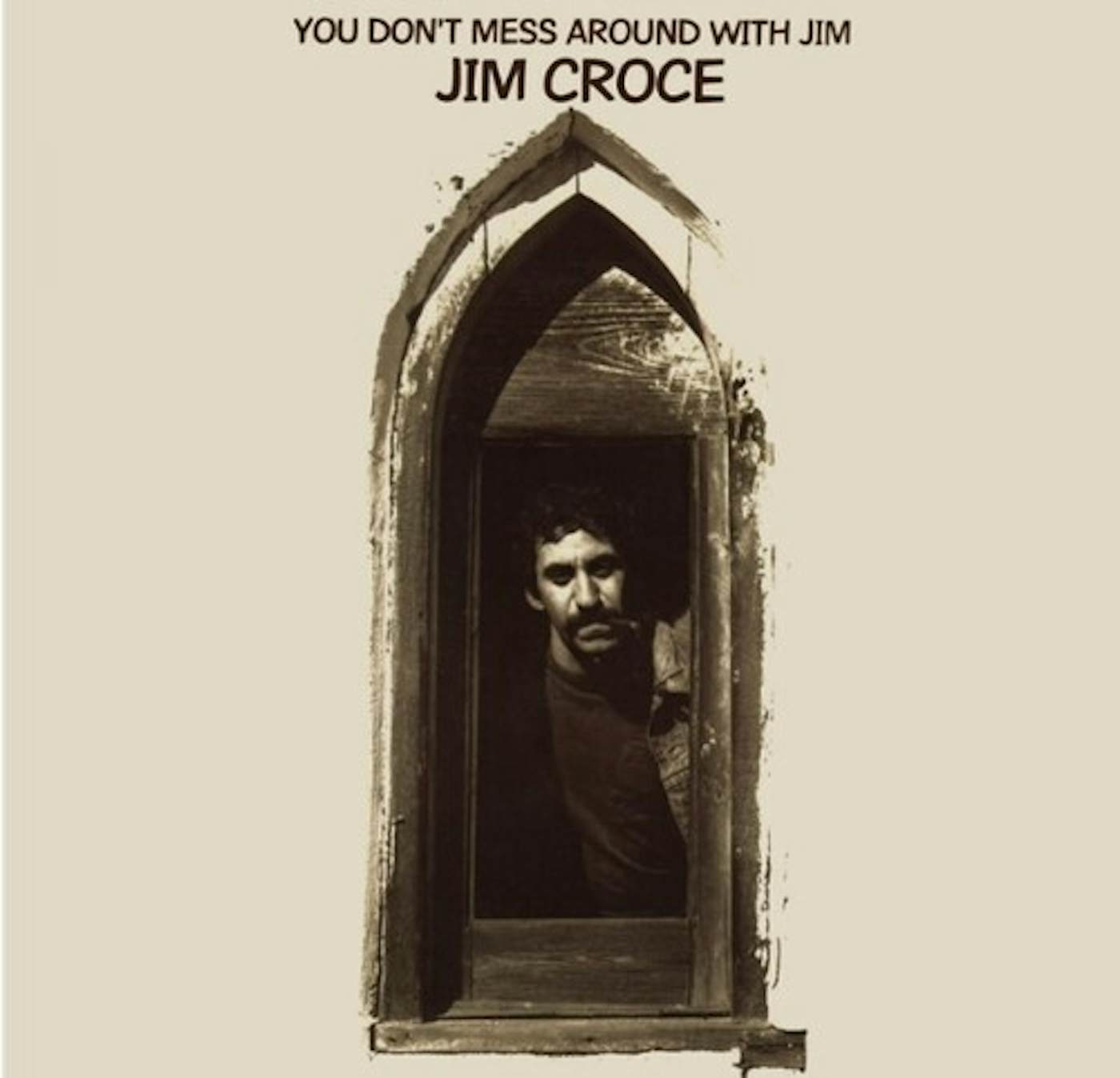
Music history is littered with guys who looked like they stepped out of a 1970s truck stop, but none of them wrote quite like Jim Croce. He had this denim-jacket-and-thick-mustache vibe that felt authentic because it was. He wasn’t a product of a record label marketing meeting. He was a guy who spent years hauling construction gear and driving trucks, soaking up the stories of the people he met in bars and on job sites. When he finally hit the airwaves with You Don’t Mess Around with Jim in 1972, he wasn't just singing a song. He was introducing us to a neighborhood he knew by heart.
The song is a masterclass in narrative songwriting. It’s funny. It’s rhythmic. Honestly, it’s a little bit of a cartoon, but it’s painted with such gritty, real-world colors that you can almost smell the stale beer and cigarette smoke of the pool hall where the story goes down.
The Man Behind the Mustache
Most people don't realize how much Jim Croce struggled before he became a household name. He wasn't some overnight success. He and his wife Ingrid had been grinding it out for years, even moving to New York City and getting chewed up by the industry. They actually made an album together in 1969 that bombed spectacularly. It was called Croce, and it sank without a trace.
Jim went back to Pennsylvania. He drove trucks. He worked on construction crews. He did what he had to do to pay the bills. But he kept writing. You Don't Mess Around with Jim came from that period of manual labor and observation. While most folk singers of the early 70s were getting deep and philosophical about the universe, Croce was looking at the guy standing next to him at the bar.
He had this incredible ear for dialogue. He knew how people actually spoke—the rhythm of the street. When he wrote about Big Jim Walker, he wasn't looking for a metaphor. He was building a character. You know the type. The guy who owns the room just by standing in it. Every town has one. Or at least, every town used to.
That Iconic Acoustic Drive
If you listen closely to the recording, the first thing that grabs you isn't the lyrics. It’s the guitar. Maury Muehleisen was Croce’s secret weapon. Seriously. Maury’s lead acoustic work provided the "zip" that made Croce's songs pop on the radio. While Jim held down the steady, driving rhythm on his Gibson, Maury would weave these intricate, delicate lines over the top.
It was a partnership that defined the sound of the early 70s. It wasn't over-produced. There weren't layers of synthesizers or massive drum kits. Just two guys with guitars and a bass player. It was lean. It was mean. It was perfect for a story about a pool-hustling giant from South Philly.
The Anatomy of a Narrative Twist
The structure of You Don't Mess Around with Jim is basically a short story set to a bluesy folk beat. You have the setup: Big Jim Walker is the king of the underground. He’s got the custom Continental. He’s got the diamond ring. He’s the guy you don't cross.
Then comes the "inciting incident." Slim, a guy from south Alabama, rolls into town looking for Jim. He says Jim owes him money. Now, in any other song, this would be the part where the hero gets beat up. But Croce loved an underdog.
The twist in the final verse is why the song stuck. Slim doesn't just hold his own; he absolutely dismantles the legend. The lyric “And he cut him in 'bout a hundred places / And he shot him in two or three” is surprisingly violent if you actually think about it, but the upbeat tempo and Croce’s delivery make it feel like a tall tale told over a campfire. It’s a classic "don't judge a book by its cover" moment.
The Success That Came Too Late
The album of the same name was released in April 1972. It was a massive hit. It reached number one on the Billboard 200. People loved the relatability of it. Croce wasn't singing down to his audience. He was one of them.
But the tragedy of Jim Croce is that he barely got to see the fruits of his labor. On September 20, 1973, just as he was becoming one of the biggest stars in the world, his plane crashed in Natchitoches, Louisiana. He was only 30. Maury Muehleisen was on that plane too.
In an instant, one of the most promising voices in American music was gone. It’s one of those "what if" scenarios that haunts music nerds. If he had lived, would he have moved into movies? His storytelling was so cinematic it seemed inevitable.
Why We Still Listen to Jim Croce
There’s something about the way Croce captured a specific slice of Americana that hasn't aged. You Don't Mess Around with Jim doesn't feel like a museum piece. It feels alive. Maybe it’s because the characters are universal. We all know a "Big Jim" who thinks he's untouchable, and we all love seeing a "Slim" come along and take him down a notch.
Also, the technical skill involved is often overlooked. To write a song that is both a catchy pop hit and a detailed narrative is incredibly difficult. Most writers sacrifice the story for the hook, or the hook for the story. Croce managed to nail both.
The song also paved the way for "Bad, Bad Leroy Brown," which followed a very similar blueprint. If you look at the two songs side-by-side, they’re almost fraternal twins. Same vibe. Same "tough guy gets his comeuppance" theme. But You Don't Mess Around with Jim was the original. It set the stage.
Misconceptions and Trivia
People often confuse Jim Croce with other singer-songwriters of the era, but he was distinct. He wasn't a "peace and love" hippie. He was a working-class storyteller.
One common misconception is that Jim Walker was a real person. While Croce based many of his characters on people he met while working various jobs, Jim Walker was more of a composite. He was an archetype of the street-level "kingpin" Croce saw in the gritty parts of Philadelphia.
Another interesting detail? The album was recorded on a shoestring budget. They didn't have the luxury of endless studio time. That’s why it sounds so immediate. What you hear is the sound of a band playing together in a room, trying to capture lightning in a bottle before the clock ran out.
Actionable Insights for the Modern Listener
If you’re just discovering Jim Croce, don't stop at the hits. To truly appreciate what made him a legend, you have to look at the craft behind the songs.
- Listen to the dynamics: Pay attention to the interplay between the two acoustic guitars. It’s a masterclass in how to arrange a song without using a full band.
- Study the lyrics: Look at how Croce uses specific details (the car, the clothes, the location) to build a world in under three minutes. It’s a lesson for any aspiring writer.
- Explore the deeper cuts: Check out "Operator (That's Not the Way It Feels)" or "New York's Not My Home." They show the more sensitive, vulnerable side of the man who wrote about pool-hall brawls.
- Watch the live footage: There are a few clips of Jim and Maury performing on TV. Seeing their chemistry and how effortless they made it look is eye-opening.
Jim Croce proved that you didn't need a flashy stage show or a complex philosophical message to connect with people. You just needed a good story, a driving beat, and the guts to be yourself. You Don't Mess Around with Jim remains the definitive proof of that. It’s a reminder that sometimes, the best songs aren't the ones that try to change the world—they’re the ones that just tell us what’s happening on the corner of the street.
To get the full experience, go back and listen to the original 1972 vinyl mix if you can find it. The warmth of the acoustic guitars on that pressing captures the "working man's" soul of the record in a way that digital remasters often lose. It’s the closest thing to sitting in a South Philly dive bar with Jim himself, watching the world go by.



