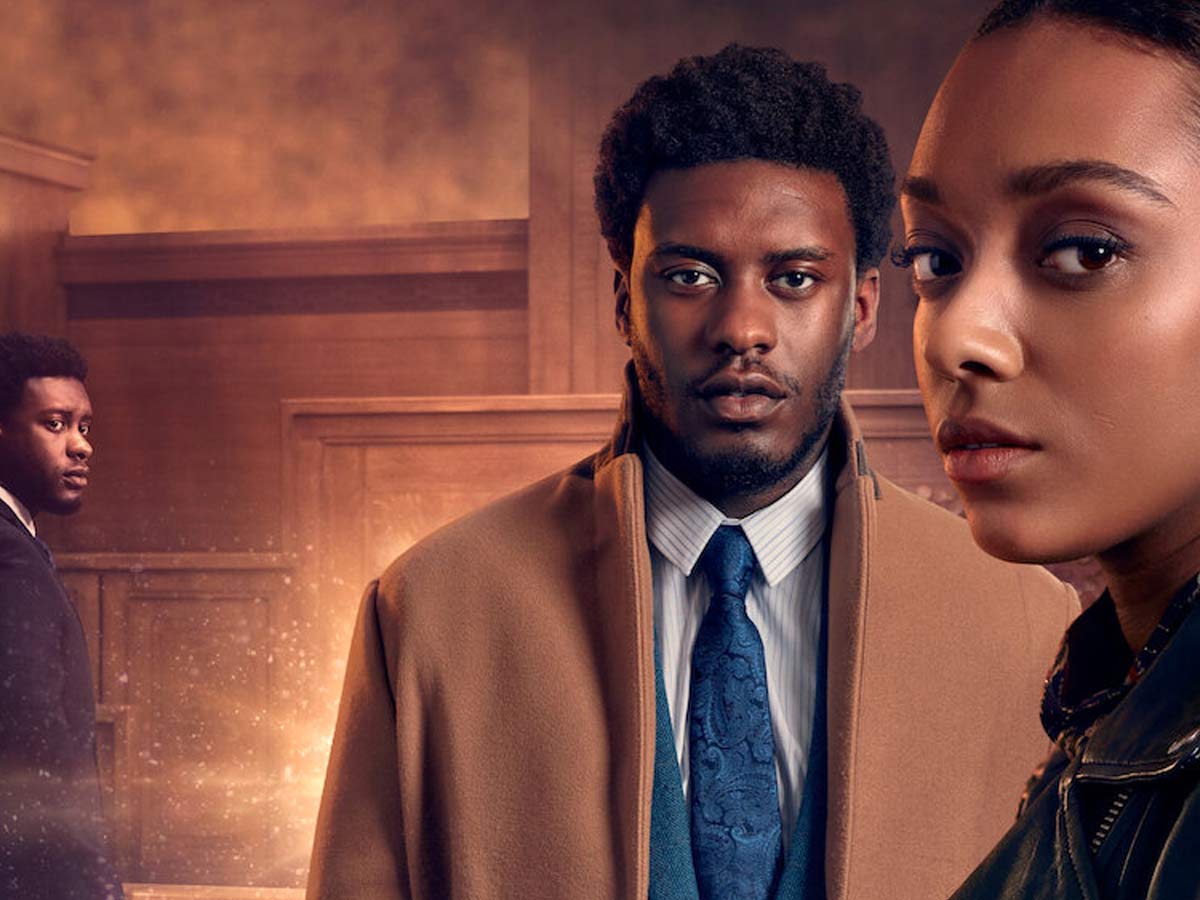
You’re sitting in a cramped, sterile London courtroom. A young man named Hero is standing in the dock, accused of a brutal murder. The evidence looks insurmountable. Blood under fingernails. A murder weapon found in his car. Cell tower pings that put him right at the scene. Most defense attorneys would be scrambling for a plea deal, but Hero does something insane. He fires his lawyer. He decides to tell his own story, his way. This is the setup for You Don’t Know Me Netflix, and if you haven't seen it yet, you're missing out on one of the most clever bits of storytelling to hit the platform in years.
It’s a four-part BBC import that found a massive second life on streaming. Honestly, it feels less like a standard police procedural and more like a fever dream of "what would you do for love?" The central hook is that we, the audience, are the jury. We are literally being spoken to by Hero (played by a phenomenal Samuel Adewunmi) as he recounts a tale involving a girl named Kyra, a lot of hidden cash, and a spiral into the London underworld that he claims was entirely accidental.
The Problem With the Narrative
Is he lying? That’s the question that drives every single minute of the show. Based on the 2017 novel by Imran Mahmood—who happens to be a real-life criminal defense barrister—the show understands the law, but it understands human psychology better. Mahmood didn’t just write a "whodunnit." He wrote a "why-say-it."
When you watch You Don’t Know Me Netflix, you’re seeing a masterclass in the "unreliable narrator." Hero tells us he’s just a car salesman who fell for the wrong girl. Kyra (Sophie Wilde) is mysterious, loves books, and disappears one day without a trace. Hero’s search for her leads him to some very dangerous people. But here’s the thing: we only see what Hero wants us to see. Every flashback is his version of the truth.
It’s brilliant. Truly.
Why the Ending Leaves Everyone Screaming at Their TV
Most shows give you a tidy bow. They show the handcuffs clicking or the person walking free. This show? It refuses. The finale of You Don’t Know Me Netflix is one of the most debated endings in recent streaming history. Without spoiling the specific beat-by-beat, the show concludes by reminding you of the title. You don't know him. You don't know if he's a victim of circumstance or a cold-blooded manipulator who just gave the performance of a lifetime to save his own skin.
People hate ambiguity. We want answers. But the reality of the British legal system—and any legal system, really—is that "the truth" is often just the most convincing story told in the room. Hero admits to some crimes to make his denial of the big one feel more authentic. It’s a gamble. It’s a high-stakes chess match played with words instead of pieces.
The show makes you complicit. If you believe him, are you being empathetic or are you being a sucker? If you think he’s guilty, are you being logical or are you just cynical?
Realism vs. TV Drama
Since Mahmood is a barrister, the courtroom procedures feel heavy. They feel real. The way the prosecution (played with a chilling, quiet efficiency by Natasha Little) picks apart his story is painful to watch. She uses the "facts"—the cold, hard data—to paint him as a criminal. Hero uses "emotion"—the messy, human stuff—to paint himself as a lover.
There’s a specific nuance here regarding race and class in the UK legal system that shouldn’t be ignored. Hero is a young Black man from South London. He knows how the jury looks at him. He mentions it. He understands that the "facts" often carry a bias before he even opens his mouth. This adds a layer of social commentary that makes the show feel urgent rather than just another bingeable thriller.
The Supporting Players
- Kyra: Sophie Wilde is haunting. She doesn't have a lot of dialogue in the present day, but her presence looms over everything. Is she a damsel in distress or the architect of the chaos?
- Blessing: Hero’s sister. She’s the moral compass, or at least we think she is. Her involvement in the later episodes raises the stakes from "Hero might go to jail" to "Hero’s whole family might be destroyed."
- Jamil: The "villain" of the piece, though even he feels like a product of his environment. His interactions with Hero are tense because they represent the world Hero was trying to avoid but eventually got sucked into.
Breaking Down the "Two Versions" Theory
The internet is full of theories about what actually happened. If you look closely at the cinematography, some fans point out that the lighting changes when Hero might be stretching the truth.
Basically, there's a theory that the "true" events are hidden in the background of the shots, while the "narrative" Hero provides is what we see in the center. For example, look at the scene in the club. The way Hero describes his interaction with the gang members is almost too cinematic, too "heroic." It feels like a movie. Maybe because, in his head, it has to be a movie for the jury to believe he’s the good guy.
The prosecution’s version is ugly. It involves drug debts and premeditated violence. Hero’s version involves a lost library book and a desperate search for a missing soulmate. The truth likely lives somewhere in the middle, in that gray area where most of us actually live our lives.
What to Do After You Finish the Show
Don't just move on to the next thing. This show demands a bit of processing.
First, go read about the "Submission of No Case to Answer." It’s a real legal maneuver mentioned in the show that actually carries a lot of weight in English law. Understanding the legal hurdles Hero was facing makes his decision to represent himself even more terrifying.
Second, check out Imran Mahmood’s other work. He wrote All I Said Was True, which follows a similar vein of questioning how we perceive guilt and innocence. He has a way of making you feel like you’re the one being judged.
Finally, watch it again. Specifically the first episode. Once you know how it ends, the way Hero looks at the jury in the opening minutes feels completely different. The first time, it looks like a plea for help. The second time, it looks like a challenge.
Next Steps for the Viewer:
- Compare the TV ending to the book’s ending; they aren't identical in how they leave the viewer feeling.
- Research the "Beyond a Reasonable Doubt" standard in the UK versus the US. The nuances in jury instructions play a massive role in why Hero tells the story the way he does.
- Watch Samuel Adewunmi in The Last Tree. His performance there shows the same range of vulnerability and strength that makes him so unreadable—and so compelling—in this series.



