It was 1995 when a voice in a video game first called me an idiot. Most games back then were trying to be polite, or at least heroically epic. Then came You Don't Know Jack. It didn't care about your feelings. If you took too long to answer a question about disco or 18th-century literature, the host, Cookie Masterson, would sigh with the kind of genuine disappointment usually reserved for parents looking at a failing report card. It was a revelation.
The game basically dragged trivia out of the dusty, wood-paneled basements of Jeopardy! and threw it into a loud, obnoxious Chicago dive bar. Created by Jellyvision (now Jackbox Games), it blended high-brow knowledge with low-brow humor. Think of it as "high-low" culture before that was even a buzzword. It wasn't just a game; it was an interactive comedy show that happened to have a scoring system. If you liked this piece, you should read: this related article.
The Secret Sauce of the Screw
Why does it still feel so fresh? Honestly, it’s the writing. Most trivia games are dry. "What is the capital of France?" Boring. You Don't Know Jack would frame it as a question about a mime stuck in a box in the shadow of the Eiffel Tower, then force you to connect it to a brand of cigarettes. It required lateral thinking.
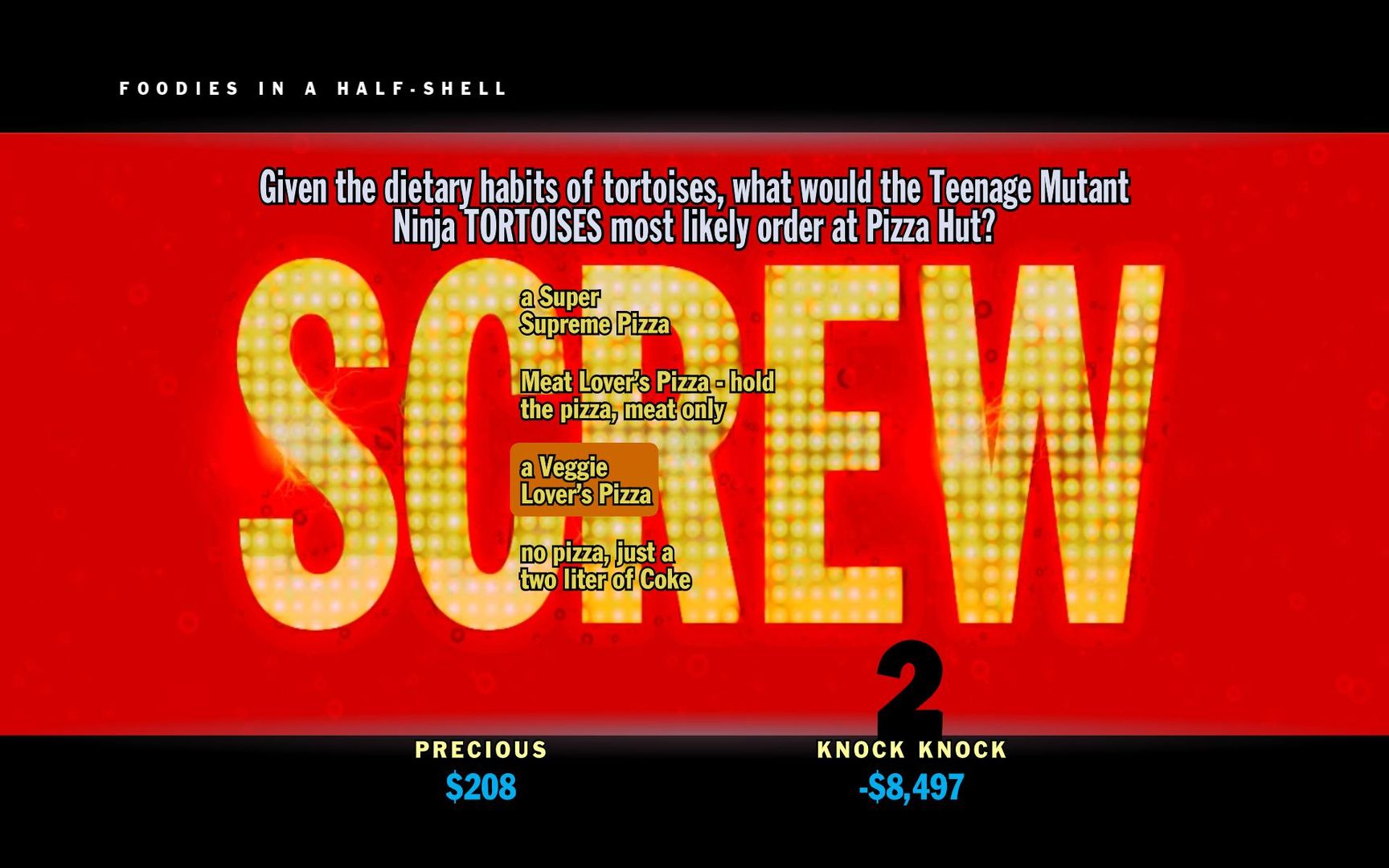
The "Screw" was the ultimate friendship-ender. If you knew your buddy didn't know anything about 90s boy bands, you could "screw" them, forcing them to answer in five seconds. If they got it right, you lost points. If they failed—which was the point—you cackled. This wasn't about being the smartest person in the room. It was about being the most strategically annoying. For another look on this event, see the latest coverage from BBC.
Harry Gottlieb, the founder of Jellyvision, understood something essential about play. He knew that people don't just want to win; they want to perform. The game wasn't a computer program; it was a host. The internal logic of the game felt sentient. If you typed in a curse word as your name, the game would roast you for ten minutes. It felt like the software was actually watching you.
From CD-ROMs to the Jackbox Party Pack
The transition from the 90s PC era to the modern "Party Pack" era is a wild case study in business pivots. For a long time, You Don't Know Jack was actually dead. The franchise went dormant in the mid-2000s because the "casual gaming" market was shifting toward mobile phones and consoles that didn't support the weird, cult-classic vibe of the original.
Then came the 2011 reboot. It was sleek. It was fast. But the real magic happened when Jackbox Games realized that controllers are the enemy of fun. Nobody has four Xbox controllers just lying around for a party. But everyone has a smartphone. By turning the phone into the controller, they removed the barrier to entry. Suddenly, your grandma could play You Don't Know Jack without having to learn what a "trigger button" was.
It’s worth noting that the game’s DNA is everywhere now. When you play Quiplash or Drawful, you’re playing the descendants of Cookie Masterson’s snark. The humor is a bit more democratized now—players write the jokes—but the foundation of "competitive comedy" remains the same.
Why We Still Suck at Trivia
Most people lose at You Don't Know Jack because they overthink. The game loves to use "Dis n' Dat" rounds or the "Gibberish Question." These aren't tests of rote memorization. They are tests of pattern recognition under pressure.
- The Dis n' Dat: Is this a type of cheese or a member of the Prussian aristocracy? You have seven seconds. Go.
- The Jack Attack: The finale. Words fly across the screen. You have to match them based on a cryptic clue given at the start.
If you’re trying to build a "Trivia Brain," you have to stop reading encyclopedias and start watching more weird late-night TV. The game rewards a broad, shallow pool of knowledge. It’s the ultimate "Jack of all trades" experience. Hence the name.
The Cultural Impact of the Voice
We have to talk about the hosts. While there have been several, Cookie Masterson (voiced by Tom Gottlieb) is the definitive voice of the franchise. His delivery is a masterclass in comedic timing. Recording these games is a nightmare—thousands of lines of dialogue, many of which most players will never hear unless they do something specific, like pausing the game for too long or getting every question wrong.
That level of detail is why the game has E-E-A-T (Experience, Expertise, Authoritativeness, and Trustworthiness) in the world of game design. It’s not a cheap trivia app made in a weekend. It’s a scripted piece of entertainment. When the game mocks you, it’s because a writer spent three hours making sure that mockery landed perfectly.
How to Actually Win (A Tactical Guide)
Stop being polite. Seriously. If you want to win at You Don't Know Jack, you need to embrace the chaos.
- Save your Screws. Don't use your Screw in the first round. The point values double in round two. Screwing someone on a 4,000-point question is a much bigger swing than doing it early on.
- Listen to the preamble. The host often hides the answer, or a massive hint, in the flavor text before the question even appears. If Cookie is talking about "baking a cake," the answer probably has something to do with flour, heat, or chemistry.
- The Gibberish Question Hack. These are the ones where you have to find a phrase that rhymes with a nonsense sentence. Don't look at the nonsense words. Say them out loud. Your ears will recognize the rhyme before your eyes do.
- Embrace the Wrong Answer of the Game. In many versions, there is a specific "wrong" answer that relates to a sponsor or a running gag mentioned earlier. If you find it, you get massive bonus points and a collectible. It’s high risk, high reward.
The Technical Evolution
Technically speaking, the game shifted from pre-rendered video files in the 90s to a much more dynamic, web-based engine today. This allows for the "streaming" culture to take over. You can play You Don't Know Jack on Twitch with 10,000 people in the "audience" voting on the answers. It’s a massive scale-up from the three-person keyboard huddle of 1996.
But even with the tech upgrades, the soul is the same. It's still about that feeling of being just slightly less smart than you thought you were. It's about the tension of the buzzer.
What's Next for the Franchise?
As we look at the gaming landscape in 2026, the demand for "couch co-op" is higher than ever, despite—or perhaps because of—how digital our lives have become. People want to be in a room together. They want to laugh. They want to yell at a screen.
The brilliance of the Jackbox model is that it doesn't need a "You Don't Know Jack 2026" every year. It needs to keep refining the humor to match the current cultural moment. Trivia gets dated fast. References to The Rachel Haircut don't land with Gen Z. The writers at Jackbox are constantly updating the "vibe" while keeping the snarky, cynical core that made the original a hit.
Actionable Steps for Your Next Game Night:
- Audit your hardware: Ensure your Wi-Fi can handle everyone being on their phones simultaneously. If the "host" lag hits, the timing-based questions become impossible.
- Pick the right crowd: This game fails if people are too sensitive. You need a group that can handle being called a "moron" by a fictional digital host.
- Mix the old and new: If you can find a way to play the classic 90s versions (available on Steam), do it. The humor is a fascinating time capsule of Gen X irony. Then, jump into Full Stream to see how the pacing has evolved for the TikTok era.
- Don't skip the credits: Some of the best jokes in the history of the franchise are hidden in the audio that plays over the end credits. It's a reward for sticking around.
The legacy of You Don't Know Jack isn't just about facts. It's about the fact that learning things can be loud, messy, and offensive. It proved that you could be smart and a total idiot at the same time. That’s a lesson that never goes out of style.
Next Steps for Enthusiasts:
To truly master the game, start by exploring the Jackbox Party Pack 5, which contains You Don't Know Jack: Full Stream. This version is the most refined iteration of the classic formula, featuring modern streaming integrations and updated question formats. Once you've conquered the digital arena, look into the history of Jellyvision's transition from educational software to comedy gaming; it provides deep insight into why their question structures are so effective at teaching (and mocking) simultaneously. Log into your Steam or console account tonight, grab at least three friends, and commit to using your "Screw" only when the stakes are at their absolute highest. That is the only way to play.