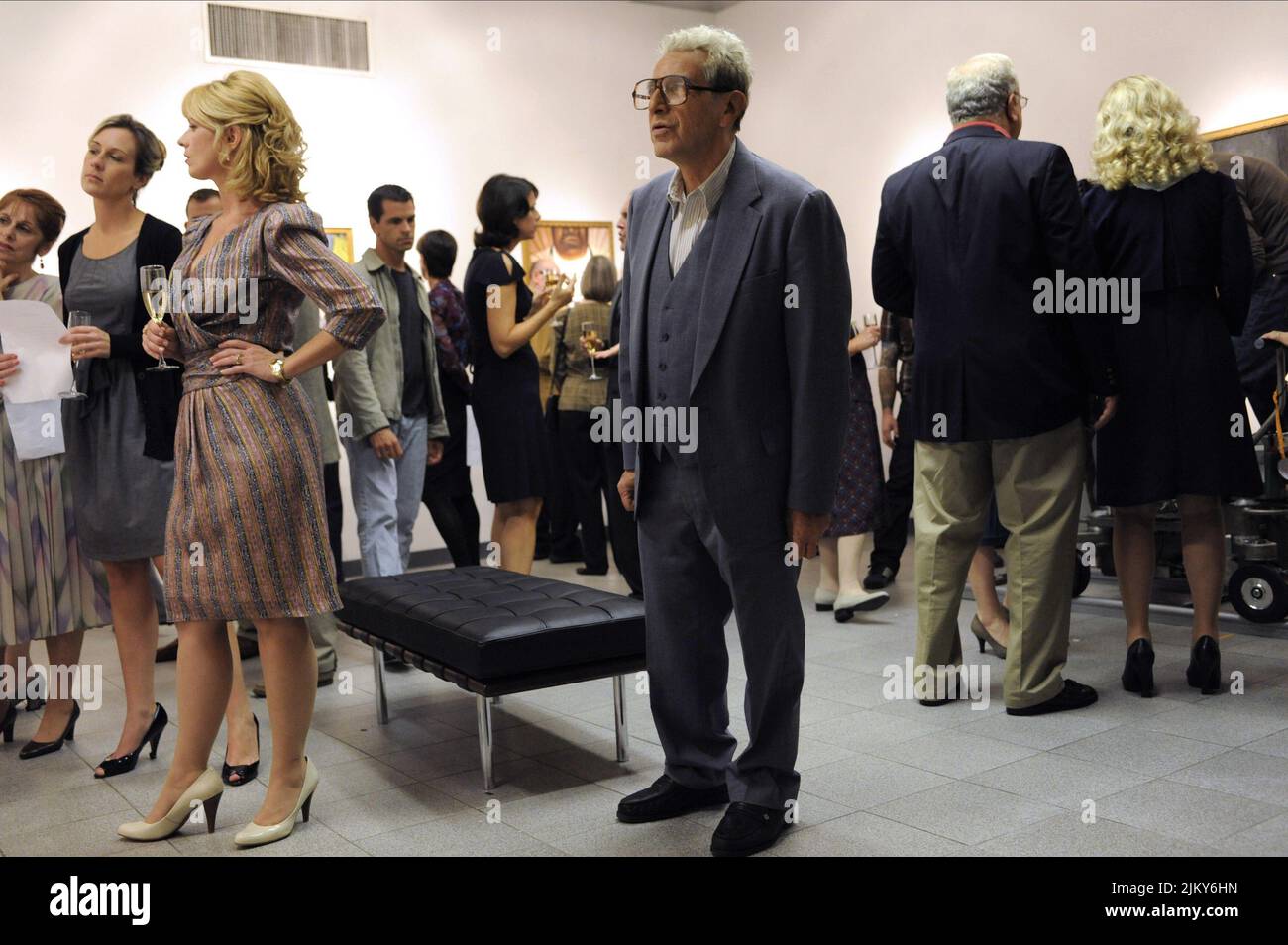
Jack Kevorkian was a weird guy. Let’s just start there. He wasn't some polished activist with a PR team. He was a retired pathologist from Michigan who liked painting macabre art and playing jazz on the flute. But when Al Pacino took on the role in the 2010 HBO film You Don't Know Jack, he didn't just play a "controversial figure." He disappeared.
Honestly, by 2010, we all thought we knew what a "Pacino performance" looked like. We expected the shouting. The "Hoo-ah!" energy. The volcanic eruptions of Scent of a Woman or Any Given Sunday.
Instead, we got something quiet. Scratchy. Stubborn.
The Performance That Reminded Us Who Al Pacino Is
You Don't Know Jack isn't your typical biopic. It doesn't start with Jack as a kid or spend forty minutes explaining his trauma. It just drops you right into the 1990s, when Kevorkian decided that "dying is not a crime."
Pacino plays him with this hunched, eccentric gait. He’s wearing these thrift-store sweaters and driving a beat-up Volkswagen van. It’s a masterclass in subtlety, which is a funny thing to say about a movie where the main character helps people end their lives.
He didn't even meet the real Kevorkian before filming. He said he just "absorbed" him. And it worked. He captures that specific brand of Midwestern arrogance—the kind where a guy is so sure he's right that he'll go to prison just to prove a point.
It wasn't just a solo act
You've got John Goodman as Neal Nicol, Jack’s longtime friend. Their chemistry is basically the heart of the movie. They bicker like an old married couple over poker games and medical equipment.
Then there’s Susan Sarandon playing Janet Good and Brenda Vaccaro as Jack’s sister, Margo. These women weren't just background characters; they were the only ones who could handle Jack’s prickly personality.
Why the Movie Caused Such a Stir
The film, directed by Barry Levinson, doesn't really try to make you "like" Jack Kevorkian. It shows him as he was: obsessive, sometimes reckless, and deeply impatient with anyone who didn't see the world his way.
The story tracks his "Mercitron" and "Thanatron" machines—basically DIY devices made from flea market parts that allowed terminally ill patients to trigger their own deaths. It’s heavy stuff.
What Really Happened With the Thomas Youk Case
Most people remember the ending. The movie builds up to the moment Jack crossed the line. For years, he just "assisted." He’d set up the machine, but the patient pulled the trigger.
Then came Thomas Youk.
Youk had ALS. He couldn't move his hands to pull a lever. So, Jack did it for him. He recorded the whole thing and sent the tape to 60 Minutes. He literally dared the state of Michigan to prosecute him.
They did.
In the movie, you see the hubris. Jack fires his high-profile lawyer, Geoffrey Fieger (played by Danny Huston), and decides to represent himself. It’s a train wreck. He thinks he’s going to turn the courtroom into a grand philosophical debate about human rights. Instead, the judge just sees a man who broke the law.
He ended up serving eight years in prison.
The Legacy of You Don't Know Jack
Looking back, the film feels even more relevant now. In 2026, the conversation around "medical aid in dying" has changed drastically, with more states and countries legalizing versions of what Kevorkian fought for.
But back in the 90s? He was "Dr. Death." He was a villain to some and a hero to others.
Pacino’s performance snagged him an Emmy, a Golden Globe, and a SAG Award. It was a reminder that when he’s given a script with meat on its bones—written by Adam Mazer and based on the book Between the Dying and the Dead—Pacino is still the heavyweight champion.
Actionable Takeaways for Movie Buffs
If you’re planning to revisit this one or watch it for the first time, here’s how to get the most out of it:
- Watch for the "Disappearing Act": Look at Pacino’s eyes. He lacks the "movie star" spark on purpose. He looks like a guy who spends too much time in a basement.
- Context Matters: Remember that this was 2010. The legal landscape for assisted suicide was much bleaker then.
- The Soundtrack: Pay attention to the music. Kevorkian’s obsession with Bach is used throughout the film to show his rigid, mathematical view of the world.
- Don't skip the "60 Minutes" scene: The film recreates the Mike Wallace interview with incredible precision. It’s the turning point of the whole narrative.
It’s not a "feel-good" movie. It’s a "think-hard" movie. And honestly, that’s exactly what you want when you’re dealing with a guy like Jack Kevorkian.
To dive deeper into Al Pacino’s later-career highlights, compare his performance here with his role as Meyer Offerman in Hunters or his turn in The Irishman. You’ll see the same DNA of a man who knows exactly how to command a room without saying a word.



