You’ve seen the phrase. It’s plastered across Reddit threads, Twitter bios, and cryptic TikTok captions. "You do not recognize the bodies in the water." For the uninitiated, it sounds like a line from a forgotten horror movie or perhaps a weirdly specific threat. But for anyone who has spent time in the digital trenches of the SCP Foundation community, it is a trigger for one of the most effective psychological horror stories ever written on the internet.
SCP-2316 is more than just a spooky entry in a database. It is a masterpiece of "cognitohazardous" fiction. It plays with your perception. It forces you to question what is real. Honestly, it’s one of those rare pieces of collaborative writing that actually manages to make the reader feel like they are part of the containment breach.
What Exactly Is the SCP-2316 Anomaly?
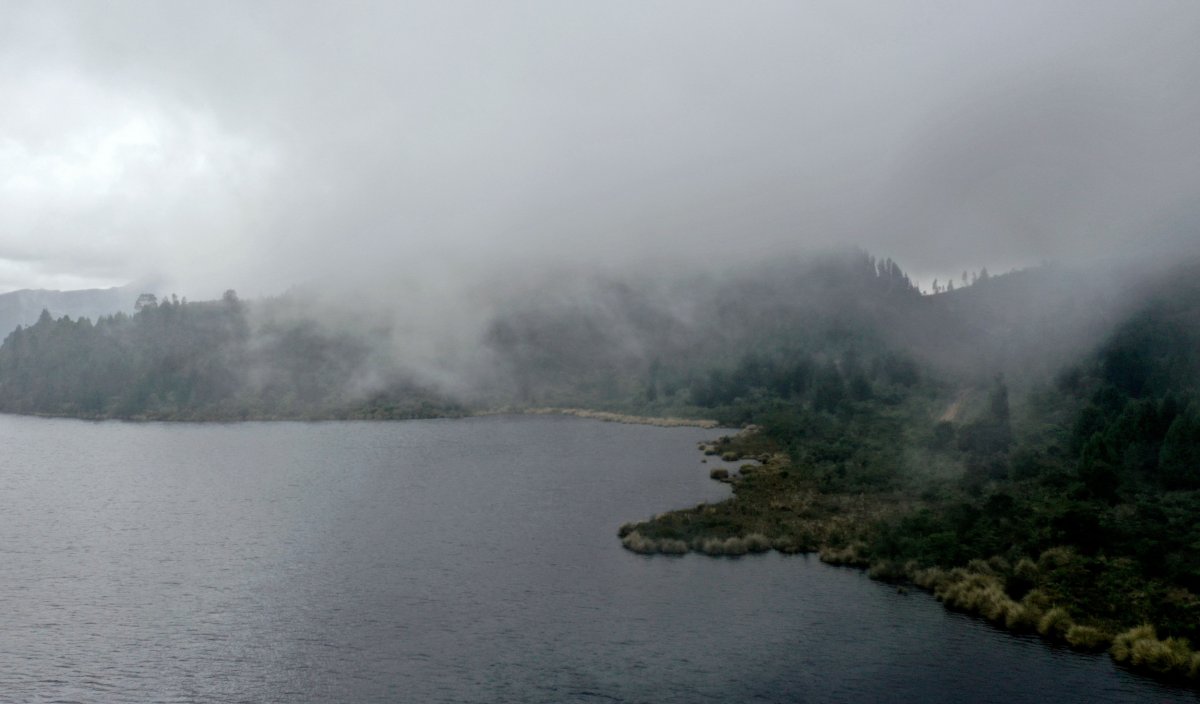
At its core, SCP-2316 describes a collection of human corpses floating in a lake. These aren't just any bodies, though. They are anomalous. When you look at them, you feel a deep, soul-shaking sense of recognition. You might think you see your high school best friend. Or maybe your cousin who moved away years ago. Perhaps it’s a neighbor. The anomaly's primary defense—and its primary way of "feeding"—is this irresistible urge to believe you know who those people are.
The "Class of '76" is the recurring theme here. This isn't just a random group of bodies; they are tied to a larger, sprawling narrative within the SCP universe involving a group of students from a specific high school who disappeared under bizarre circumstances.
If you acknowledge that you recognize them, you're basically toast. The lore suggests that once you "recognize" a body, you are compelled to enter the water to "save" them. You don't come back. You just become another floating body in the lake, waiting for the next person to walk by and think they recognize you. It’s a cycle of grief and memory used as a predatory trap.
Why "You Do Not Recognize the Bodies in the Water" Became a Meme
Memes are weird. Usually, they’re funny. This one is unsettling. The repetition of the phrase is a direct reference to the "Cognitohazard Verifier" used in the original SCP-2316 entry written by the author Shaggydredlocks.
In the fiction, the Foundation forces personnel to repeat this phrase as a mantra. It’s a mental anchor. By saying "I do not recognize the bodies in the water," you are supposedly reinforcing your mind against the anomaly's influence. It’s a way of lying to yourself to stay alive.
But here is where the writing gets clever: the article itself is "infected." As you read the official entry on the SCP Wiki, the text starts to change. Hidden text appears. The layout breaks. The mantra begins to fail. The article starts asking you if you remember your classmates. It asks if you remember the lake. It’s meta-fiction at its absolute best because it turns the reader into the subject of the experiment.
The Horror of the Class of '76
The "bodies in the water" aren't an isolated incident. They belong to a broader "canon" known as the Class of '76. This is a collection of stories that lean heavily into nostalgia-based horror. Think about it. Nostalgia is a powerful emotion. It’s usually warm and fuzzy, but in the world of SCP, it's weaponized.
The Class of '76 stories often involve:
- Disappearing graduating classes.
- Anomalous school yearbooks where the faces fade or change.
- Low-fidelity recordings of marching bands that cause listeners to vanish.
- A general sense of "Synesthesia," where memories of the past are distorted and painful.
The genius of SCP-2316 is that it taps into a universal fear: the idea that our memories are fallible. We trust our brains to tell us who our friends are. If your brain tells you that’s your brother floating in the lake, how do you argue with your own eyes? The Foundation's solution is brutal—they tell you to ignore your heart and your eyes. They tell you to prioritize the "truth" of the containment protocol over the "truth" of your own senses.
Breaking Down the Hidden Content
If you go to the actual SCP-2316 page, don't just skim it. You’ll miss the point. You have to look for the "hidden" elements. There are invisible text blocks that you can only see if you highlight the page with your mouse.
There are also several "collapsibles"—buttons you click to expand the text—that lead to a descent into madness. The final collapsible is often a long, rambling narrative that breaks the standard clinical tone of the Foundation. It stops being a scientific report and starts being a desperate plea or a delusional rant from someone who has clearly succumbed to the anomaly.
This is a hallmark of Series IV SCPs. Earlier entries (Series I) were often just "spooky monsters." By the time we got to the 2000s and 3000s, the writers started experimenting with the format of the website itself to tell the story.
Fact vs. Fiction: Is the Lake Real?
Let’s be clear: there is no actual lake filled with the Class of '76. The SCP Foundation is a creative writing project. However, the author, Shaggydredlocks, used very grounded, realistic descriptions to make it feel like a real place. The setting is often associated with rural, wooded areas that feel like a "back home" location for many readers.
The psychological phenomenon it mimics is real, though. It’s called Pareidolia—the human tendency to see familiar patterns (like faces) in random stimuli (like ripples in water or clouds). Combine that with False Memory Syndrome, and you have the biological recipe for why SCP-2316 is so creepy. It takes real quirks of human psychology and turns them into a supernatural death trap.
Common Misconceptions About SCP-2316
People get a few things wrong about this one quite often.
First, it’s not just about "ghosts." It’s a cognitohazard. A ghost is a spirit; a cognitohazard is an idea or a visual stimulus that breaks your brain. The danger isn't that the bodies will jump out and grab you. The danger is that you will want to go to them.
Second, the "bodies" might not even be physical corpses in the traditional sense. Some interpretations of the lore suggest they are manifestations of the observers' own guilt or forgotten pasts. If you didn't have a "Class of '76," maybe you'd see something else. But the specific anomaly documented here is tied to that specific event.
Third, the mantra isn't a "spell." It’s a psychological conditioning tool. It doesn't have magical powers to ward off evil; it’s just a way for the Foundation to filter out people who are already too far gone. If you can’t say the phrase and mean it, you’re already considered "lost."
How to Explore the Lore Further
If you’ve fallen down the rabbit hole of the bodies in the water, you shouldn't stop at the main article. The SCP ecosystem is vast. To get the full picture, you need to look into the supplementary materials that provide context for the Class of '76.
- Read SCP-1833 (The Class of '76): This is a yearbook that changes based on who is reading it, usually showing a much darker version of their high school experience.
- Look up "Remembrance" on the SCP Wiki: This is a tale series that dives deep into the collective memory anomalies.
- Check out SCP-332 (The 1976 Kirk Lonwood High School Marching Band): This provides more "audio" context for the tragedy that befell these students.
The best way to experience this lore is to read it in a dark room, away from distractions. The "bodies in the water" narrative relies heavily on atmosphere. It’s about that nagging feeling in the back of your mind that something from your past is catching up to you.
Actionable Steps for New Readers
If you want to truly understand why this anomaly is a staple of internet horror, do the following:
- Visit the official SCP-2316 page and highlight every blank space. Look for the text hidden in white font.
- Compare it to SCP-2317. While the numbers are close, the stories are vastly different (one is a world-ending entity, the other is a personal, psychological horror). Seeing the contrast helps you appreciate the range of the Foundation.
- Search for "Class of '76" tag on the SCP Wiki. This will give you a list of every article connected to this specific universe, allowing you to piece together the timeline of the disappearance.
- Listen to a "Declassification" podcast or video. Channels like The Exploring Series or SCP Explained offer deep dives that connect the dots between the subtle clues hidden in the text.
Remember: the story is designed to make you feel uneasy. If you find yourself staring at the screen a little too long, or if the phrase "You do not recognize the bodies in the water" starts echoing in your head, just take a break. It's just a story. Probably.



