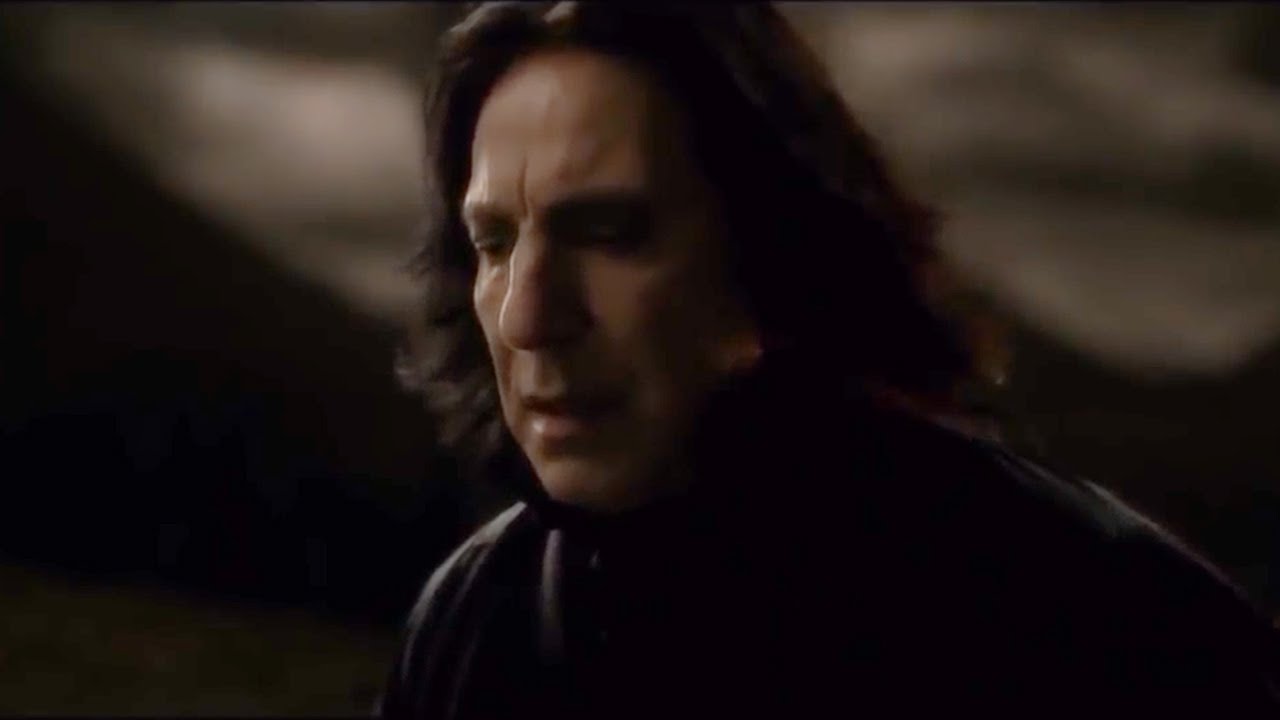
It’s the sneer. That specific, curdled look on Alan Rickman’s face as he deflects Harry’s desperate Hex. If you grew up with the books or the movies, you know the line by heart. "You dare use my own spells against me, Potter?" It’s a moment of peak cinematic and literary irony. But honestly, it’s more than just a cool quote for a meme. It is the exact moment the entire power dynamic of the Harry Potter series shifts.
Harry is angry. He’s grieving Sirius. He’s watching Dumbledore fall. He wants blood.
He tries to use Sectumsempra, a spell he found in an old, crusty textbook belonging to the "Half-Blood Prince." He thinks he’s being clever. He thinks he’s found a secret weapon that the "adults" didn't want him to have. Then Snape just bats it away like a nuisance fly. The revelation that Severus Snape—the man Harry has loathed for six years—is actually the brilliant, tortured teenager who invented those spells is a gut-punch. It’s also one of J.K. Rowling’s most effective pieces of foreshadowing.
The Half-Blood Prince Reveal Wasn't Just About Identity
People talk about the reveal like it’s a "gotcha" moment. It’s not. It’s actually a masterclass in character building. Think about it. For the first five books, Snape is just the "mean teacher." He’s the guy who docks points from Gryffindor because he’s petty. But the moment he reveals he wrote those spells, he stops being a caricature. He becomes a prodigy.
Imagine being Harry in that scene. You’ve spent months bonding with this "Prince" through the margins of a book. This person taught you how to brew perfect potions. They taught you how to dodge enemies. You felt a kinship with them. Then, in a flash of green light and a rainy escape across the Hogwarts grounds, you realize your mentor and your worst enemy are the same person. It’s messy. It’s uncomfortable. It’s great writing.
The line "You dare use my own spells against me" carries the weight of Snape’s entire childhood. He grew up in a household full of shouting and neglect. He had to invent things to survive. Those spells weren't just homework; they were his armor. When Harry uses them, Snape isn't just defending himself—he’s reclaiming his property. He’s telling Harry that he is outclassed in ways he can’t even fathom.
Why This Quote Blew Up Online
Memes are weird. They take something deeply emotional and turn it into a joke about "uno reverse" cards. But the "You dare use my own spells against me" meme works because it’s a universal feeling. We’ve all had that moment where someone tries to use our own logic, our own words, or our own tricks to beat us.
It happens in gaming constantly. You show a friend a specific strategy in League of Legends or Elden Ring, and two weeks later, they’re using it to wipe the floor with you. It’s that feeling of: "I taught you that, and you think it’s going to work on me?"
According to data from Know Your Meme, the phrase started peaking around 2018 and 2019. It wasn't just Potterheads using it. It became a shorthand for any situation involving technical expertise or "gatekeeping" your own creations. It’s the ultimate "I was there when it was written" energy.
The Technical Genius of Severus Snape
Let’s get nerdy for a second. Most wizards in the Potter universe use standard spells. Expelliarmus. Stupefy. Petrificus Totalus. These are the "factory settings" of magic. Snape was different. He was a tinkerer.
- Sectumsempra: A dark, slashing curse "for enemies." It’s brutal and messy.
- Muffliato: A utility spell to keep people from eavesdropping.
- Levtiscorpus: A non-verbal dangling jinx.
Snape didn't just learn magic; he hacked it. When he tells Harry "I am the Half-Blood Prince," he is asserting his intellectual dominance. Harry was relying on a "cheat sheet" while Snape was the one who wrote the source code. This highlights the massive gap between Harry’s "heroism" (which is often based on luck and brave friends) and Snape’s "mastery" (which is based on raw talent and decades of bitterness).
The Cinematography of the Scene
In the film version of The Half-Blood Prince, director David Yates plays this scene with a lot of shadows and high contrast. The fire is roaring in Hagrid’s hut behind them. Everything is orange and black. Snape is calm. Harry is frantic.
Alan Rickman’s delivery is legendary here. He doesn't scream the line. He says it with a mix of disgust and almost a hint of disappointment. Like he expected more from "The Chosen One" than just throwing his own old inventions back at him. It’s a quiet kind of power. That’s why the scene sticks. It’s not a loud Michael Bay explosion. It’s a psychological breakdown of a boy who realized he knows nothing.
A Lesson in E-E-A-T: Why Character Arcs Matter
From a storytelling perspective, this moment is the "dark night of the soul." Harry loses his father figure (Dumbledore) and discovers that his new "guide" (the Prince) is actually his tormentor. If you're a writer, this is how you handle a twist. You don't just pull it out of a hat. You plant the seeds early. You make the reader love the "Prince" through the potions book so that the betrayal hurts more.
What This Means for Us Today
We live in an era of remixes and "borrowed" content. We’re constantly using tools and "spells" created by others—whether that’s code on GitHub or a specific editing style on TikTok. The "You dare use my own spells" moment is a reminder that there is always someone who knows the "Why" behind the "How."
It’s about the difference between a practitioner and a creator. Harry was a practitioner. He could cast the spell, but he didn't understand its essence. Snape was the creator. He knew exactly how to dismantle it because he knew exactly how it was built.
If you want to apply this to your own life, don't just learn the "shortcuts." Learn the fundamentals. Don't just copy the "spells" you find in the margins of someone else’s book. If you understand how the magic works, nobody can use it against you.
Real-World Takeaways
- Understand your tools: If you're using software, a framework, or a strategy, don't just use the surface-level features. Learn the logic behind them.
- Don't underestimate the "Villain": In stories and in life, the people we dislike often have skills or perspectives we’re ignoring because of our bias.
- Reclaim your work: Like Snape, don't be afraid to take credit for your "spells." Ownership matters.
The next time you see that meme, remember the rain at Hogwarts. Remember the look on Harry’s face when he realized he was outmatched. And most importantly, remember that you should probably check who wrote the textbook before you start using the spells inside it.
The best way to respect a "Prince" is to become a master of your own craft so that one day, you’re the one who can say: "I invented that."
Actionable Insight: Go back and re-watch or re-read the "Flight of the Prince" chapter in Book 6. Pay attention to how many times Snape blocks Harry without even trying. It’s a lesson in preparation versus desperation. If you want to be unshakeable in your career or hobby, focus on "Non-Verbal" mastery—doing the work so well that you don't even need to announce your moves.



