It starts with a revving engine. Slash hits that iconic, chugging riff, and suddenly it's 1991 all over again. Most people think of You Could Be Mine as the Terminator 2 song, and honestly, they aren't wrong. It was the massive lead single for the Use Your Illusion albums, a cinematic beast that paired the world's most dangerous band with the world's biggest movie star. But if you dig into the actual history of the track, the Hollywood glitter starts to peel away, revealing a much messier, much older story about a failing relationship and a band trying to survive its own success.
The song was actually "old" by 1991
Everyone assumes the track was written specifically for Arnold Schwarzenegger. Nope. Not even close. You Could Be Mine was a leftover. It was actually written during the Appetite for Destruction sessions back in the mid-80s. Axl Rose and Izzy Stradlin had the bones of it ready years before the world ever saw a T-1000. It’s wild to think that one of the most polished, high-production rock songs of the nineties was actually born in the same gritty, low-budget environment as "Welcome to the Jungle."
Slash has mentioned in various interviews, including his self-titled autobiography, that the song was nearly finished while they were recording their debut. They just couldn't find a place for it. It didn't fit the vibe of Appetite. It was too dense, maybe. Or maybe they just knew they had a hit and wanted to save it for when they really needed a comeback. Timing is everything in rock and roll.
The lyrics aren't about a cyborg from the future, obviously. They’re about Izzy Stradlin’s relationship with his then-girlfriend, Angela Nicoletti. It’s a bitter, exhausted track. When Axl screams about someone "sleeping late" and having "nothing to say," he’s not being poetic. He’s complaining about a roommate/girlfriend situation that was driving the band crazy in their early Los Angeles days.
Why James Cameron obsessed over it
So, how does a song about a messy breakup in a West Hollywood apartment become the anthem for a $100 million sci-fi blockbuster? James Cameron. The director was a huge Guns N' Roses fan, which makes sense because Cameron's filmmaking style in the early 90s was exactly like GNR's music: loud, expensive, and technically perfect.
Cameron invited the band to dinner at his house to discuss the collaboration. According to legend, the band was hesitant. They didn't want to be "sellouts." But then they saw the footage. Once the band saw Arnold Schwarzenegger’s character interacting with the young John Connor, they realized the gritty, metallic edge of You Could Be Mine was a perfect sonic match for the film’s industrial aesthetic.
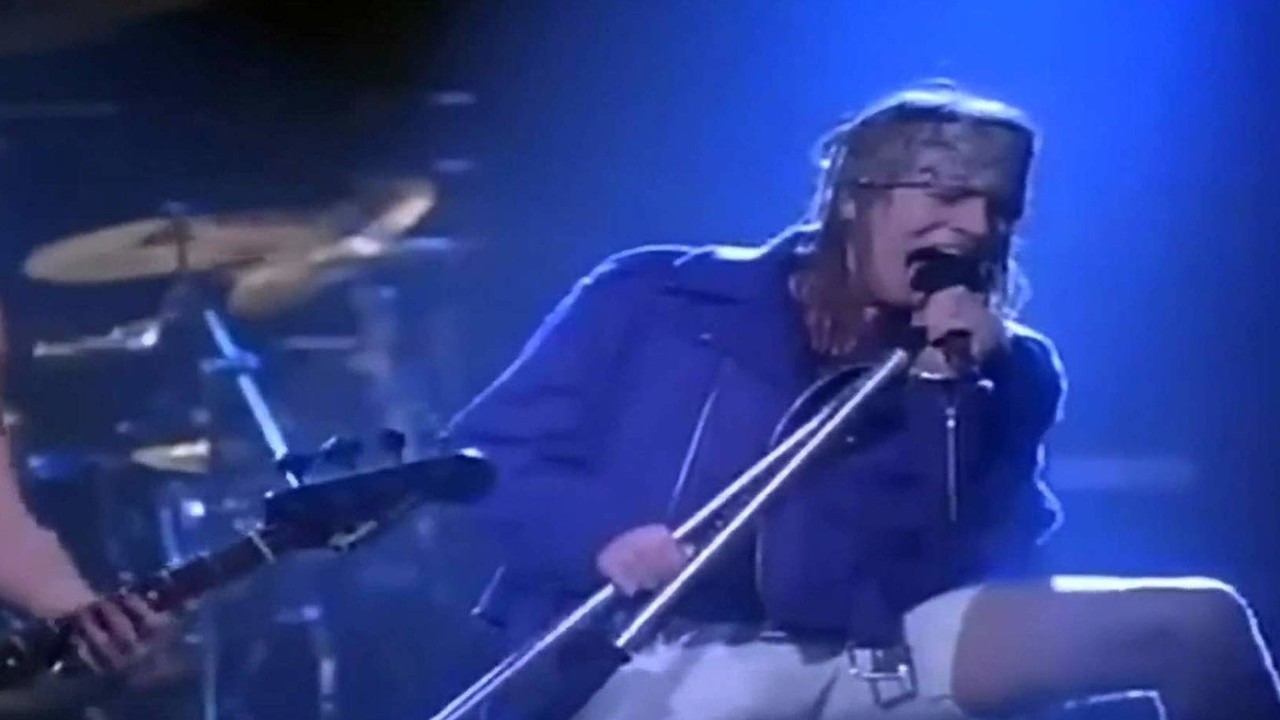
The deal was sealed. Arnold himself reportedly had the band over for dinner too—can you imagine that table? Arnold, Axl, Slash, and Duff. Arnold wanted to make sure they were "cool" enough for the movie. Apparently, they passed the test. The resulting music video, which features the T-800 tracking the band down at a concert, cost nearly $1 million to produce. That was unheard of at the time.
The technical madness of the recording
Listen to the drums. Matt Sorum had just joined the band, replacing Steven Adler. This was his big debut. You Could Be Mine is arguably Sorum’s finest moment because of that monstrous intro. It’s precise. It’s heavy. It’s a complete departure from Adler’s swing-heavy, "pop-rock" style.
The song is played in E-flat tuning, which is standard for GNR, but the tension in the bridge is what makes it a masterpiece. That section where the music drops out and it's just Axl whispering "You've gone and bit off more than you can chew" before the explosion of the final chorus? That’s pure dynamics.
- The song clocks in at 5:44, which is long for a radio single.
- It features a rare cowbell appearance that actually sounds "metal."
- The ending is a chaotic fade-out that mimics a machine breaking down.
It’s a long song. Most radio edits cut the best parts. If you’ve only heard the 3-minute version, you haven't really heard the song. You need that full five-minute build-up to appreciate how much anger is actually packed into the track.
The lyrical Easter egg everyone misses
There’s a line in the song that predicted the future of the band. In the final verse, Axl sings: "With your cocaine tongue and your silver ear." Wait. Check the liner notes of Appetite for Destruction. That exact phrase appears in the "Thank You" section of their first album, four years before the song was released. It was a shout-out to the song they hadn't put out yet. It’s a weird bit of foreshadowing that proves how much the band lived within their own mythology. They knew they were building an empire, one song at a time.
Axl's vocal performance was a peak
This was Axl Rose at the height of his powers. He wasn't doing the "Mickey Mouse" voice yet. It was that rasp. That pure, throat-shredding grit. The way he holds the notes during the "You could be mine" refrain is a masterclass in breath control. He’s singing at the very top of his register, but he’s doing it with a weight that most singers can’t replicate without their voice cracking.
By the time the Use Your Illusion tour started, this song became the litmus test for Axl’s voice. If he could hit the notes on this one, the show was going to be great. If he struggled, it was going to be a long night. It’s a physically demanding song. It’s fast. It’s aggressive. It doesn't let up.
The impact on the charts and the "Illusion" era
When the single dropped in June 1991, it didn't just climb the charts; it detonated them. It reached number 29 on the Billboard Hot 100, which is impressive for a song that aggressive. But its real impact was in Europe and Australia, where it was a top-five hit.
It set the stage for the massive, bloated, brilliant experiment that was Use Your Illusion I & II. Without the success of You Could Be Mine, the record label might have been more nervous about releasing two double albums on the same day. This song proved that the public was hungry for more Guns N' Roses, no matter how over-the-top it got.
Is it the best GNR song?
Maybe. Probably not if you’re a "Sweet Child O' Mine" purist. But if you like the version of the band that was dangerous, metallic, and slightly unhinged, it’s the gold standard. It captures a specific moment in time—the exact bridge between the 80s hair metal scene and the 90s industrial/grunge shift.
It’s a song about a girl, used for a movie about a robot, written by a band that was about to fall apart. It shouldn't work. But it does.
Practical ways to appreciate the track today
- Listen to the 2022 Remaster: The "Use Your Illusion" box set released a few years ago cleaned up the low end. You can actually hear Duff McKagan’s bass lines properly now. It’s a revelation.
- Watch the T2 Music Video: It’s on YouTube in 4K now. It’s a time capsule of 1991 fashion and special effects.
- Check out the live version from Tokyo 1992: This is widely considered the definitive live performance of the song. The band is tight, the energy is frantic, and Axl is wearing those ridiculous spandex shorts that only he could pull off.
- Compare the studio version to the "Appetite" demos: If you can find the bootlegs, listen to the early versions. It’s fascinating to hear how a raw punk-rock song transformed into a polished stadium anthem.
The legacy of the track isn't just about the movie. It's about a band at their absolute zenith, before the egos and the legal battles tore it all down. It remains a reminder of why Guns N' Roses was the only band that mattered for a few years in the early nineties. They weren't just making music; they were making events. And You Could Be Mine was the biggest event of them all.



