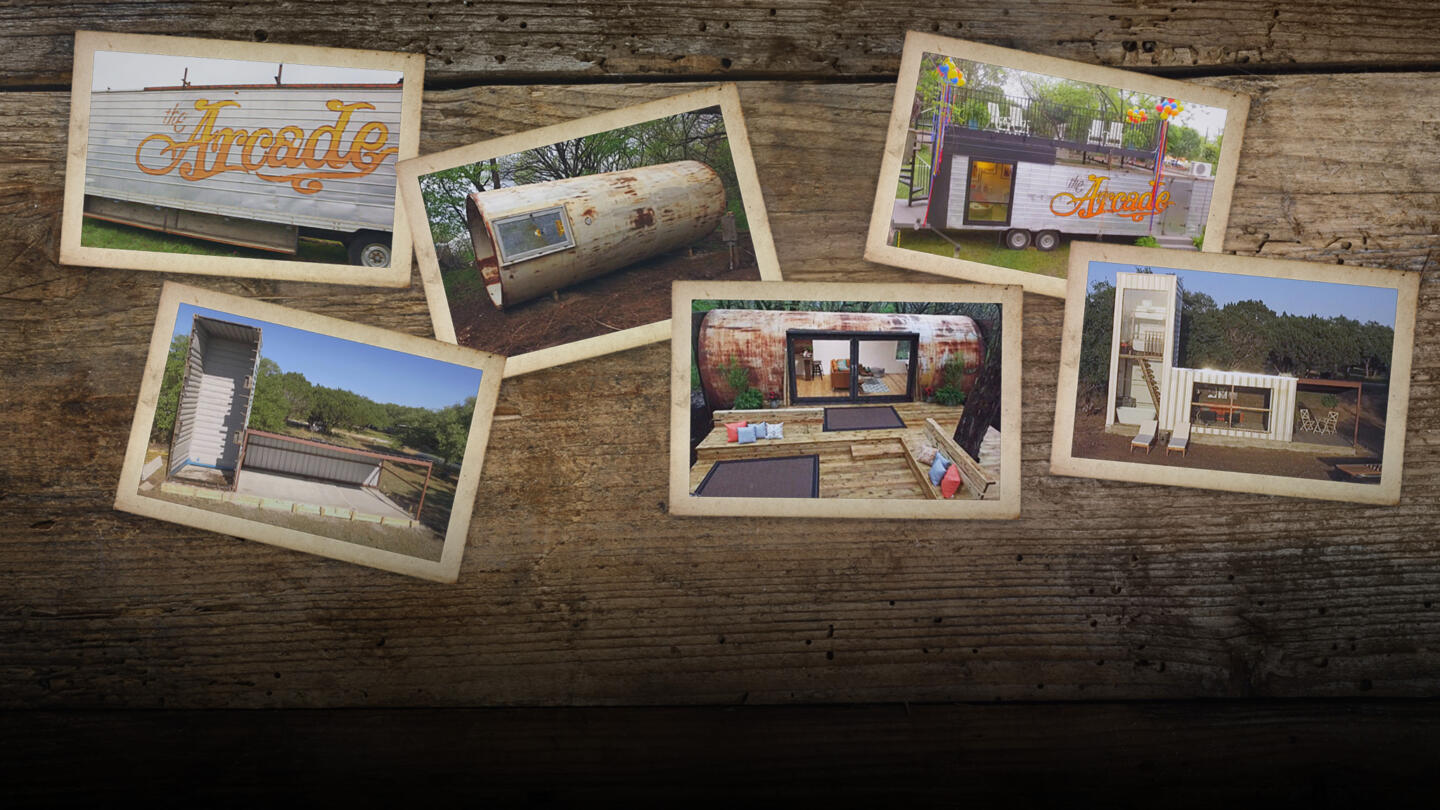
You’ve seen the TikToks. A guy buys a rusty grain silo for $500, cuts a hole for a window, and suddenly it’s a "minimalist industrial loft" with 4 million views. It looks easy. It looks cheap. It looks like the ultimate middle finger to the housing crisis. But here’s the cold, hard reality that contractors and code enforcement officers deal with every day: you can’t turn that into a house as easily as the internet wants you to believe.
Conversion projects are the siren song of the DIY world. People see a school bus, a shipping container, or a literal cave and think they’ve found a loophole in the system. They haven't. Most of the time, these projects end up as unfinished shells rotting in a backyard because the owner hit a wall of physics, law, or sheer exhaustion.
The Zoning Wall Most People Hit
Zoning is the boring monster under the bed. It doesn't matter if your converted dumpster looks like a five-star hotel if the land it sits on is zoned "R-1" and requires a minimum of 1,000 square feet of living space. Local municipalities have these things called Unified Development Ordinances (UDOs). They are thick, dry, and absolutely ruthless.
Many hopeful homeowners think that if they own the land, they can do whatever they want. Wrong. In many jurisdictions across the U.S., particularly in places like California or the Northeast, "alternative dwellings" are straight-up illegal as primary residences. You might get away with it as an ADU (Accessory Dwelling Unit) if you’re lucky, but even then, the setbacks and utility hookup requirements can cost more than the structure itself.
Why Shipping Containers are Often a Trap
Shipping containers are the poster child for the "you can't turn that into a house" argument. They seem perfect. They are structural boxes! They stack! They’re cheap! Except, they aren't meant to be lived in. A standard ISO shipping container is designed to carry weight on its four corners. The moment you cut a massive hole for a sliding glass door, you have compromised the structural integrity of the entire unit. Now you need steel reinforcement. That requires a specialized welder. Suddenly, your "cheap" house needs $15,000 in professional metalwork just to keep the roof from sagging.
Then there is the toxicity issue. Real experts like Mark Hogan, principal at OpenScope Studio, have pointed out for years that these boxes are coated in lead-based paints and pesticides to survive years on the high seas. Sandblasting that off is a health hazard. And insulation? If you insulate the inside, you lose all your living space because the box is only eight feet wide to begin with. If you insulate the outside, you’ve hidden the "cool" industrial look that made you buy it in the first place. It’s a paradox that eats money.
The Invisible Cost of Utilities
Let's talk about the stuff that isn't aesthetic. Let's talk about poop.
If you are trying to turn an old shed or a school bus into a permanent home, you need a septic system or a sewer tie-in. A new septic system in 2026 can easily run you $15,000 to $30,000 depending on your soil’s percolation rate. You can’t just "gray water" your way out of this in most counties. Health departments don’t care about your aesthetic; they care about E. coli.
Electrical is another nightmare. Retrofitting a non-residential structure—like a vintage airplane or a concrete pipe—to meet the National Electrical Code (NEC) is a jigsaw puzzle of fire hazards. Most traditional houses have "stud bays" where wires run easily. A grain silo doesn’t have studs. It has curved metal walls. You end up having to build a house inside the structure just to have a place to put the wires and the pipes. At that point, you aren't "converting" anything; you're just building an expensive, inconveniently shaped house inside a piece of junk.
The Psychological Toll of Living in a "Non-House"
There is a reason humans have built square-ish houses for centuries. It’s practical. When you live in a converted school bus—a "Skoolie"—you are living in a metal tube. In the summer, it’s an oven. In the winter, it’s a freezer. Condensation is the eternal enemy. Without massive amounts of ventilation and high-end spray foam, your walls will literally weep. Mold isn't just a possibility; it's an inevitability.
I’ve talked to people who spent three years building a "tiny house" out of an old backyard shed only to realize they hated living in it after three months. The ceiling was too low. The sound of rain on the roof was deafening. There was nowhere to put a vacuum cleaner. These "you can't turn that into a house" moments usually happen at 3:00 AM when you realize you can hear every cricket outside and your toes are touching the wall.
Insurance: The Final Boss
Even if you build it, even if the city lets you stay, try getting a mortgage or homeowner's insurance.
Standard insurers like State Farm or Liberty Mutual want to see a "stick-built" or "modular" home that meets IRC (International Residential Code) standards. If your home started life as a 1994 Blue Bird school bus, most insurers will laugh you off the phone. Without insurance, you can't get a mortgage. This means you have to pay for the entire project in cash. For most people, that's where the dream ends. You’re left with a "house" that has no resale value because the next buyer can’t get a loan to buy it from you.
What Actually Works (The Realistic Path)
If you are determined to ignore the warnings, there are ways to do it right, but they aren't the "budget" options you see on YouTube.
- Barn Conversions: This is the most viable route because barns often have the height and footprint to accommodate actual living quarters. However, you essentially have to strip them to the frame.
- Permitted ADUs: Buy a pre-fabricated unit that is already coded as a dwelling. It’s less "quirky" than an old train car, but it’s actually legal.
- The "Hybrid" Build: Use the unconventional structure as a feature, not the whole house. Build a legal, code-compliant core (kitchen/bath) and use the weird structure as a living area or workspace.
Hard Truths for Your Project
Before you buy that old church or that decommissioned ambulance, do these three things:
- Call the Building Department First: Don't ask if you "can" live in it. Ask for the specific minimum square footage and foundation requirements for a primary residence.
- Get a Quote for "Off-Grid" Waste: If you think a composting toilet is the answer, check if your county allows them. Many don't. You might be forced into a $25k mound system.
- Calculate the R-Value: If you can't get at least R-13 in the walls and R-30 in the ceiling, you don't have a house; you have a tent that looks like a building.
The reality is that most things people try to turn into houses are just garbage with a view. Respect the physics of heat transfer and the bureaucracy of local government, or you'll find out the hard way why you can’t turn that into a house.
Actionable Next Steps
- Audit your local zoning code: Look for the term "Minimum Dwelling Size." If it's 800 square feet and your container is 320, you're done before you start.
- Consult a structural engineer: Spend $500 now to find out if that "cool old barn" is going to collapse the moment you add a second floor.
- Check the "Certificate of Occupancy" requirements: This is the golden ticket. If you can't get a CO, you can't legally live there. Period.