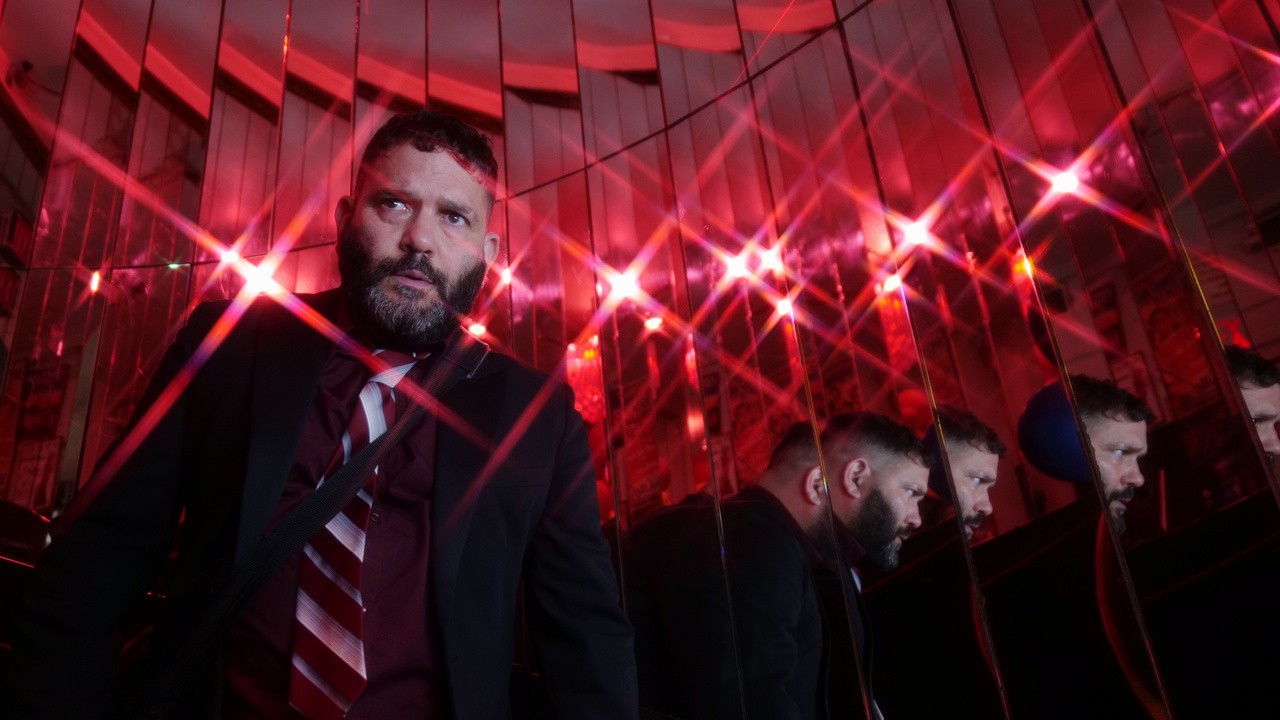
Fear is a weirdly specific thing. For some people, it's a masked guy with a machete running through the woods, but for others, the real terror is much quieter. It's the feeling of being unwelcome in a place you paid to be. That is exactly the nerve that the 2024 film You Can't Stay Here decided to press, and honestly, it pressed it until it bruised.
Directed by Tomer Almagor and starring Peter Vack, this movie didn't just drop into the indie horror scene; it seeped in like a cold draft under a locked door. Set against the backdrop of a gritty, unforgiving New York City, it follows a photographer named Ethan who becomes obsessed with a mysterious man living in Central Park. But it’s not just a "stalker" movie. It is a descent into the kind of psychological isolation that makes you question your own pulse.
Most people who watched You Can't Stay Here came away feeling a bit greasy. Not because of gore—though there’s tension—but because of the atmosphere. It captures a version of New York that feels like a trap.
The Grime of Reality in You Can't Stay Here
If you’ve ever walked through the Ramble in Central Park at dusk, you know the vibe. It's beautiful, sure. But it’s also dense, confusing, and full of shadows that shouldn’t be there. Almagor uses this setting to build a sense of voyeurism that feels dangerous.
Ethan, our protagonist, is a guy who looks through a lens for a living. This is a classic trope, right? Think Rear Window or Blow-Up. But in You Can't Stay Here, the act of looking isn't just about curiosity. It’s about a desperate need to connect with something—anything—even if that thing is a violent, enigmatic stranger. The film leans heavily into the "cruising" subculture and the history of the park as a place for anonymous, often risky, encounters.
The movie doesn't hold your hand. It’s jagged. One minute you're watching a quiet, almost poetic shot of the city skyline, and the next, you're thrust into a confrontation that feels far too real. The pacing is intentionally off-kilter. It mimics the frantic, sleep-deprived energy of someone who has stayed up too many nights in a row staring at things they shouldn't.
Why Peter Vack Was the Right Choice
Let’s talk about Peter Vack for a second. He has this specific energy—vulnerable but also kinda intense. In You Can't Stay Here, he plays Ethan with a jittery nervousness that makes you want to tell him to go home and lock his doors. But he can't. That’s the whole point.
The title itself serves as a double entendre. It’s a literal warning from the people he encounters, but it’s also a psychological state. Ethan can’t stay in his current reality. He’s being pulled toward something darker.
What Most People Get Wrong About the Ending
There is a lot of chatter online about what actually happens when the credits roll. Is it a ghost story? Is it a mental breakdown? The beauty of You Can't Stay Here is that it refuses to give you a clean answer.
Some critics argued that the film was too ambiguous for its own good. They wanted a "big reveal" or a twist that explained away the weirdness. But that would have ruined it. The film is an exploration of the "liminal space"—that awkward, uncomfortable transition between being a witness and being a participant in a tragedy.
- The man in the park represents a mirror.
- The city represents a cage.
- The camera represents a barrier that eventually breaks.
Honestly, the ending works because it leaves you with that exact same feeling Ethan has: the realization that you've gone too far to turn back.
Production Realism and the Indie Aesthetic
The film was shot on what looks like a modest budget, but it uses it perfectly. You can almost smell the damp earth and the subway exhaust. This isn't the "Sex and the City" New York. This is the New York of the 70s and 80s, filtered through a modern lens. It’s grainy. It’s dark.
By using real locations and avoiding overly polished CGI, the filmmakers created a world that feels lived-in. When Ethan is wandering through the woods, you aren't looking at a soundstage. You're looking at the actual, tangled heart of Manhattan. This groundedness makes the more surreal elements of the plot hit much harder.
Actionable Insights for Horror Fans and Filmmakers
If you’re planning on watching You Can't Stay Here, or if you're a creator looking to capture this kind of "unsettling" vibe, keep these points in mind:
- Watch the background. A lot of the story is told through what is happening in the edges of the frame. Almagor loves to hide details in the shadows.
- Focus on the soundscape. The film uses ambient city noise—sirens, wind, distant shouting—to create a constant state of low-level anxiety. It never lets you feel "safe" in silence.
- Embrace the ambiguity. Don't try to "solve" the movie while you're watching it. Let the discomfort sit. The best horror doesn't explain the monster; it makes you feel like the monster is standing right behind you.
- Research the history. Understanding the history of Central Park’s cruising spots and its reputation in the late 20th century adds a layer of depth to the interactions Ethan has. It’s not just random; it’s historical.
The next time you find yourself in a place where you feel like you don't belong, remember this movie. Sometimes, the world is telling you exactly what the title says. You can't stay here. You should probably listen.



