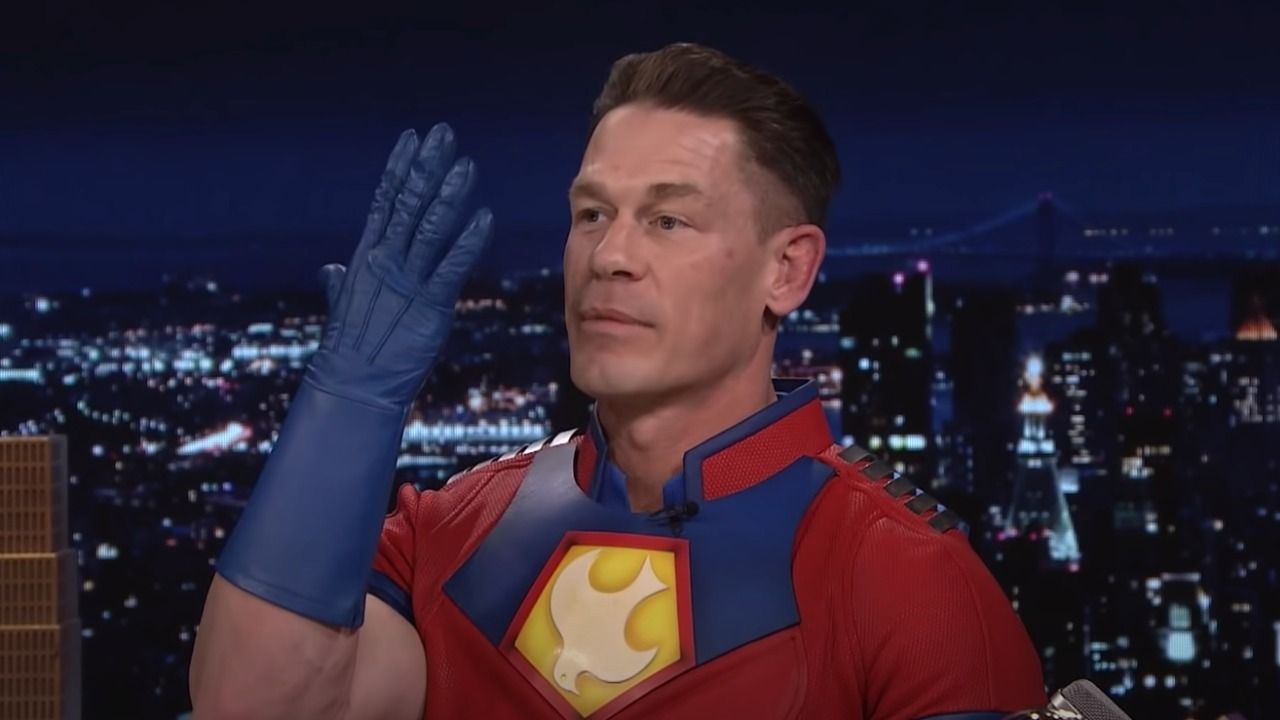
It started with a dare. Honestly, most of the greatest pop culture moments do. Back in 2002, John Cena was just a burgeoning WWE superstar with a "Doctor of Thuganomics" gimmick and a need to stand out in a locker room full of giants. His brother, Sean, was messing around to the beat of John’s upcoming entrance theme, "The Time is Now." Sean started doing this weird little dance, bobbing his head and moving his hand in front of his face. It looked ridiculous. John told him he’d do it on TV. Sean bet him he wouldn't.
Fast forward two decades and you can’t see me John Cena isn't just a wrestling catchphrase. It is a fundamental pillar of internet literacy. If you post a photo of an empty forest on Reddit, someone will comment about Cena being in the frame. If he wears a camouflage suit on a red carpet, the jokes write themselves. It’s the joke that never gets old because it’s so stupidly simple that anyone can participate.
The Actual Origin Story (It’s Not What You Think)
People assume the hand-waving was some choreographed marketing move. Nope. It was a 50-cent dare between brothers. When Cena first did it on Velocity—WWE’s old secondary show—he added the "You can't see me" line to make it more aggressive. He wasn't talking about literal invisibility back then. In the world of hip-hop and street ball, "you can't see me" basically means you aren't on my level. You aren't fast enough to catch my footwork. You aren't "in the same frame" as me.
But the internet? The internet takes things literally.
Somewhere around the mid-2010s, the meaning shifted. The bravado of a professional wrestler disappeared, replaced by the surrealist humor of Image Boards and Vine. The logic became: if he says we can’t see him, then he must be invisible. It’s a joke that relies entirely on the audience's willingness to play along with a blatant lie.
Cena himself has talked about this transition in interviews, notably with GQ and The Tonight Show. He treats it with this sort of bewildered grace. He knows that at any given moment, if he stands still in a public place, people will walk right past him and pretend he’s a ghost. He leans into it. That's why it works. If he hated it, the meme would have died in 2012. Instead, he wears green screen suits to the Oscars and makes "invisible" jokes in big-budget movies like Peacemaker or The Suicide Squad.
Why the Meme is SEO Gold and Social Media Fuel
You might wonder why we are still talking about a hand gesture from the early 2000s. It’s because the you can’t see me John Cena trope is the perfect "template" for engagement.
Think about the mechanics of a viral post. You need something low-friction. You need something that makes the commenter feel like they are "in" on the joke. When a brand posts a picture of a new product and John Cena happens to be in the background, the comment section explodes. 10,000 people write "Why did you post a picture of an empty room?" and the algorithm sees that massive spike in comments and pushes the post to the top of everyone’s feed.
It is "Invisible Engagement."
There are very few celebrities who have managed to turn a catchphrase into a permanent state of being. Chuck Norris had his "facts." Rick Astley has the Rickroll. Cena has invisibility. But unlike the Chuck Norris jokes, which feel very 2005, the Cena meme feels evergreen because it’s visual. It’s a prank played on the eyes.
The Evolution into Mainstream Cinema
Cena’s transition to Hollywood changed the stakes. In the WWE, he was a polarizing figure—the "Super Cena" who always won. Fans used to chant "Cena sucks" just for the fun of it. But as he moved into comedy with Trainwreck and then into the DC Extended Universe, his comedic timing became his strongest asset.
He realized that his physique is actually the punchline.
When a guy who is 250 pounds of pure muscle tells you that he is invisible, it’s inherently funny. James Gunn, the director of Peacemaker, used this perfectly. There’s a specific kind of "Cena humor" that relies on him being the most conspicuous person in the room while acting like he’s a stealthy ninja.
The Science of Invisibility Jokes
Why do our brains find this funny? Psychologically, it’s a form of "Benign Violation Theory." The joke violates the logic of our eyes—we clearly see a massive man—but it’s benign because we know it’s a shared cultural reference.
- The Shared Secret: When you see a "Cena is invisible" joke, you feel a micro-connection with the person who made it.
- The Iteration: The meme evolves. It’s not just the hand wave anymore. It’s Potato Salad (a weird sub-Reddit meta-joke where people swapped John Cena and potato salad). It’s the "Unexpected John Cena" video trope with the loud trumpets.
- The Longevity: Because Cena stays relevant through movies and charity work (he holds the record for the most Make-A-Wish grants), the meme gets a fresh coat of paint every year.
The Technical Side of the "Five Knuckle Shuffle"
If we’re being technical—and wrestling nerds usually are—the "You Can't See Me" gesture is the precursor to his signature move, the Five Knuckle Shuffle.
He knocks the opponent down, hits the ropes, does the "You can't see me" hand wave, and then drops a fist to their forehead. It’s pure theater. It’s the "theatricality and deception" that Ra's al Ghul talked about in Batman Begins, but with more denim shorts.
Most people don't realize how much that specific sequence built his brand. In the mid-2000s, WWE was selling millions of dollars in merchandise. The "You Can't See Me" t-shirts were everywhere. It became a logo. It became a brand. It became a lifestyle for kids who wanted to feel invincible.
What Most People Get Wrong About the Meme
Common mistake: thinking the meme is about him being a bad wrestler. It’s actually the opposite. The meme survived because Cena is a workhorse. He was the face of a global company for a decade.
Another misconception is that the meme is "dead." In internet terms, a meme dies when it becomes "cringe" or when the subject tries too hard to make it happen. Cena has mastered the art of passive meme-ing. He doesn't post "Hey guys, I'm invisible!" every day. He just posts bizarre, context-less photos on his Instagram—which has millions of followers and no captions—and lets the fans do the work. It’s a masterclass in social media management.
Real-World Impact: The "Unexpected Cena" Phenomenon
We have to talk about the audio. You know the one. The blaring brass instruments that signify the start of his theme song. For a solid three years, "Unexpected John Cena" was the king of YouTube jumpscares.
You’d be watching a peaceful video of a person baking a cake, and suddenly—BAM—the screen cuts to Cena’s face with the volume turned up to 11. This didn't just keep him relevant; it introduced him to a generation of kids who never even watched wrestling. They didn't know him as a 16-time World Champion; they knew him as the "Loud Trumpet Man."
How to Use the "Cena Effect" in Your Own Content
If you're a creator or just someone who wants to understand the "why" behind internet culture, there are lessons to be learned here.
- Embrace the Absurd: Don't fight the weird nicknames or jokes people make about you. Lean in.
- Consistency is King: Cena has been doing the same gesture for over 20 years.
- Low Barrier to Entry: A joke shouldn't require a PhD to understand. "Man says he's invisible but is actually huge" is a Tier 1 joke.
Actionable Takeaways for the Super-Fan
If you want to truly appreciate the you can’t see me John Cena legacy, you’ve got to look past the surface.
- Watch the Evolution: Go back and watch his 2003 promos. See how the gesture was originally used as a taunt, not a joke. It adds layers to the current humor.
- Check the Instagram: Follow John Cena’s official Instagram account. It is a surrealist art gallery. No captions. Just vibes. It is the ultimate extension of the "You Can't See Me" persona—he is there, but he’s not providing any context.
- Study the Brand: Look at how he transitioned from a "tough guy" to a "funny guy." The invisibility meme was the bridge that allowed people to stop taking him so seriously and start liking him as an entertainer.
The "You Can't See Me" thing isn't going anywhere. As long as there are empty chairs, green screens, and camouflage pants in the world, John Cena will be there. Or he won't be. You just can't tell.
Honestly, the best way to handle the meme is to just keep playing along. The next time you see a photo of an empty wrestling ring, just ask where Cena is. You'll get a thousand likes. It's the easiest win on the internet.
Keep an eye out for his next film roles—specifically how he uses his physical presence to subvert expectations. Whether he’s in a Fast & Furious movie or a small indie comedy, that "invisible" DNA is part of his performance now. It’s a rare example of a meme that actually enhanced a career instead of turning it into a punchline. He’s the punchline, the comedian, and the promoter all at once. And that, more than anything, is why he’s still the most "visible" man in Hollywood.



