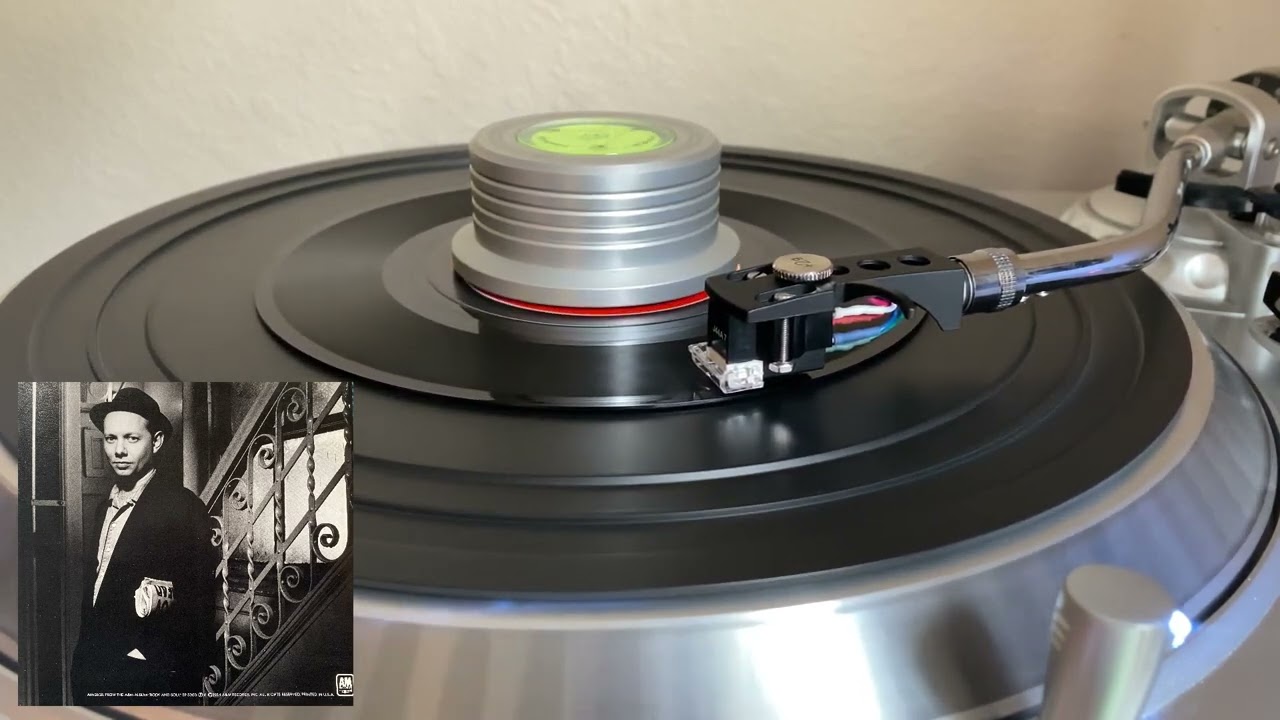
Joe Jackson has always been a bit of a contrarian. Just when the world decided he was the next angry young man of New Wave, he ditched the skinny ties and started making big-band swing records. Then, when everyone got used to the sleek, synth-driven vibes of Night and Day, he decided to record a jazz-infused, horn-heavy masterpiece in a drafty Masonic lodge in Brooklyn.
That brings us to You Can't Get What You Want (Till You Know What You Want). Meanwhile, you can read similar stories here: The Media Anatomy of Celebrity Health Revelations: Quantifying the Clarkson Disclosure Function.
Released in 1984 as part of the Body and Soul album, the track is a masterclass in what happens when a classically trained musician decides to tackle "sophisti-pop." It’s punchy. It’s funky. Honestly, it’s one of the best-sounding recordings of the 1980s, mostly because Jackson was obsessed with capturing a "natural" sound at a time when everyone else was drowning in gated reverb and Yamaha DX7s.
The Sound of Brooklyn’s Masonic Hall
If you’ve ever wondered why the brass on this track sounds like it’s literally in the room with you, there’s a reason. Jackson and producer David Kershenbaum weren't interested in the sterile, airless atmosphere of a typical 80s studio. They wanted air. They wanted echoes. To see the complete picture, check out the detailed article by GQ.
They found what they were looking for at the Masonic Hall in Manhattan (often associated with Vanguard Studios). It was a massive space made of stone and wood. To capture the vibe, they didn't just plug everything into a board. They hung two vintage Neumann M-50 microphones fifteen feet in the air to catch the natural "bloom" of the room.
The result? A track that feels alive.
Most people don't realize that You Can't Get What You Want (Till You Know What You Want) was actually a pioneering digital recording. It was tracked on a 3M 32-track digital system. Back then, digital often meant "thin" or "harsh," but Jackson’s insistence on using the acoustics of the hall gave the song a warmth that most digital records of 1984 lacked. It’s got that "holographic" quality where you can almost point to where the trumpet player is standing.
That Slap Bass Line
You can't talk about this song without mentioning Graham Maby.
Maby has been Jackson’s secret weapon for decades. For this specific track, Joe wanted a slap bass performance. Here’s the funny thing: Maby didn’t really consider himself a "slap" player. In interviews, he’s admitted it wasn't exactly his primary strength.
But listen to the record.
The bass isn't just keeping time; it’s the engine. It’s got this percussive, aggressive snap that pushes against the horn section. It’s a bit of a departure from the more melodic, walking lines Maby did on Look Sharp!, but it fits the high-energy, urban tension of the song perfectly.
What the Song Is Actually About
The title sounds like a riddle, or maybe a piece of unsolicited advice from a life coach. You Can't Get What You Want (Till You Know What You Want). On the surface, it’s a song about the frustration of desire. Jackson’s lyrics often lean into cynicism and irony, and here he’s poking at the way people chase things—success, love, "the good life"—without actually understanding what will make them happy.
"Sometimes you start feelin' so lost and lonely / Then you'll find it's all been in your mind"
It’s a bit of a takedown of consumerism and the general restlessness of the 80s. While the Rolling Stones told us we "can't always get what we want," Joe Jackson took it a step further. He’s saying you won't even recognize "it" if you don't have a plan.
Musically, the song mirrors that internal chaos. The "heat, heat, heat" refrain and the rising tension in the horns make it feel like someone pacing a tiny apartment in the middle of a New York summer. It’s frantic but controlled.
Chart Success and Legacy
By the time 1984 rolled around, Joe Jackson was a legitimate star. You Can't Get What You Want (Till You Know What You Want) peaked at number 15 on the Billboard Hot 100 in June of that year. It was his second-highest charting single in the U.S., trailing only "Steppin' Out."
But the song is more than just a chart statistic.
It represents the peak of "Sophisti-pop," a genre that blended jazz, soul, and pop with high production values. Think Sade, The Style Council, or early Simply Red. But while some of those acts went for a "smooth" finish, Jackson kept the grit. The horns on this track aren't polite; they’re brash and loud.
Why it still holds up
- The Dynamics: Unlike modern music that is "brickwalled" (everything is at the same volume), this song breathes. The quiet parts are quiet, and the loud parts actually hit you.
- The Musicianship: There’s no MIDI-mapping here. These are real humans playing in a real room, and you can hear the slight imperfections that make it feel "human."
- The Arrangement: Jackson’s background in music theory is all over this. The way the horns interlock with the piano is sophisticated without being pretentious.
Actionable Insights for the Audiophile
If you really want to experience why people still obsess over this track, skip the low-bitrate YouTube versions.
Look for the SACD (Super Audio CD) or the 180g vinyl remasters, specifically the ones done by Kevin Gray at Cohearant Audio. Because this was an early digital recording, the original PCM files have a specific "air" to them that sounds incredible when remastered with modern tech.
When you listen, pay attention to the "decay" of the notes. In that Masonic Hall, when the horns stop, you can hear the sound bouncing off the walls for a fraction of a second before it fades. That’s the "Body and Soul" of the recording.
Whether you're a casual fan of 80s pop or a die-hard Joe Jackson enthusiast, this track remains the gold standard for how to marry commercial appeal with high-art musicianship. It’s a reminder that sometimes, to get what you want in a recording, you just have to find the right room and let it rip.
To get the most out of your listening experience, try comparing the "Single Version" to the "Album Version." The album version gives you nearly five minutes of that incredible groove, allowing the instrumental sections more room to breathe, which is where the real magic of the Masonic Hall acoustics shines through.



