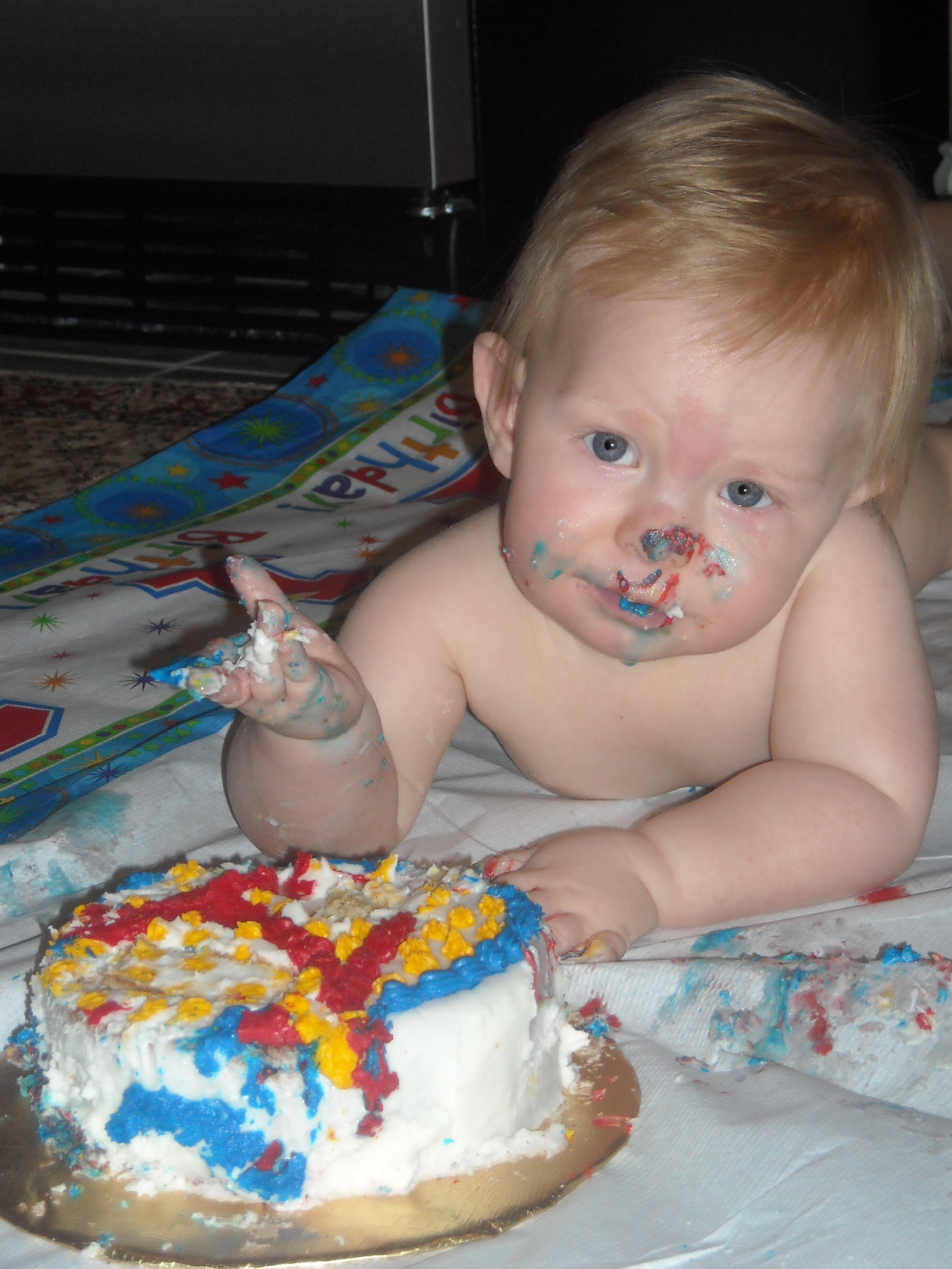
You've probably said it a thousand times. Maybe you were venting to a friend about a job offer that pays well but kills your social life. Or perhaps you were looking at a flashy new car that fits your ego but definitely not your budget. We use the phrase you can't eat your cake and have it too to describe that annoying reality where we have to choose between two mutually exclusive desires. It’s the ultimate linguistic "gotcha."
But here's the thing. Most people actually say it wrong.
The common version we use today is technically backward, and if you look at the history of the English language, the original phrasing actually makes a lot more sense. It wasn't always "eat your cake and have it." In the 1500s, people said "wolde you bothe eate your cake, and have your cake?"
Think about that for a second.
If you eat the cake first, it’s gone. It’s in your stomach. You can’t "have" it anymore because "having" it implies it’s still sitting there on the plate, looking pretty with its frosting intact. The modern phrasing suggests you can't possess the cake and then consume it, which is actually possible—you have it, then you eat it. The proverb is meant to highlight the impossibility of the reverse: you can't consume the resource and still expect to see it sitting in the pantry.
The 500-Year-Old Logic of Choice
The earliest recorded version of this sentiment pops up in a letter from Thomas Duke of Norfolk to Thomas Cromwell in 1538. He wrote, "a man can not have his cake and eat his cake." It's a simple observation of physical reality. In the world of 16th-century economics, resources were scarce. If you used your grain to bake a cake and then ate that cake, you no longer had the grain or the cake.
It’s about the opportunity cost.
Economists love this phrase. Basically, every time you choose "A," you are inherently rejecting "B." You can’t spend that same $50 on a nice dinner and also keep that $50 in your high-yield savings account. You can't spend your Saturday morning sleeping in and also spend that same Saturday morning hitting a personal best at the gym.
Life is a series of trade-offs.
Sometimes we try to cheat. We look for "hacks" or "workarounds" to bypass the fundamental law of the universe that says we can't be in two places at once. We multi-task, which usually just means we do two things poorly instead of one thing well. We try to find the "middle ground" only to realize that the middle ground is often just a lukewarm version of the two things we actually wanted.
Why Our Brains Hate This Rule
Psychologically, humans are hardwired for loss aversion.
A study by Daniel Kahneman and Amos Tversky—the grandfathers of behavioral economics—famously showed that the pain of losing something is twice as powerful as the joy of gaining something. This is why you can't eat your cake and have it too feels so personal. When we are forced to choose, our brain doesn't focus on the "cake" we are getting to eat; it screams about the "cake" we no longer "have" on the plate.
We want the freedom of being single and the intimacy of a committed relationship. We want the thrill of a startup and the security of a government job.
We want everything.
But the proverb serves as a cold bucket of water. It reminds us that "having" is a state of potential, while "eating" is a state of consumption. You can't live in both states simultaneously. John Heywood, the dramatist who collected many English proverbs in 1546, included this one because it captured a universal human frustration: the desire to escape the consequences of our own choices.
The Unabomber and the Linguistic Shift
Believe it or not, the "correct" way to say this phrase became a massive plot point in the hunt for the Unabomber, Ted Kaczynski.
The FBI had his 35,000-word manifesto, but they couldn't figure out who wrote it. James Fitzgerald, a forensic linguist, noticed something peculiar. The author of the manifesto used the phrase "eat your cake and have it too" in the older, more traditional way. Most people in the 1990s were saying it the modern way (have your cake and eat it).
This tiny linguistic quirk was one of the clues that helped narrow down the profile. Kaczynski was an academic, someone who would have been familiar with older structures of English. It’s a wild example of how a simple proverb can carry enough data to identify a person.
It’s Not Just About Dessert
In the business world, this concept shows up as the "Project Management Triangle." You've seen it: Fast, Cheap, and Good.
- If you want it fast and cheap, it won’t be good.
- If you want it fast and good, it won’t be cheap.
- If you want it cheap and good, it won’t be fast.
You can’t have all three. You can’t "eat" the speed and the quality while still "having" your budget. Businesses that try to ignore this usually end up crashing. They overpromise to stakeholders and underdeliver on everything. They try to be a luxury brand and a discount retailer at the same time. It never works.
Brands like Apple understand this. They chose "Good" and "Fast" (sort of), but they definitely aren't "Cheap." They don't try to have their cake and eat it too. They know their lane.
Decision Fatigue and the Modern Dilemma
We live in an era of infinite choice.
Go to the grocery store and try to buy mustard. There are forty types. In the past, you had "mustard." Now, you have to decide if you want stone-ground, honey, spicy brown, Dijon, or yellow. This abundance of choice makes the "cake" proverb even more painful. When you choose the honey mustard, you are actively rejecting thirty-nine other versions of reality.
Barry Schwartz talks about this in The Paradox of Choice. He argues that having too many options actually makes us less happy because we become obsessed with the "cake" we didn't choose. We worry that the spicy brown mustard might have been better. We "had" the possibility of all those flavors, but once we "ate" (chose) one, we lost the others.
Honestly, it’s exhausting.
The more options we have, the more we feel the sting of you can't eat your cake and have it too. In a simpler time, you didn't have to choose between a hundred different career paths or thousands of potential partners on a dating app. You chose what was in front of you. The "cake" was simpler, so the trade-off felt less like a monumental loss.
How to Actually "Have" the Cake
Is there a way around it? Kinda. But it requires a shift in perspective.
If you view the "cake" as your time, you realize that you aren't just losing something; you are investing it. The trick isn't trying to find a way to keep the cake on the plate forever. That’s impossible. The cake will eventually go stale. The plate will get dusty.
The real goal is to be so intentional about the "eating" part that you don't regret the "having" part.
- Own the Trade-off. Stop pretending you can do it all. When you pick a path, look the other path in the eye and say, "I'm not choosing you right now." This reduces the mental friction of trying to hold onto two things at once.
- Prioritize the "Flavor." If you're going to eat the cake, make sure it’s the one you actually like. Don't waste your "eating" on a career or a relationship you don't actually want just because you're afraid of the plate being empty.
- Sequence, Don't Parallel. You might not be able to have your cake and eat it at the same time, but you can have different cakes at different times. You can focus on your career in your 20s and your family in your 30s. You can focus on health for six months and then focus on travel. It’s not about having everything at once; it’s about having everything eventually.
The Hard Truth of Maturity
At its core, this proverb is about growing up.
Children believe they can have everything. They want the toy, and they want the money, and they want to stay up late, and they want to be energized in the morning. Adulthood is the process of realizing that the "and" in those sentences is a lie.
It’s a "but" or an "or."
We see this play out in politics all the time. Politicians promise lower taxes and better infrastructure. They promise more privacy and more security. They are promising that you can eat the cake and still have it sitting right there on the national budget. And we, the voters, often fall for it because we desperately want to believe that the rules of the universe don't apply to us.
But they do. They always do.
Moving Beyond the Plate
Next time you find yourself stuck between two choices, don't just sit there staring at the cake. Recognize that the tension you feel is a sign of a life with options. That's a good thing. The only people who don't have to worry about this proverb are the people who have no cake at all.
If you're struggling to choose between two great opportunities, congratulate yourself. You have a cake! Now, decide whether you want the satisfaction of the experience or the security of the possession.
Actionable Steps for the "Cake" Dilemma:
- Audit your "ands": Look at your current goals. Are you trying to "work 80 hours a week" AND "be a present parent"? Admit that these are in direct competition.
- Define your "Must-Haves": What is the one thing you are unwilling to "eat"? For some, it’s their health. For others, it’s their creative freedom. Protect that "cake" at all costs.
- Practice "Selective Neglect": To truly enjoy the cake you've chosen to eat, you must intentionally neglect the other things vying for your attention.
- Reframe the Loss: Instead of thinking about what you’re giving up, focus on the fact that you are finally getting to taste what you’ve been holding onto.
The plate will eventually be empty. That is the nature of time. The question isn't how to keep the cake; it's how to make sure the eating was worth it.



