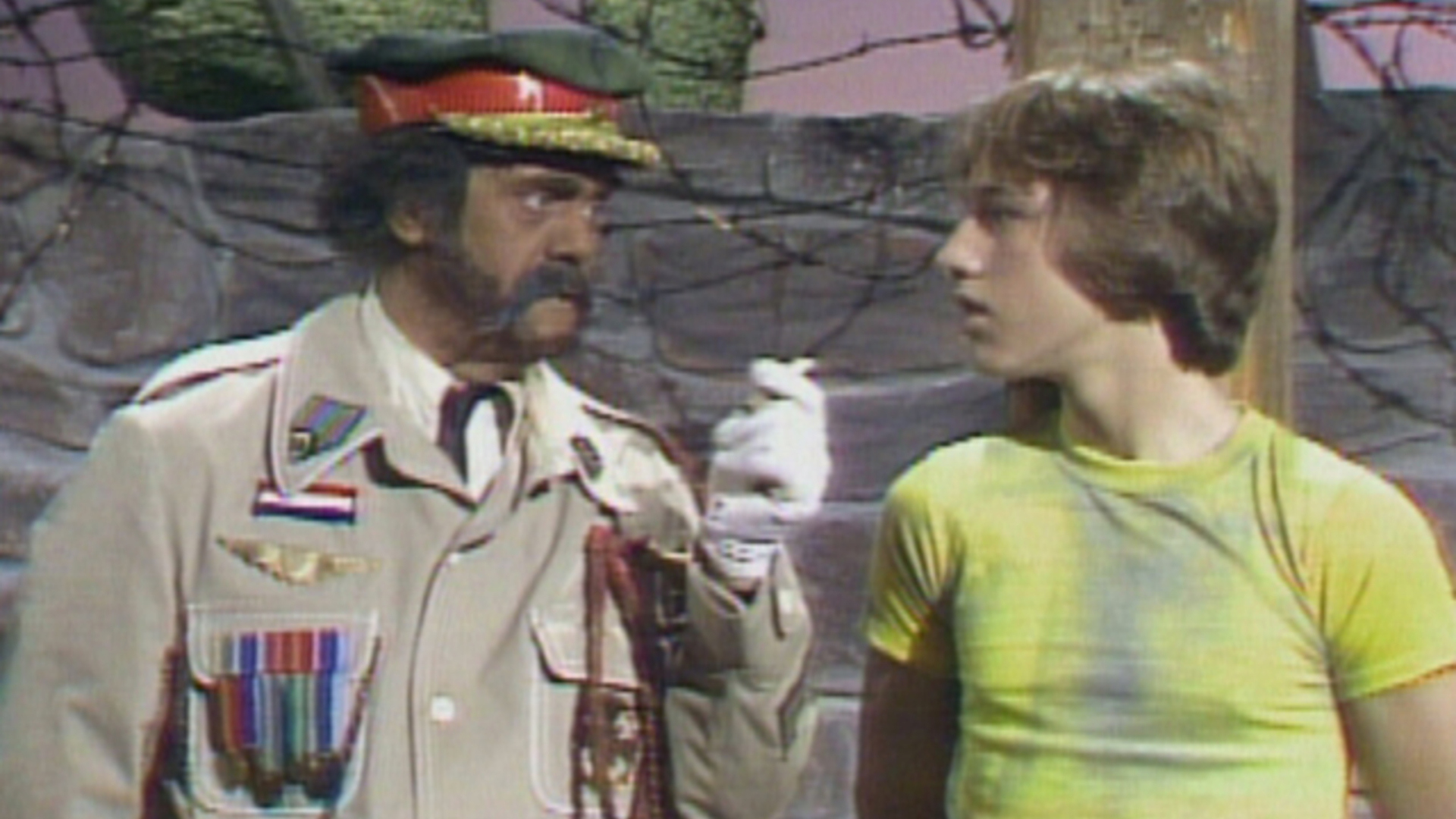
If you grew up in the eighties, you probably still have a Pavlovian response to the sound of a locker door slamming or the sight of a bucket of green slime. But honestly, You Can't Do That on Television Season 5 is where the show really found its footing as a global powerhouse.
It was 1984.
Nickelodeon was finally starting to look like the juggernaut we remember today, and this ragtag sketch show from Ottawa, Canada, was the engine driving the whole ship. Most people remember the slime, sure. But season 5 was weirdly pivotal. It was the year of "The Blame Game." It was the year the cast started to feel like a real ensemble. It was also the year that a skinny, curly-haired kid named Alanis Morissette made her debut. Yes, that Alanis. Before she was jagged or little or a pill, she was just another kid getting doused in green gunk on CJOH-TV's Studio B set.
Why Season 5 Felt Different
By the time 1984 rolled around, the show had already survived its early, ultra-low-budget years. But You Can't Do That on Television season 5 had a different energy. The production values didn't necessarily get "better"—the charm was always in how cheap it looked—but the writing got sharper. It felt more dangerous.
The "Library" sketches became more biting. The "Barth’s Burgery" segments felt more disgusting. If you look back at the episode themes from this specific year, they were hitting topics that kids actually cared about, like peer pressure, vanity, and the sheer unfairness of being a minor.
Roger Price and Geoffrey Darby, the masterminds behind the chaos, knew exactly what they were doing. They weren't trying to teach kids a lesson. They were trying to show kids that they were in on the joke. That's why it worked.
The Alanis Morissette Factor
You can't talk about this season without mentioning Alanis. She appeared in five episodes during season 5. She wasn't the "star" yet—that was still arguably Les Lye and Christine "Moose" McGlade—but you could see she had timing.
It's funny to watch those old clips now. You see this future rock icon participating in the "Locker" jokes. It’s a reminder that this show was a legitimate launchpad. However, she wasn't the only one. The cast was a rotating door of Canadian talent, but the 1984 roster felt like the "Goldilocks" zone of casting. You had the veterans who knew how to take a pie to the face, and you had the new kids who brought a fresh, frantic energy to the screen.
Breaking Down the Slime and the Themes
In You Can't Do That on Television season 5, the "rules" of the show were firmly established. You say "I don't know," you get slimed. You say "Water," you get a bucket of H2O dropped on your head.
But have you ever actually looked at what the slime was?
By season 5, the recipe had been "perfected," if you can call it that. It was a nasty concoction of Quaker Oats, green food coloring, cottage cheese, and sometimes vegetable oil to make it slide off the hair easier. It smelled. It stained. The kids hated it, which is exactly why the audience loved it.
Key Episodes from 1984
The season kicked off with "The Blame Game," which is classic YCDTOTV. It perfectly encapsulated the show’s philosophy: adults are usually wrong, and even when they’re right, they’re annoying.
Then you had "Divorce." Yeah. They did a comedy sketch show episode about divorce.
That was the magic of this era. They didn't treat kids like they were made of glass. They took "heavy" topics and turned them into satirical sketches. Other standout themes from season 5 included "Failure," "Foreign Countries," and "Holidays." Each one followed the same chaotic structure:
- An introductory skit that usually ended in a mess.
- The locker jokes (the bread and butter of the show).
- The "Opposite Sketches" (where everything was backwards).
- The inevitable execution at the firing squad.
The Les Lye Masterclass
We need to talk about Les Lye. In You Can't Do That on Television season 5, Lye was playing something like ten different characters. He was Barth, the cook who served "burgers" made of questionable meat. He was the dungeon master. He was the firing squad captain. He was the school teacher.
He was the only adult lead for a long time, and his ability to be the "villain" that kids loved to hate was unparalleled. In the 1984 episodes, his chemistry with Christine McGlade was at its peak. Christine was the de facto leader of the kids, the "straight man" in a world of lunatics. When she left a few years later, the show never quite felt the same, which is why many purists consider season 5 to be part of the show's "Imperial Phase."
The Cultural Impact of the 1984 Run
Why does this specific season still get talked about in retro television circles?
Mainly because this was when Nickelodeon went from being a niche cable channel to a household name. You Can't Do That on Television was the highest-rated show on the network for years. Season 5 was the bridge. It proved that the format—short, punchy, cynical, and messy—was what the "MTV Generation" of kids wanted.
It’s also where the show's visual language became iconic. The "Pre-school" drawings, the bright colors, and the sheer randomness of the transitions. It influenced everything from Kenan & Kel to iCarly. Even Saturday Night Live has shades of the DNA found in this 1984 Canadian export.
The Mystery of the Missing Episodes
If you try to find the full run of You Can't Do That on Television season 5 today, it's a bit of a headache. Due to music licensing issues and the way the show was syndicated, many episodes are hard to find in their original form. Some were edited down for "best of" compilations. Others have been lost to the vaults of CJOH.
But for the die-hards, the 1984 episodes are the holy grail. They represent the show before it became too self-aware. It was still raw. It was still a bit "local TV" in its execution, which gave it an authenticity that modern, polished kids' shows completely lack.
What Most People Get Wrong
People think the show was just about the slime.
Actually, the slime was often the least interesting part of a season 5 episode. The real gold was the satire. They were parodying the very concept of a "kid's show." When the kids would "strike" or when the set would "collapse," it was a meta-commentary on television production itself.
They also tackled things that would never fly today. The firing squad? Probably not getting past a modern standards and practices department. The jokes about child labor or Barth’s health code violations? Too "dark" for today’s sanitized landscape. But in 1984, it was exactly what we needed. It was an outlet for the frustration of being a kid in an adult-controlled world.
Actionable Insights for Fans and Collectors
If you're looking to revisit this era of television history, here is how you should approach it:
- Prioritize the "Themes": Don't just watch random clips. Find the full episodes for "The Blame Game" or "Enemies." The show’s brilliance lies in how it hammers a single concept for 22 minutes.
- Track the Evolution of Slime: Watch the first episode of season 5 versus the last. You can actually see the consistency of the slime change as the "slimers" behind the scenes experimented with the recipe for maximum "stick."
- Look for the "Easter Eggs": Keep an eye out for the background details in the locker sketches. The cast often put personal items or inside jokes on the locker doors that were never meant to be the focus but added to the "lived-in" feel of the show.
- Check the Credits: Pay attention to the writing credits in season 5. You’ll see the names of people who went on to shape the next twenty years of Canadian and American comedy.
- Digital Archives: Since official DVD releases are incomplete and rare, your best bet is checking specialized retro TV archives or fan-maintained YouTube channels that have digitized original broadcast tapes, commercials and all. This is the only way to experience the show as it was intended—interrupted by 1984 toy commercials.
The legacy of You Can't Do That on Television season 5 isn't just nostalgia. It’s a blueprint for how to talk to kids without talking down to them. It was messy, it was loud, and it was perfectly imperfect. That’s why, even decades later, we’re still talking about it.



