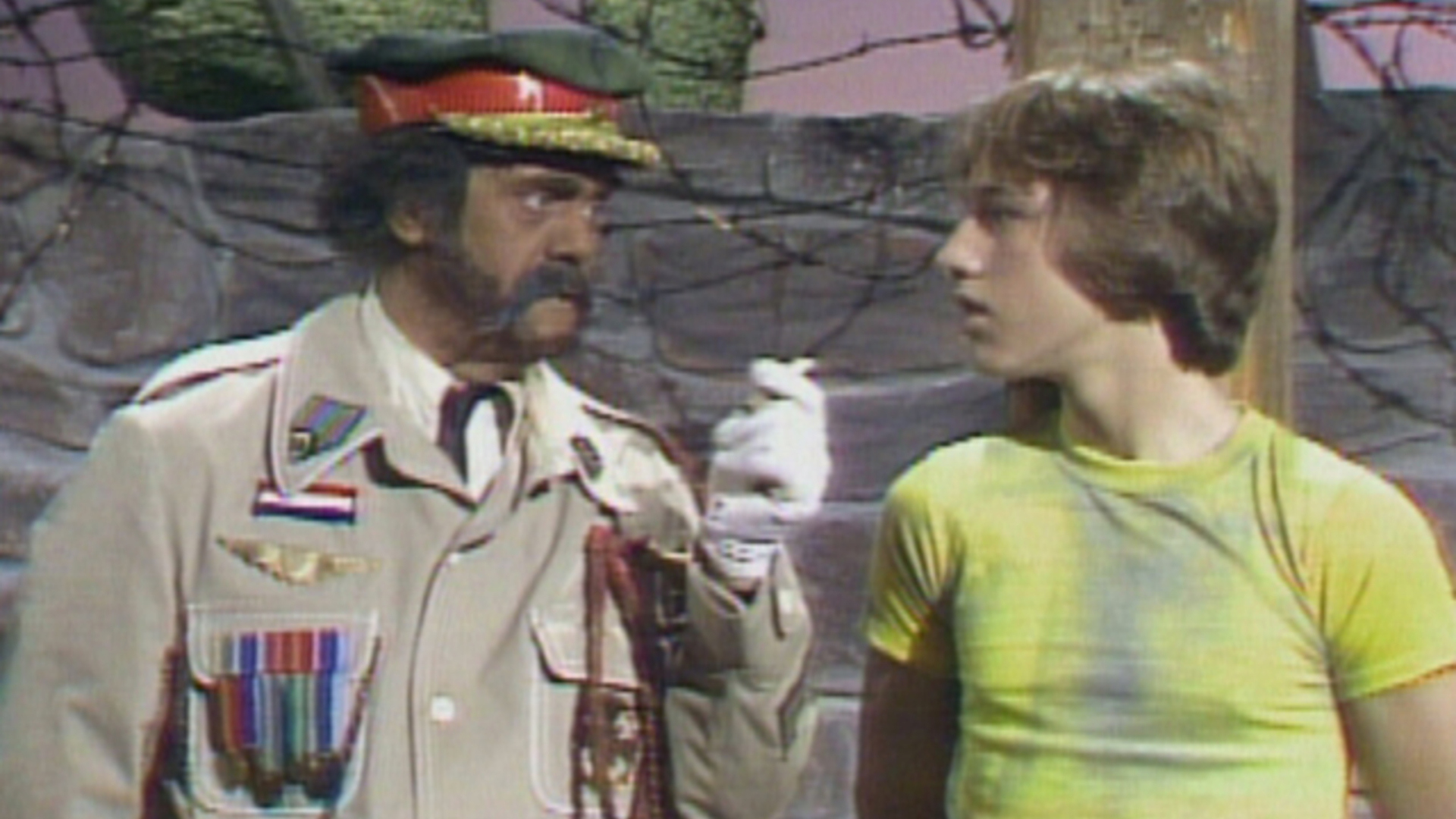
If you grew up in the eighties, the sound of a toilet flushing wasn’t just a plumbing noise; it was a cue that your favorite show was starting. Honestly, looking back at You Can't Do That On Television season 2, it’s wild how much changed in such a short window of time. This was 1981. The show had survived its experimental local run in Ottawa on CJOH-TV and was finally finding the chaotic, subversive groove that would eventually define Nickelodeon for an entire generation. But if you watch these episodes today, they feel different than the neon-soaked sketches of the late eighties. They were grittier. A bit more dangerous.
It was during this second season that the "rules" of the show really solidified. You know the ones. If you say "I don't know," you get doused in thick, green slime. If you say "Water," you get a bucket of H2O over the head. It sounds like such a simple gimmick now, but in 1981, this was revolutionary. It broke the third wall between the screen and the kid sitting on the shag carpet at home.
The 1981 Transformation: Why Season 2 Was the Real Beginning
While the show technically started in 1979, the 1980 season was actually a spin-off called Whatever Turns You On. It was... fine. But it wasn't the show. When You Can't Do That On Television season 2 kicked off in January 1981, the production returned to its original title and brought back the sketch-heavy format that worked. This was the year the show went national in Canada and started its slow creep into the American psyche via the fledgling Nickelodeon network.
The cast was a rotating door of Canadian kids, many of whom became icons of the era. We’re talking about Christine "Moose" McGlade, Kevin Kubutshky, and Lisa Ruddy. It’s hard to overstate how much Moose anchored the show. She wasn't a "child actor" in the traditional, polished sense. She felt like your older sister who was constantly annoyed by the adults around her. That authenticity is exactly why the show worked. It didn't talk down to kids. It joined them in the trenches of childhood frustration.
The Slime Formula and the Birth of a Legend
We have to talk about the slime. In You Can't Do That On Television season 2, the green goop wasn't the bright, fluorescent stuff you see at the Kids' Choice Awards today. It was a darker, more "organic" looking mess. Legend has it (and by legend, I mean production notes from Roger Price) that the original slime was a mix of lime Jell-O, flour, oatmeal, and sometimes even cottage cheese or old pea soup if the prop masters were feeling particularly cruel.
The kids hated it. You can see it in their eyes during the season 2 episodes. When Lisa Ruddy gets hit, she’s not doing a "TV reaction." She’s genuinely disgusted. Because the slime was often left out under hot studio lights for hours, it started to smell. That’s the kind of raw, low-budget energy that you just can't replicate with a massive Disney Channel budget today. It was gross-out humor before gross-out humor was a billion-dollar industry.
Breaking Down the Iconic Sketches of 1981
If you watch You Can't Do That On Television season 2 back-to-back, you start to see the patterns. The show was structured around themes. One week it was "Work," the next it was "Transportation" or "Personal Hygiene." This gave the writers—mostly Roger Price—a chance to skew every aspect of an adult-controlled world.
Barth’s Burgery: The Nightmare Cafe
Season 2 really leaned into the Barth sketches. Les Lye, the absolute MVP of the series, played Barth, the cook who definitely wasn't following health codes. "Duhh, heard that!" was the catchphrase that launched a thousand schoolyard impressions. The joke was always the same: the food was made of garbage or pets, and the kids were forced to eat it. It tapped into that universal childhood fear of the school cafeteria. Les Lye’s ability to play almost every adult role—from the firing squad captain to the dad—provided a consistent "us vs. them" dynamic.
The Firing Squad
"Ready... Aim..." "Wait a minute!"
This was the peak of the show’s dark humor. In You Can't Do That On Television season 2, the firing squad sketches were a staple. Think about that for a second. A kids' show featured a recurring bit about a child being executed by a state-sponsored firing squad. It’s the kind of thing that would never, ever get past a standards and practices board in 2026. But in 1981? It was hilarious because it represented the ultimate adult unfairness. The kid always found a way to stall, usually by confusing the Captain (played by Lye with a perfect blend of incompetence and malice).
Why the "Work" Episode Changed Everything
One of the standout episodes from You Can't Do That On Television season 2 was the "Work" episode. This is where we see the show’s cynical heart beating the loudest. It portrayed the workforce as a soul-crushing machine, even for kids. Whether it was the kids being forced into child labor or the adults being depicted as lazy bureaucrats, the message was clear: growing up is a trap.
The show's creator, Roger Price, had a very specific philosophy. He believed kids were an oppressed minority. He didn't want the show to be "educational" in the way Sesame Street was. He wanted it to be a survival guide. Season 2 is where that philosophy really sharpened its teeth. The pacing was frantic. The edits were jumpy. It felt like a fever dream.
The Cast: Not Just Famous Names
Everyone remembers that Alanis Morissette was on the show, but she didn't join until later. In You Can't Do That On Television season 2, the stars were kids like Kevin Kubutshky and Rodney Helal. Kevin was the quintessential "everykid." He was the one who often took the brunt of the slapstick.
What’s fascinating is how the show handled its cast. There were no "stars" in the billing. It was an ensemble. They were paid a modest fee per episode, and when they got too old or grew too tall, they were cycled out. It kept the show feeling fresh, but it also added to the weird, ephemeral nature of the series. One week your favorite kid was there, the next they were gone, replaced by another face in a striped shirt.
The Production Reality: Low Budget, High Impact
The show was taped at CJOH in Ottawa. The sets were flimsy. The lighting was often harsh. But this "cheapness" was its greatest strength. It looked like something kids could have made themselves in their basement if they had access to a broadcast switcher.
In You Can't Do That On Television season 2, you can see the crew experimenting with the chroma key (green screen) technology. Sometimes it worked. Often, you could see a weird fuzz around the actors. It didn't matter. The audience didn't care about polish; they cared about the fact that someone was finally making fun of teachers, parents, and the government.
The Introduction of the "Opposite" Sketches
Season 2 popularized the "Opposite" skits. The screen would flip, the colors would invert, and suddenly the world was backwards. Kids were the bosses, and parents were the ones being told to clean their rooms. It was a simple role-reversal trope, but for a ten-year-old in 1981, it was pure catharsis. It allowed the show to explore themes of power dynamics without being overly preachy.
The Legacy of the Slime
It’s impossible to discuss You Can't Do That On Television season 2 without acknowledging how it changed Nickelodeon forever. When Nick picked up the show, it was a struggling channel with very little original content. The Canadian import became its highest-rated program.
The green slime eventually became the network’s logo. It was on the stationery. It was the "honor" given to celebrities at the awards shows. But it all started with a bunch of Canadian kids in a cold studio getting dumped with a bucket of fermented pea soup and flour.
Common Misconceptions About Season 2
- "The slime was always green." Actually, in the very early days, it wasn't always the iconic shade. It evolved during season 2 to the more recognizable sludge.
- "Alanis Morissette was the main star." Nope. She wasn't even in season 2. The heavy lifting was done by Moose, Lisa, and Kevin.
- "It was an American show." It was 100% Canadian. The humor is distinctly "Commonwealth"—a bit drier, a bit darker, and much more comfortable with failure than American sitcoms of the time.
Navigating the Archive: How to Watch Season 2 Now
Finding You Can't Do That On Television season 2 today is a bit of a treasure hunt. Because of music licensing issues (the show used a lot of popular music in the background) and the age of the master tapes, full high-definition releases are rare.
- Check Boutique Streaming Services: Occasionally, services specializing in cult TV will host a block of episodes.
- The Fan Community: There is a dedicated group of "YCDTOTV" archivists online who have digitized old VHS recordings from the original broadcasts. These often include the original commercials, which adds a whole other layer of nostalgia.
- YouTube: While copyright strikes happen, you can often find "best of" compilations from 1981 that give you the gist of the season's energy.
Final Insights for the Retro TV Fan
If you’re looking to understand why 80s kids are the way they are, You Can't Do That On Television season 2 is the blueprint. It taught us to be skeptical of authority. It taught us that "I don't know" has consequences. And it taught us that life is messy—literally.
To truly appreciate this season, don't look for the polish. Look for the moments where the kids almost break character and laugh. Look for the visible wires and the cardboard sets. That’s where the magic was. It was a show that belonged to the kids, and it never let the adults in on the joke.
If you're diving back into the series, start with the "General Science" or "School" episodes from 1981. They represent the peak of the show's early creative surge. Observe the chemistry between Moose and Les Lye; it’s one of the most underrated comedic duos in television history. By the time you finish a few episodes, you'll realize why this weird, low-budget Canadian sketch show became a global phenomenon. It wasn't just about the slime. It was about the freedom to be a kid in a world that usually demanded you grow up too fast.
Actionable Next Steps:
- Search for "YCDTOTV 1981 episodes" on archival sites to see the original "Work" and "Science" themed shows.
- Compare the slime texture in Season 2 to the 1984 episodes to see the evolution of the "special effects."
- Look up the "Slime Society," a fan-run archive that maintains the most accurate database of cast members and episode air dates for the early eighties run.



