It is a groaner. Honestly, the phrase you can tune a piano but you can't tuna fish is the ultimate "dad joke" archetype. You’ve probably heard it a thousand times, maybe seen it on a faded t-shirt at a thrift store, or scrolled past it on a meme page dedicated to bad puns. But while it feels like a relic of 1970s humor, it actually holds a weirdly permanent spot in pop culture history. It’s one of those rare sentences that is simultaneously a musical reference, a linguistic quirk, and a massive commercial success.
Most people think it’s just a silly play on words. They aren't wrong. However, there is a lot more to the story than just the phonetic overlap between "tune a" and "tuna." It involves a hard-working rock band from Illinois, a bit of accidental marketing genius, and the strange way that jokes become brand names.
Where did the phrase actually come from?
If we are being totally literal, the joke predates the famous 1978 REO Speedwagon album. It’s an old playground riddle. Kids have been swapping this one for decades. But REO Speedwagon is why the phrase is stuck in your head today. Kevin Cronin and Gary Richrath were looking for a title for their seventh studio album. They were a band that had been grinding for years. They weren't superstars yet. They needed something that grabbed attention.
The legend goes that they were just joking around during a session. Someone said the line, and it stuck. It fit the vibe of the late 70s perfectly—a little bit irreverent, a little bit goofy, and very memorable. When the album dropped in 1978, it didn’t just sit on the shelves. It blew up. It was their first album to hit the Top 40. It eventually went double platinum. Suddenly, you can tune a piano but you can't tuna fish wasn't just a bad joke; it was a multi-platinum catchphrase.
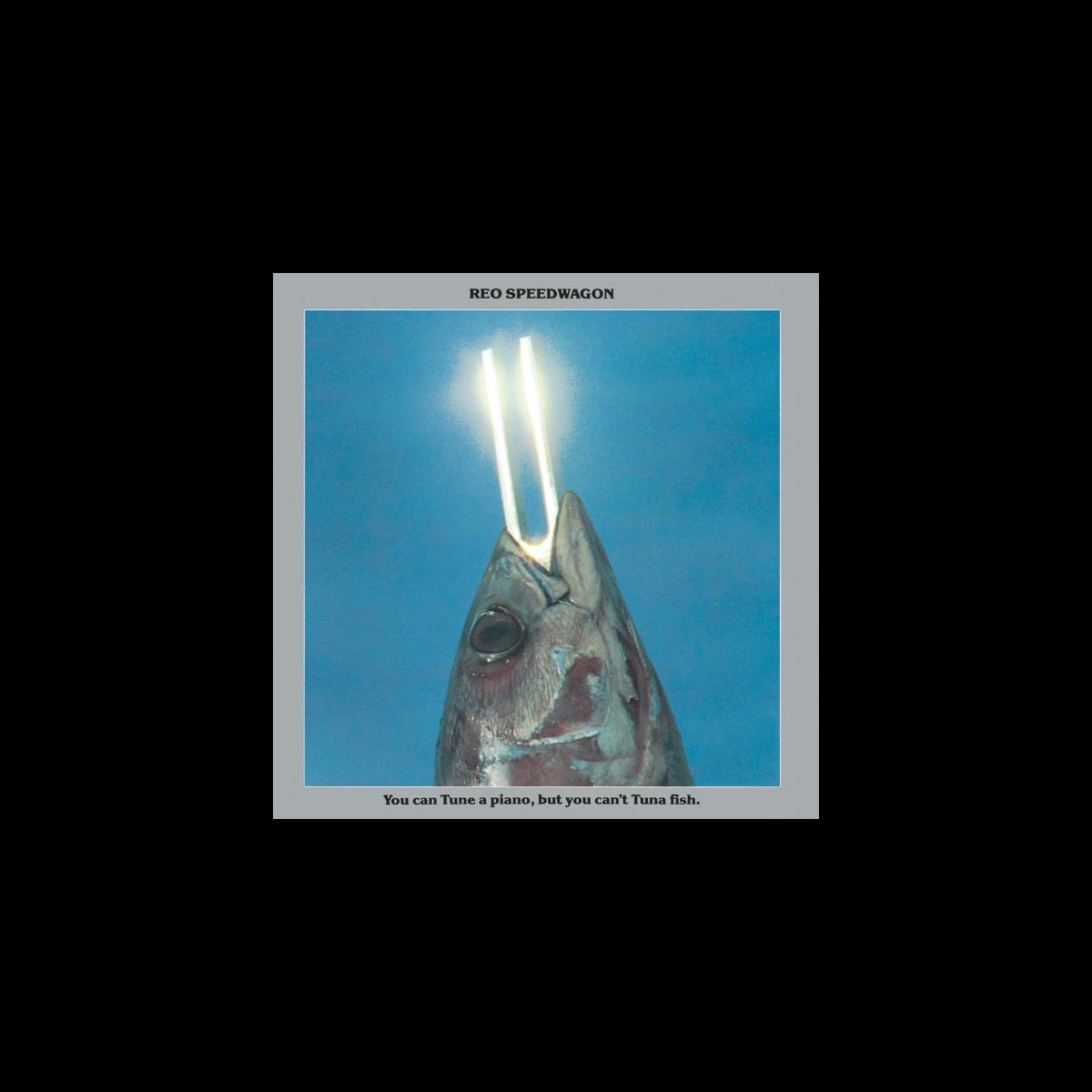
It’s worth noting the cover art, too. It’s iconic for all the wrong reasons. You’ve got a giant tuna fish with a tuning fork in its mouth, positioned next to a piano. It is literal. It is surreal. It’s kind of ugly, if we're being real. But in the world of 12x12 vinyl covers, it was impossible to miss. It stood out among the moody, artistic covers of the era by being unapologetically stupid.
The Mechanics of the Pun
Why does it work? Or, more accurately, why does it work well enough to be annoying? Linguistically, it’s an example of an antimetabole-adjacent pun. You are repeating words but shifting the meaning through phonetic similarity.
"Tune a" (verb + article) sounds identical to "Tuna" (noun) in many English dialects. This is called a homophonic pun. The "piano" and "fish" elements provide the necessary context to make the listener realize they’ve been tricked. It relies on the listener's brain trying to find a parallel structure where one doesn't exist. You expect a deep philosophical truth about the limitations of marine biology. Instead, you get a middle-school joke.
Interestingly, piano tuners actually hate this joke. Talk to a professional technician—someone who spends their life adjusting the tension on 230 strings—and they’ve heard it every single time they tell someone what they do for a living. It’s the "it didn’t scan, so it must be free" of the music world.
REO Speedwagon’s Pivot to Stardom
Before this album, REO Speedwagon was basically a bar band that got big. They were known for touring relentlessly. They played every county fair and hockey rink in the Midwest. But you can tune a piano but you can't tuna fish changed their trajectory. It contained hits like "Roll with the Changes" and "Time for Me to Fly."
These songs are staples of classic rock radio now. You can't go an hour on a "70s, 80s, and 90s" station without hearing Kevin Cronin’s voice. The album's success proved that a band could be "uncool" or "corny" and still dominate the charts. They leaned into the relatability. They weren't trying to be Led Zeppelin or Pink Floyd. They were just guys from Champaign, Illinois, who liked puns and power chords.
The Impact on Pop Culture and Beyond
The phrase didn’t stop with the album. It became a linguistic "snowclone." A snowclone is a type of formulaic joke where you swap out parts of the sentence to make a new one. Think "X is the new Y."
People started riffing on the tuna/tune-a structure immediately. You’ve seen it in cartoons, other song lyrics, and even advertising. It became a shorthand for a specific kind of American wit—low-brow, harmless, and catchy. It’s also one of the most cited examples of a "punning album title" in music journalism, often ranked alongside The Beatles' Rubber Soul (a play on "plastic soul") or Led Zeppelin’s Houses of the Holy.
But REO Speedwagon owns the space. They took a joke that was essentially public domain and branded it so effectively that they basically own the trademark in the eyes of the public. If you say the phrase to anyone over the age of 40, they don't think of a fish; they think of a Hammond B3 organ solo and long hair.
The Science of Why We Remember It
There is actually some psychological weight to why this specific pun stuck. Our brains love patterns. When a pattern is disrupted by a joke, it triggers a small release of dopamine. Even if you groan, your brain "solved" the puzzle.
- Phonetic Matching: The brain processes "tune a" and "tuna" in the same auditory pathway.
- Visual Contrast: A piano and a fish have zero logical connection, which creates a "bizarrely memorable" mental image.
- Repetition: Because the album stayed on the charts for over a year, the phrase was reinforced through radio DJs saying it every single day.
Common Misconceptions
People often think the band invented the phrase. They definitely didn't. As mentioned, it's a folk-humor staple. There’s also a common mistake where people think the "tuna fish" part refers to some kind of musical instrument or a specific tuning technique. It doesn't. It’s literally just about the fish.
Another weird myth is that the album was supposed to be a concept album about the ocean. It’s not. There isn't a single song on the record about fishing, the sea, or aquatic life. It’s all about relationships, life on the road, and growing up. The title was a total non-sequitur. That was the point. It was a "gotcha" for anyone looking for deep meaning.
What to take away from the "Tuna" Phenomenon
If you are a creator, a marketer, or just someone trying to name a podcast, there is a lesson here. You don't always have to be profound. Sometimes, being memorable is better than being "cool." REO Speedwagon wasn't the coolest band in 1978, but they had the most talked-about title of the year.
- Own the Pun: If you're going to use a joke, go all in. The giant fish on the cover was essential.
- Know Your Audience: The band knew their fans were regular people who liked a good laugh, not high-brow critics.
- Timing is Everything: The late 70s were a time of transition from the serious, prog-rock era to the more fun, pop-centric 80s. This album bridged that gap.
Action Steps for Using This Knowledge
If you’re looking to apply the "Tuna Fish" logic to your own branding or writing, keep these practical points in mind:
- Check for "Aural Confusion": When naming a project, say it out loud. Does it sound like something else? Can you use that to your advantage?
- Lean into the Groan: If a joke is so bad it's good, don't apologize for it. Authenticity often looks like a bad dad joke.
- Visual Reinforcement: If you use a pun, make sure the visual identity matches the joke. It helps the "memory hook" sink in.
- Study the Classics: Look at other pun-heavy albums like The Smoker You Drink, the Player You Get by Joe Walsh. See how they used humor to soften a rock-and-roll image.
The legacy of you can tune a piano but you can't tuna fish is a reminder that rock and roll doesn't always have to be serious. Sometimes, it just needs to be catchy enough to make you smile—or roll your eyes—while you're driving down the highway with the windows down.



