Kevin Cronin wasn't even sure if he’d stay in the band.
By 1978, REO Speedwagon had been grinding through the Midwest for years, playing bars and theaters, building a reputation as a relentless touring act that just couldn't quite translate that sweat into a massive radio hit. They were the definition of a "working-class" rock band. Then came an album with a title so ridiculously punny it felt like a dad joke gone rogue. You Can Tune a Piano, But You Can’t Tuna Fish didn't just change their bank accounts; it fundamentally altered the DNA of American arena rock.
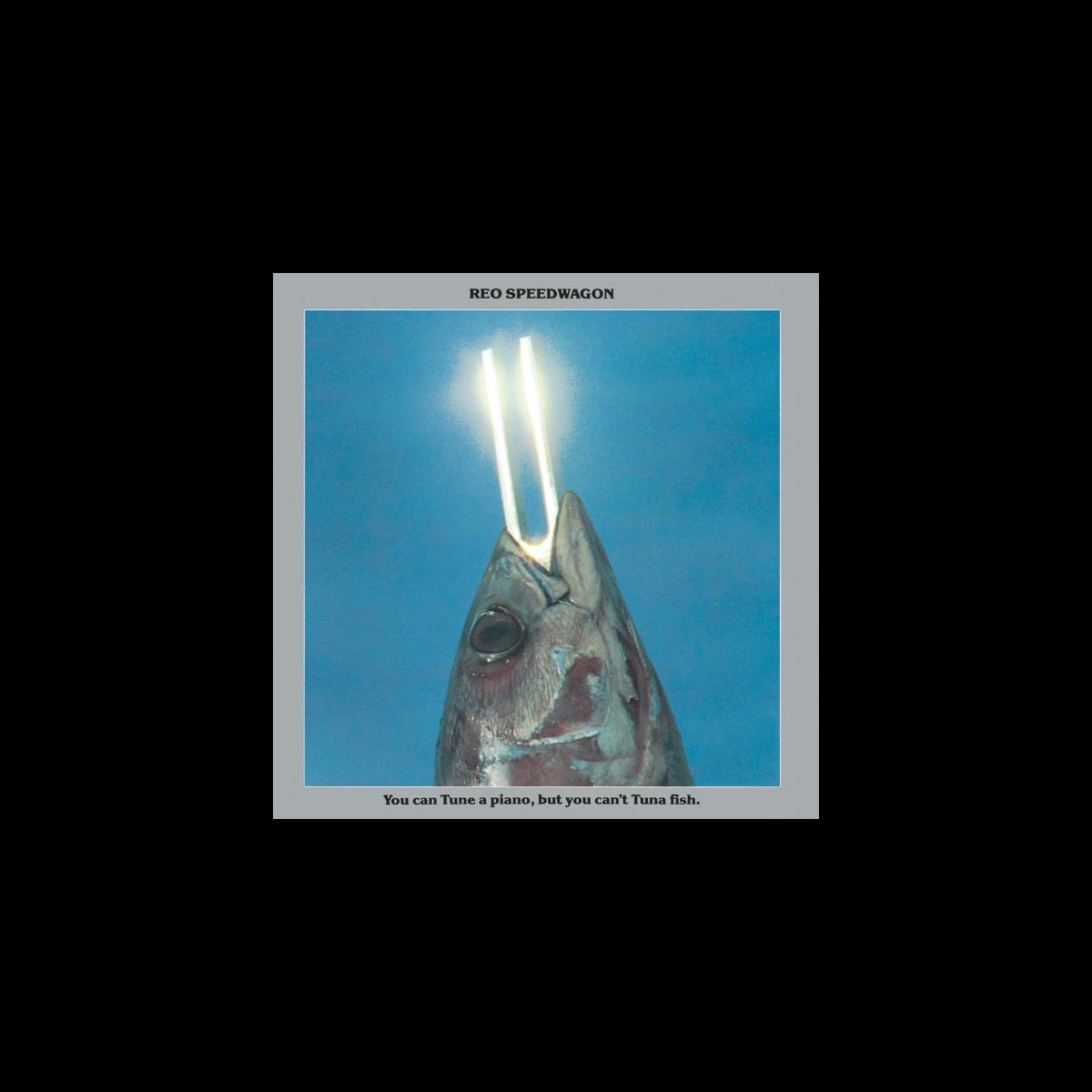
People remember the title. It’s hard to forget a giant fish on the cover with a tuning fork in its mouth. But the music inside was a pivot point. Before this record, REO was leaning heavy into a boogie-rock sound that was starting to feel a bit dated as the seventies drew to a close. With this release, they found the "sweet spot" between Gary Richrath’s aggressive, biting guitar leads and Cronin’s knack for a melodic hook that sticks in your brain like gum on a shoe.
The Sound of a Band Finally Finding Its North Star
If you listen to their earlier stuff like R.E.O./T.W.O., it’s raw. It’s good, but it’s wandering. You Can Tune a Piano, But You Can’t Tuna Fish is where the polish arrived without scrubbing away the grit. Honestly, the opening track "Roll with the Changes" is arguably one of the best "road" songs ever written. It starts with that driving piano—piano you can tune, naturally—and builds into a gospel-tinged crescendo that makes you want to drive 90 mph toward a horizon you haven't seen yet.
Gary Richrath’s guitar work on this album is often criminally underrated by modern critics who dismiss 70s rock as "corporate." Listen to the solo on "Say You Love Me Or Say Goodnight." It’s nasty. It’s melodic. It has a specific "honk" to the tone that defined the REO sound. Richrath wasn't just playing notes; he was wrestling the guitar. He and Cronin had this legendary, often high-friction creative partnership that mirrored the Jagger/Richards or Tyler/Perry dynamic. That tension is what makes the tracks here feel alive rather than manufactured.
They recorded the bulk of the album at Sound City and Cherokee Studios. You can hear the room. There’s a certain air around the drums—played by Alan Gratzer—that feels massive. This wasn't the era of Pro Tools and snapped-to-grid perfection. If the tempo sped up because the band got excited, they kept it. That’s why it feels human.
Why the Critics Hated It (And Why They Were Wrong)
Rock critics in 1978 were busy falling in love with Elvis Costello and the burgeoning punk scene in New York and London. They saw REO Speedwagon as "dinosaur rock" before the dinosaurs were even extinct. Rolling Stone wasn't exactly handing out five-star reviews to guys from Illinois singing about "Time for Me to Fly."
But the critics missed the emotional resonance.
Take "Time for Me to Fly." It’s a song about the quiet realization that a relationship is dead. It’s not a flashy breakup song. It’s weary. It’s relatable. When Cronin sings about how he's "had enough of the hard luck and the blues," he’s speaking to every person working a 9-to-5 who felt stuck. That’s the secret sauce of You Can Tune a Piano, But You Can’t Tuna Fish. It bridged the gap between the blues-rock of the early 70s and the power ballad era that REO would eventually dominate in the 80s with "Keep On Loving You."
The "Tuna Fish" Tracklist and Its Weird Balance
- Roll with the Changes: The anthem. It’s the soul of the record.
- The Whole World's Shakin': A bit of a throwback to their bar-band roots.
- Time for Me to Fly: The definitive mid-tempo ballad that changed their career trajectory.
- Say You Love Me or Say Goodnight: Pure Richrath guitar swagger.
- Blazin' Your Own Trail Again: A deeper cut that shows Cronin’s folkier influences.
- Sing to Me: A bit more experimental, showing they weren't just a two-trick pony.
The album isn't perfect. "Runnin' Blind" feels a little like filler compared to the hits, but even the "weaker" tracks have a high level of musicianship. You have to remember, Bruce Hall had just joined on bass, and his energy shifted the band's rhythm section into a higher gear. It was a rebirth.
The Cultural Footprint of the Pun
Let’s talk about that cover. It’s iconic and stupid all at once. It was designed by Kosh (John Kosh), the same guy who did Abbey Road and Hotel California. Think about that. The man who designed some of the most prestigious covers in history put a fish on a REO Speedwagon record.
The title itself actually came from a joke. It’s a play on the old saying, but it perfectly captured the band’s "no-nonsense" Midwestern attitude. They weren't trying to be "art" with a capital A. They were trying to be the band that played your local arena and blew the roof off. It worked. The album was their first to hit the Billboard Top 40, eventually going Double Platinum. It proved that a band from Champaign, Illinois, could conquer the coast-to-coast airwaves without changing who they were.
Real Talk: The Production Nuance
A lot of people don't realize that Kevin Cronin and Gary Richrath co-produced the album along with Paul Grupp. This was a bold move. Usually, labels wanted a "heavy hitter" producer to reign in bands. By taking the reins themselves, they ensured the record sounded like their live show.
If you listen to the layering of the acoustic guitars in "Time for Me to Fly," there’s a richness there that usually requires a very steady hand in the booth. They doubled the tracks, panned them wide, and created a shimmer that became a staple of the "REO sound." It’s a production technique that many hair metal bands would try to mimic a decade later, but rarely with the same level of taste.
The Legacy of Tuna
Decades later, You Can Tune a Piano, But You Can’t Tuna Fish remains a staple of classic rock radio. You can't go through a weekend without hearing "Roll with the Changes" on some station. It’s become part of the American landscape.
The album represents a moment in time when rock was transitioning. It was the end of the "freewheeling" 70s and the beginning of the highly polished, commercially driven 80s. REO Speedwagon stood right at the crossroads. They kept the Hammond B3 organ and the long guitar solos, but they tightened the songwriting until it was lean and mean.
It’s easy to be cynical about "arena rock." It’s easy to call it "dad rock." But when you strip away the labels and just listen to the transition from the piano intro of "Roll with the Changes" into the full band kick-in, it’s hard not to feel something. It’s pure, unadulterated musical optimism.
How to Experience This Album Today
If you’re just discovering this record, don't just stream the hits. You’ll miss the flow. The album was designed for two sides of vinyl.
- Find the original vinyl if you can. The analog warmth suits the mid-range heavy production of the late 70s much better than a compressed MP3.
- Listen to the lyrics of "Time for Me to Fly" and ignore the fact that you've heard it in a thousand grocery stores. It’s a genuinely heart-wrenching song about self-preservation.
- Pay attention to the backing vocals. The harmonies on this record are tight and provide a "wall of sound" effect that gives the choruses their punch.
- Watch live footage from 1978. Seeing Richrath play these solos live explains why the band was such a force. The studio versions are great, but the live versions were explosive.
REO Speedwagon would go on to even greater commercial heights with Hi Infidelity, but many long-time fans argue that Tuna Fish is the superior record because it feels more "band-centric." It’s the sound of five guys in a room, finally figuring out how to be superstars. They weren't just tuning pianos; they were tuning their entire legacy.
Next Steps for the Classic Rock Enthusiast:
- Analyze the Richrath Tone: If you're a guitar player, look into the "fixed wah" technique Gary Richrath used. He would often leave a wah-wah pedal cocked halfway to get that specific, nasal lead tone found throughout this album.
- Compare the Mixes: Listen to the 1978 original mix versus the 2013 remasters. You'll notice the remaster brings the bass and kick drum much further forward, which changes the "swing" of the songs.
- Explore the "Midwest Rock" Scene: If this album resonates with you, dive into early Styx (The Grand Illusion) or Kansas (Leftoverture). There was a specific melodic hard rock movement coming out of the American heartland at this time that shared the same DNA as REO.
- Check the Credits: Look at the engineering credits for Sound City during this era. You'll see why the drum sounds on this record are so distinctive—the room itself was a legendary character in rock history.
The reality is that You Can Tune a Piano, But You Can’t Tuna Fish isn't just a funny title. It’s a masterclass in how a band survives the transition from "local favorites" to "national legends" without losing their soul in the process.



