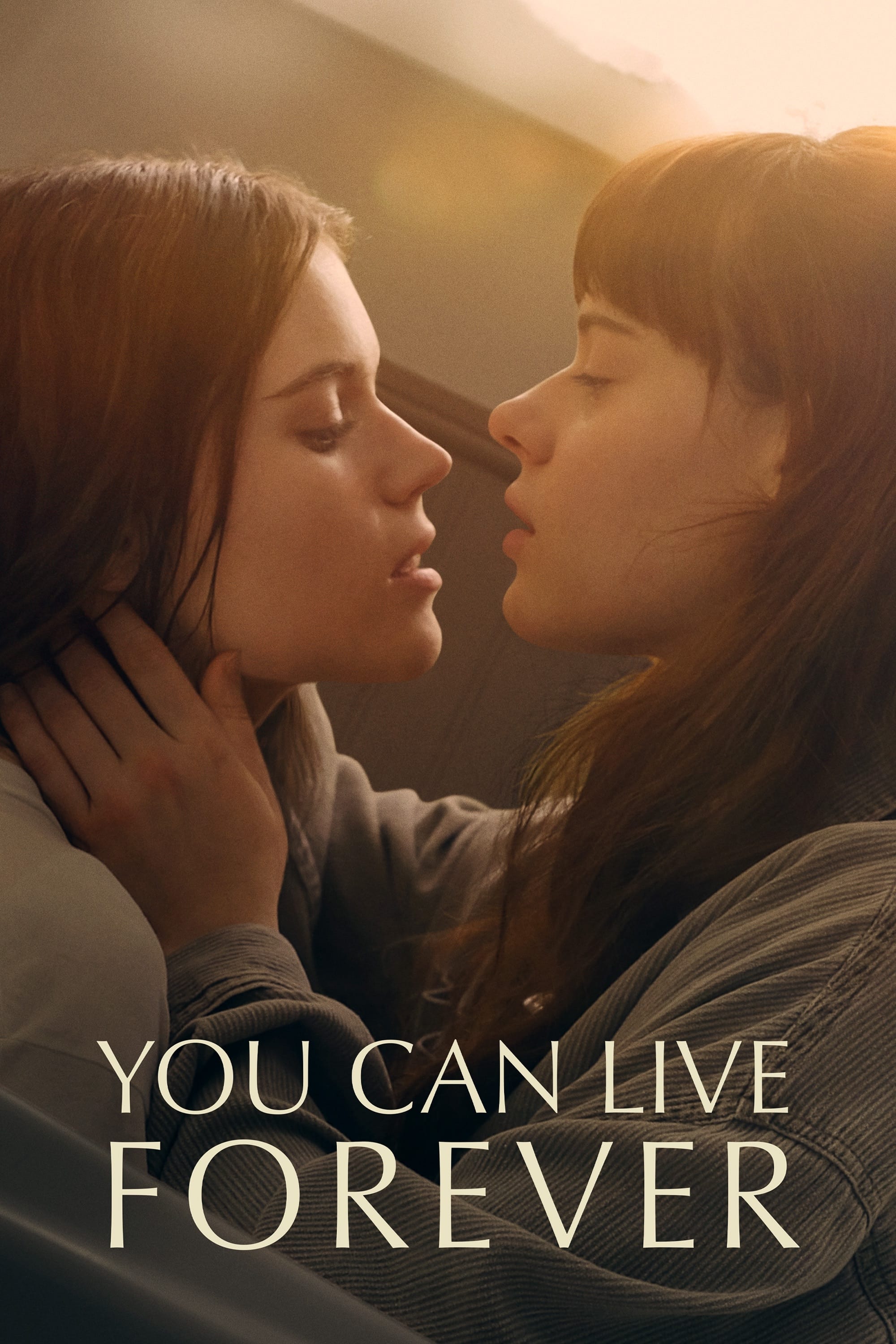
Finding a movie that actually gets the suffocating weight of religious upbringing right is rare. It’s even rarer to find one that does it without descending into a bunch of tired cliches or cheap "trauma porn." That’s basically why people are still hunting for the you can live forever full movie years after its initial festival run. It isn't just another teenage romance. It's a specific, quiet, and honestly devastating look at what happens when your heart pulls you one way and your entire community—literally your whole world—pulls the other.
Directed by Sarah Watts and Mark Slutsky, this 2022 Canadian drama feels lived-in. Set in the early '90s within a Jehovah’s Witness community in Quebec, it follows Jaime, a teenager sent to live with her aunt and uncle after her father dies. She’s an outsider from the jump. Then she meets Marike. Marike is a "pioneer" in the community, deeply devout, and the daughter of a prominent elder. The chemistry is immediate, but the stakes are, quite literally, eternal.
The Reality of Searching for the You Can Live Forever Full Movie
Let's be real for a second. When you're searching for the you can live forever full movie, you're likely hitting a wall of "subscription required" banners or, worse, those sketchy third-party sites that promise a free stream but just want to give your laptop a digital cold.
The film had a modest theatrical release and did the rounds at major festivals like Tribeca. Because it's an indie production distributed by companies like Prospector Films and Good Deed Entertainment, its availability shifts. Currently, if you're in the US or Canada, your best bet is usually platforms like Hulu, Kanopy (which is free with a library card!), or for digital rental on Amazon and Apple TV. It’s one of those movies that deserves a legitimate watch because the cinematography by Christian de la Cortina is stunning—it uses this muted, almost foggy palette that perfectly captures the isolation of a small town in the 90s.
The movie doesn't rely on flashy editing. It’s slow. It breathes. If you try to watch a grainy, pirated version, you’re honestly losing half the experience of the atmosphere.
What Actually Happens (And Why It Isn't a Fairytale)
Most queer cinema from the last decade has leaned toward "it gets better." This movie? It’s more interested in the "how it feels right now."
Anwen O’Driscoll plays Jaime with this sort of watchful, guarded energy. She knows she doesn't belong, but she isn't trying to burn the house down. June Laporte, who plays Marike, has the harder job. She has to convey a girl who genuinely loves her faith. Marike isn't a victim of her religion in the way we usually see in movies; she believes in the "New World." She believes she can have Jaime and her faith, even though everyone around her says that's impossible.
Their relationship starts in the margins. It’s in the car rides to "field service" (door-to-door preaching) and the quiet moments in bedrooms where they "study" together. The tension isn't just about getting caught. It’s the psychological friction of Marike trying to fit Jaime into a theology that has no room for her.
The Jehovah's Witness Context
The film’s title, You Can Live Forever, is actually a reference to a specific book used by Jehovah’s Witnesses for decades: You Can Live Forever in Paradise on Earth. It’s a clever, biting bit of irony. For the characters, "living forever" is the ultimate goal, but the price of that eternal life is the suppression of their actual lives in the present.
The movie is incredibly accurate about the "New World" imagery. You see the drawings of people petting lions and eating fruit in a literal paradise. To an outsider, it looks kitschy. To Marike, it’s a promise. When she looks at Jaime, she isn't just seeing a girlfriend; she’s seeing someone she wants to save so they can be together for eternity. It’s a heavy burden for a teenager to carry.
The Ending Everyone Argues About
Without spoiling every single beat, the third act of the you can live forever full movie is where most viewers get polarized.
Some people want the "run away together" ending. They want the Thelma & Louise moment where the kids escape the oppressive town and live happily ever after in Montreal. But Watts and Slutsky don't give you that. Why? Because that’s not how these stories usually end in real life.
Shunning—or "disfellowshipping"—is a real practice. If Marike leaves with Jaime, she loses her parents, her friends, her sister, and her entire social safety net. The film chooses a path that is much more grounded in the reality of religious exit. It’s bittersweet. Actually, it’s mostly just bitter, but with a tiny glimmer of autonomy at the very end.
The final sequence, which jumps forward in time, is a masterclass in "what could have been." It reminds me of the ending of Brokeback Mountain or Portrait of a Lady on Fire. It’s about the permanence of a first love, even when that love is fundamentally incompatible with the lives the people chose to lead.
Where to Actually Watch It Right Now
If you are looking for the you can live forever full movie, stop clicking on the weird pop-up links. Seriously.
- Hulu: It has been a staple on Hulu’s "Pride" and "Indie" sections for a while.
- Kanopy: If you have a library card or a university login, check here first. It’s free and high-def.
- VOD: It’s usually about $3.99 to rent on YouTube, Google Play, or Apple.
- Physical Media: There is a DVD release if you’re one of those people (like me) who likes to actually own things in case they vanish from streaming.
Why This Movie Still Matters in 2026
We’re in an era where "niche" stories are finally getting the production value they deserve. This isn't a "shaky cam" low-budget flick. It looks like a painting.
The reason people keep searching for it is that it touches on the universal experience of being "the other." Whether or not you grew up in a strict religious sect, you know what it feels like to love someone you aren't "supposed" to love. The film captures that specific 90s nostalgia—the lack of cell phones, the reliance on physical letters and landlines—which makes the isolation feel even more profound.
It’s a quiet movie. It doesn’t scream. It whispers. And sometimes, those are the films that stay with you the longest.
Actionable Steps for the Viewer
- Check Kanopy first: It is the most underrated streaming service for high-quality indie films like this.
- Watch with subtitles: Some of the French-Canadian accents and specific religious terminology can be a bit thick if you aren't used to them.
- Look up the soundtrack: The synth-heavy score by Rayannah and Cédric-Amon Martel is incredible and perfectly sets the "90s-but-timeless" vibe.
- Read the creators' interviews: Sarah Watts grew up in this community, which explains why the details—the dress lengths, the way they hold their Bibles, the specific phrasing of prayers—feel so authentic. It wasn't written by someone guessing; it was written by someone who lived it.



