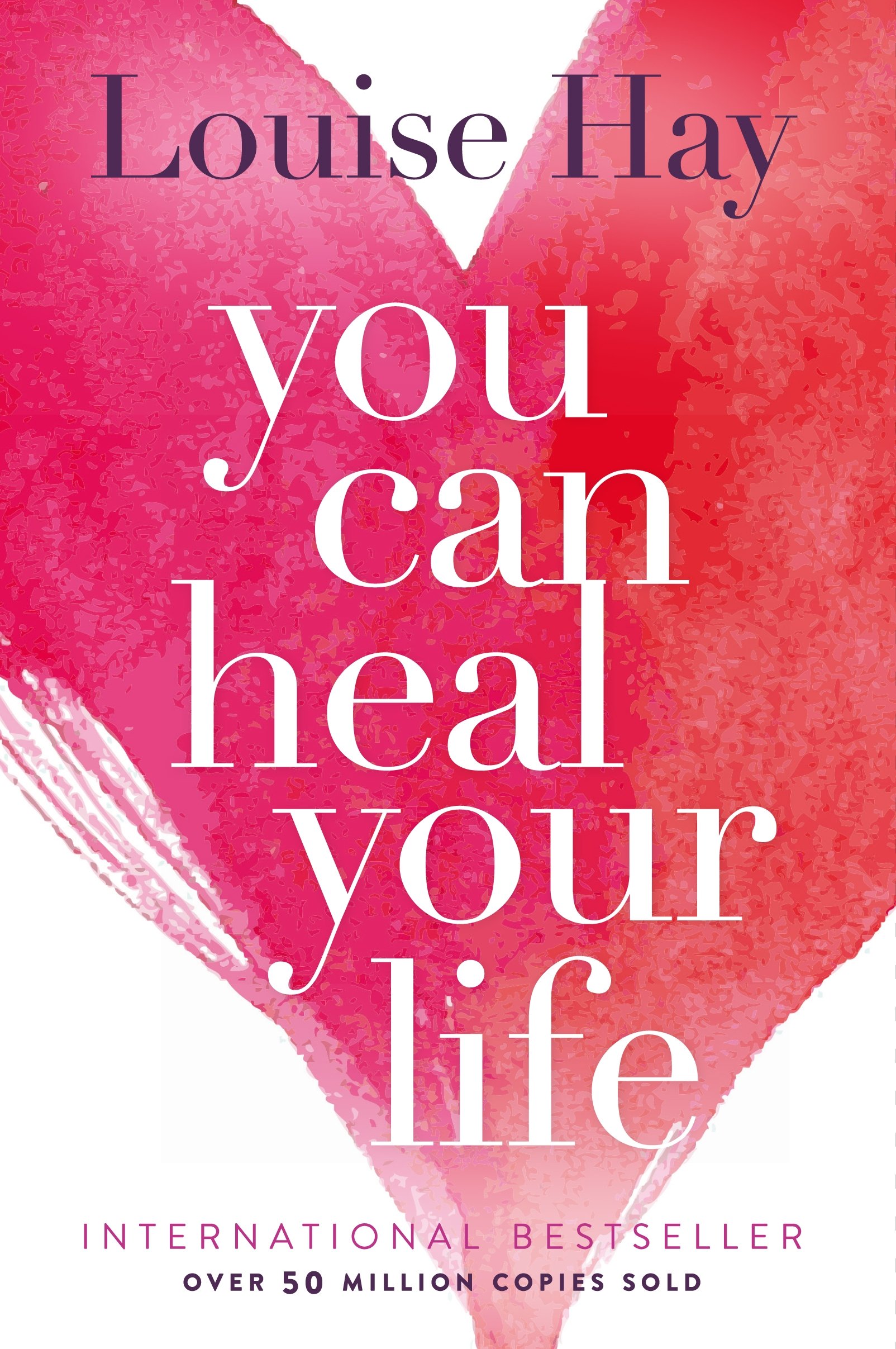
Louise Hay didn’t start out as a "saint." Honestly, she started out in a place most of us would find completely unlivable. We're talking about a childhood marked by poverty, instability, and a neighbor who raped her when she was just five. By 15, she had dropped out of high school. At 16, she gave up a baby for adoption. If anyone had a reason to be bitter, it was her. But instead of letting that trauma define her, she wrote a book that basically invented the modern self-help industry. You Can Heal Your Life isn't just a book; it's a 50-million-copy phenomenon that still tops charts in 2026.
People often dismiss it as "woo-woo." They see the bright, flowery covers and think it's just about smiling your way through a crisis. But that misses the point entirely.
Why You Can Heal Your Life Still Matters
The core of Louise's message is simple: Your thoughts create your future. It sounds a bit like magic, but if you look at the psychology behind it, she was actually onto something that science is only now fully catching up with. In the book, she argues that our physical ailments are often just symptoms of "mental patterns."
Think about it.
When you’re stressed, your shoulders tighten. When you’re scared, your stomach knots up. Louise took this further, suggesting that long-term resentment or self-hatred could manifest as serious illness. She famously claimed she healed herself of cervical cancer in the late 1970s using affirmations, visualization, and a massive internal "housecleaning" of her past traumas.
The Famous Symptom Chart
The most iconic part of the book is the back section. It’s an alphabetical list of physical problems, their "probable" mental causes, and a new thought pattern to fix it.
- Acne? She says it's a lack of self-acceptance.
- Back pain? Usually related to feeling unsupported (money-wise or emotionally).
- Headaches? Often come from invalidating the self or self-criticism.
Is it a replacement for a doctor? No. Even Louise acknowledged that nutrition and therapy played a role. But she insisted that if you don't fix the mental "blueprint," the physical problem will just keep coming back. It’s about getting to the root.
The Controversy Nobody Talks About
You can't talk about You Can Heal Your Life without mentioning the "Hayrides." In the mid-80s, during the height of the AIDS crisis, Louise started a support group for men who were being treated like lepers by society. She sat with them, hugged them, and told them they were lovable.
This was radical.
However, her stance on disease also drew fire. Some critics felt her philosophy blamed the victim. If you "create" your own illness with your thoughts, does that mean getting sick is your fault? It’s a heavy question. Louise’s fans argue it's not about guilt; it's about empowerment. It's the difference between being a victim of your body and being an active participant in your recovery.
Science is Finally Calling Her Bluff (In a Good Way)
Back in 1984, the idea of a "mind-body connection" was considered fringe. Today, we have entire fields like psychoneuroimmunology. Researchers at Washington University recently discovered the Somato-Cognitive Action Network (SCAN), a literal physical link in the brain between the parts that control movement and the parts that handle thinking and planning.
Basically, the brain is hardwired to connect our internal state with our physical health.
When Louise wrote about "mirror work"—looking yourself in the eye and saying "I love you"—it felt cheesy. Now, we know that positive self-talk can lower cortisol and boost the immune system. She wasn't a scientist, but she was a master of observation.
How to Actually Use This Stuff
If you pick up a copy today, don't just read it. It’s meant to be a workbook.
- Stop the Criticism. Louise says this is the first step. You can't heal in an environment of judgment.
- Forgiveness is Selfish. Not in a bad way, but in a "I'm not carrying this heavy backpack anymore" way. You don't forgive for the other person; you do it to set yourself free.
- Watch Your Words. Notice how often you say "I should" or "I must." Replace them with "I could" or "I choose to."
Honestly, the book is kinda repetitive. But that’s the point. You’re trying to overwrite decades of negative programming. It’s like trying to turn a giant ship; it doesn’t happen in one sharp turn. It takes a lot of small, consistent nudges.
Actionable Next Steps
To get the most out of the philosophy in You Can Heal Your Life, start with these three concrete actions:
- The Mirror Test: Every morning for one week, look in the mirror and say, "I love and approve of myself." Notice the immediate resistance or "inner critic" that pops up. That resistance is your roadmap of what needs healing.
- Trace the Ailment: The next time you feel a physical "niggle"—a stiff neck or a sudden cold—look up the metaphysical cause in the book. Even if you don't fully believe it, ask yourself: "Does this emotional theme (like feeling unsupported or being inflexible) resonate with what's happening in my life right now?"
- The "Should" Audit: For one full day, catch every time you use the word "should." It is a word that implies you are wrong or failing. Consciously swap it for "I choose to" and see how your energy levels shift when you take back your power of choice.



