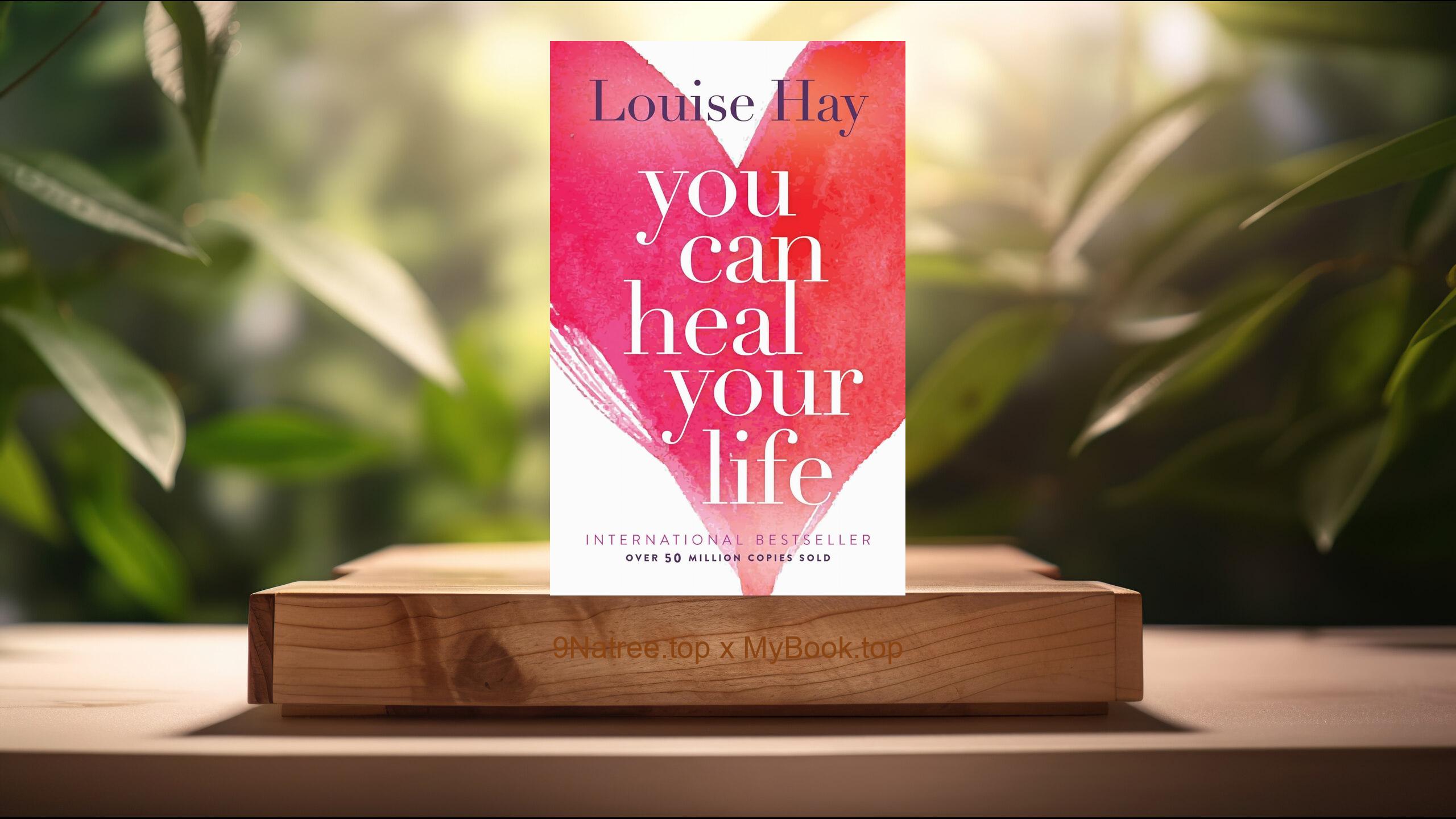
You’ve probably seen the little blue book with the rainbow heart sitting on a dusty shelf in a thrift store or featured in a sleek 2026 "wellness" TikTok. It’s been around since 1984. Honestly, it’s one of those books that people either treat like a sacred text or dismiss as dangerous, "woo-woo" nonsense. There isn’t much middle ground here.
You Can Heal Your Life Louise L Hay isn't just a self-help book; it’s a cultural artifact that basically birthed the modern affirmation industry. If you’ve ever told yourself "I am enough" in a mirror, you’re inadvertently quoting Louise Hay. But behind the pastel covers and the gentle quotes lies a philosophy that is surprisingly radical and, to some, deeply upsetting.
She wasn't a doctor. She wasn't a scientist. She was a woman who had a horrific childhood—we’re talking about being raped at five and abused by a stepfather—and she turned that trauma into a multi-million dollar publishing empire called Hay House.
The Core Idea (And Why It’s Polarizing)
The premise is simple. Radical, but simple.
Louise Hay argued that our thoughts create our reality. Period. She believed that every physical "dis-ease" in our bodies is just a mirror of a mental pattern. If you have a sore throat? You’re supposedly suppressing anger or feeling unable to speak up. Constipation? You’re "holding onto" the past.
It sounds empowering to some. To others, it sounds like victim-blaming.
Let's be real: telling someone their cancer is caused by "resentment" is a massive claim. Scientists and medical professionals have been dunking on this for decades. There is zero clinical evidence that saying a mantra will shrink a tumor. Yet, the book has sold over 50 million copies. Why? Because while the "science" is non-existent, the psychology of self-compassion is actually quite powerful.
What the Book Actually Asks You to Do
Most people haven't actually read the thing; they just know the affirmations. The actual "work" Louise Hay prescribes is intense.
- Mirror Work: You have to look into your own eyes in a mirror and say, "I love you, I really, really love you." It feels incredibly awkward. Most people can't do it for more than ten seconds without wanting to crawl out of their skin.
- The List: The back of the book is a literal glossary of diseases and their "metaphysical" causes.
- Forgiveness: This is the big one. She argues that you have to forgive everyone. Not because they deserve it, but because your resentment is a "poison" you’re drinking while hoping the other person dies.
It’s about "mental housecleaning." She uses the metaphor of cleaning a kitchen. You find the rotten stuff in the back of the fridge (your old beliefs) and you throw them out. Simple? Yes. Easy? Not even close.
The 1980s AIDS Crisis and the "Hayride"
You can't talk about You Can Heal Your Life Louise L Hay without mentioning the "Hayride." In the mid-80s, when the AIDS crisis was at its peak and the government was largely ignoring dying gay men, Louise Hay opened her doors.
She started a support group in her living room that eventually grew to hundreds of people in a gymnasium. She told these men they were lovable. She told them they weren't being punished by God. In a time of extreme stigma, that was revolutionary.
However, this is also where the criticism gets sharp. Critics argue that telling a dying man he can "think" his way out of a viral infection is irresponsible. It’s a messy legacy. She provided immense emotional comfort, but she also peddled ideas that flew in the face of biology.
Is It Still Relevant in 2026?
We live in an era of "manifestation" and "lucky girl syndrome." These are just Louise Hay's ideas with a 2026 filter.
Modern neuroplasticity studies show that repeated thoughts can change neural pathways. That’s a fact. When you stop calling yourself an idiot every time you drop a glass, your stress levels (cortisol) actually go down. Lower stress leads to better immune function.
So, while Louise might have been wrong about the direct cause of a wart (she blamed "little expressions of hate"), she was right about the fact that a brain marinating in self-loathing is a brain that makes the body sick.
What People Get Wrong About the Philosophy
The biggest misconception is that this book is about "thinking happy thoughts."
It’s not. It’s actually quite dark. To "heal your life" according to Hay, you have to go back to your earliest memories of being told you weren't good enough. You have to sit with the pain of your five-year-old self. It’s more like DIY-psychotherapy than a "good vibes only" Instagram post.
Also, Hay never actually told people to stop seeing doctors. She used conventional medicine too. She just believed that the medicine wouldn't "stick" if you didn't fix the underlying self-hatred.
Actionable Steps: How to Use These Ideas Without Being "Woo-Woo"
If you want to see if there's any value here for you, don't start by trying to cure a broken leg with a chant. Try these grounded steps instead:
- Audit your inner critic: For one day, just notice how you talk to yourself. Is it "Man, I'm so clumsy" or "I'm such a failure"? Just notice it.
- Try the Mirror Test: Look at yourself in the mirror tomorrow morning. Don't check your hair or look for a pimple. Just look at your eyes and say "I’m doing my best." If it makes you cry or feel angry, that’s your "resistance" showing you where the work is.
- The "So What?" Forgiveness: Think of someone you’re mad at. You don't have to like them. Just decide that holding onto the anger is exhausting you. Say, "I release you." See if your shoulders drop.
You Can Heal Your Life Louise L Hay is a tool. It's not a medical textbook. If you take the medical claims with a massive grain of salt and focus on the "learning to not hate yourself" part, it’s easy to see why it hasn’t disappeared after forty years.
Start by identifying one recurring negative thought you have about your body. Write it down. Then, write the exact opposite. Even if you don't believe the new version yet, just saying it out loud changes the air in the room. That's the first step of the "housecleaning" Louise talked about.



