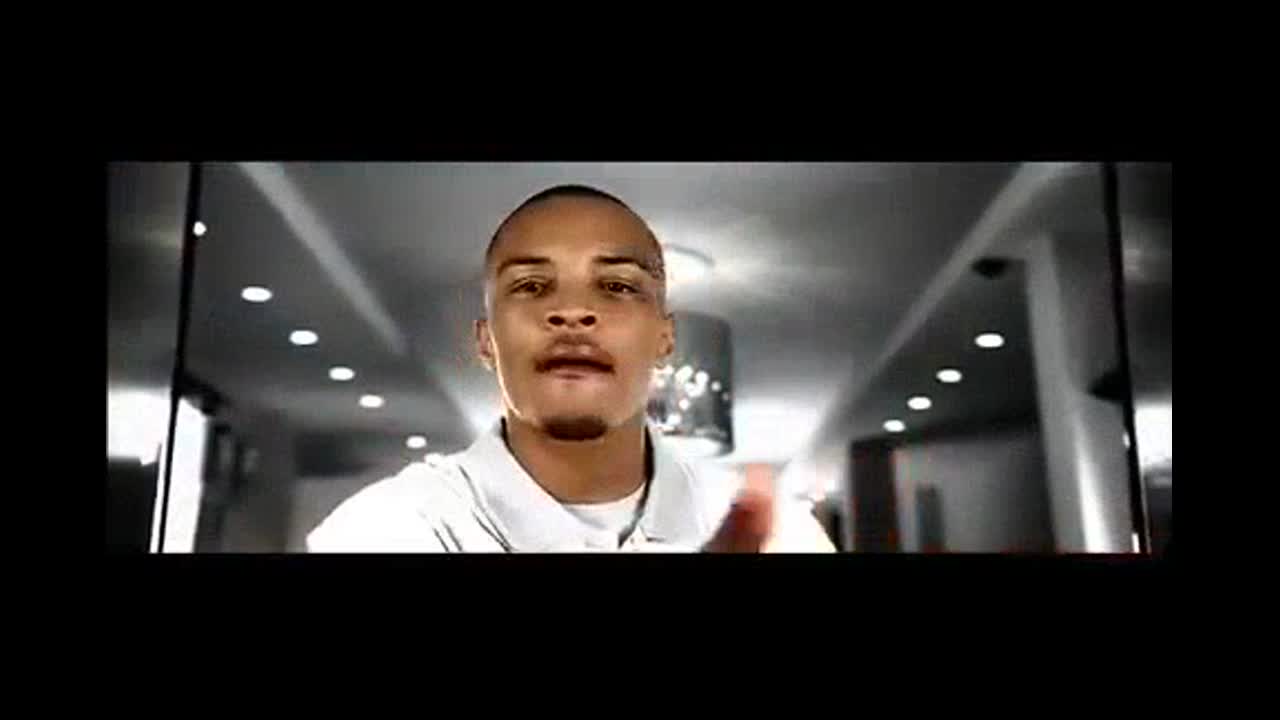
Music moves fast. One minute you're the king of the south, and the next, your greatest hits are being used as background noise for a "Get Ready With Me" video on an app that didn't even exist when you were topping the charts. But when Clifford Harris Jr.—the world knows him as T.I.—dropped "Whatever You Like" in the late summer of 2008, he wasn't just releasing a catchy synth-pop rap hybrid. He was basically rewriting the blueprint for how we talk about wealth in popular music.
It’s been over fifteen years. Think about that for a second. In 2008, the global economy was literally collapsing. Lehman Brothers was folding, the housing market was a smoking crater, and people were losing their shirts. Yet, right in the middle of that financial nightmare, Tip walks in with a song that says, "Yeah, the world is ending, but you can have whatever you like."
It was the ultimate escapism.
The Weird Timing of a Global Smash
Most people forget how dire things were when this track hit number one on the Billboard Hot 100. It wasn't just a hit; it was a phenomenon that stayed at the top for seven non-consecutive weeks. Honestly, the song's success was kinda counterintuitive. You’d think people struggling to pay rent wouldn't want to hear about popping rubber bands on stacks of cash or buying private jets.
But that’s the magic of the "Paper Trail" era. T.I. managed to make the flex feel inclusive rather than exclusionary. When he says the line about the "gas range, wide-screen TV," he’s listing things that felt like peak luxury at the time. Today, a wide-screen TV is something you buy at a drug store on Black Friday for ninety bucks. In 2008? That was the dream.
The production by Jim Jonsin was a masterclass in "stadium rap." It had those bright, buzzy Lead synths that defined the late 2000s. It felt expensive. If you listen to it now, the 808s are actually surprisingly soft compared to the aggressive drill beats we hear in 2026, but the melody is undeniable. It’s a pop song wearing a crown.
Breaking Down the Chart Dominance
The song didn't just climb the charts; it teleported. It actually broke a record at the time for the biggest leap to number one, jumping from 71 to 1 in a single week. This was before streaming really dictated the game. This was pure radio dominance and digital downloads from iTunes. Remember buying individual songs for 99 cents?
T.I. was competing with himself, too. "Live Your Life" with Rihanna was right there in the mix. For a few months, the entire music industry was basically an Atlanta-based monopoly.
Why the Message Stuck
"You can have whatever you like" became more than a lyric. It became a meme before we really used the word "meme" the way we do now. It's a phrase that has been parodied by everyone from "Weird Al" Yankovic—whose parody "Whatever You Like" was about a guy offering his girlfriend "coupons for the food court"—to endless late-night talk show sketches.
The song works because it taps into a very specific human desire: the wish to provide.
Tip isn't just bragging about his own money. He’s telling a partner that his success is their success. It's the ultimate "I made it" anthem. It’s also incredibly catchy. Let's be real, you’ve probably hummed that chorus in the shower at least once in the last decade.
The Contrast of the Paper Trail Era
To understand the weight of this track, you have to look at where T.I. was personally. He was facing serious federal weapons charges at the time. There was this massive cloud hanging over his head. The album Paper Trail was largely written while he was under house arrest, hence the title—he had to write his verses down because he couldn't just go to the studio whenever he wanted.
This tension creates a weird vibe if you look closely. On one hand, you have the celebratory "Whatever You Like," and on the other, you have the introspective "No Matter What." It's a glimpse into a man who is at the absolute peak of his commercial powers while simultaneously staring down the barrel of a prison sentence.
The Evolution of the "Flex"
If we look at how rappers brag today, it’s much more specific. It's about Richard Mille watches, Birkin bags, and crypto portfolios. T.I. was more general. He talked about "stacks," "big houses," and "fancy cars." It was a broader, more aspirational type of wealth that felt attainable to the listener's imagination.
There's a specific cadence he uses in the song—that slow, deliberate flow—that influenced a whole generation of Southern rappers. You can hear echoes of it in early Drake or even some of Big Sean’s work.
- The Hook: It uses a call-and-response structure that works perfectly in a club.
- The Beat: Minimalist but heavy.
- The Persona: The "King of the South" being a romantic lead.
It was a pivot. Before this, T.I. was mostly known for the gritty "Trap Muzik" sound. "Whatever You Like" proved he could play the pop game better than the pop stars themselves.
The Cultural Longevity
Why do we still care? Why does a song from 2008 still get play at weddings and birthday parties?
Part of it is nostalgia. For Gen X and Millennials, that "Paper Trail" era represents the last moment before social media completely fractured the monoculture. It was one of the last times everyone was listening to the same ten songs at once.
But there’s also the fact that you can have whatever you like is a timeless sentiment. It’s the "Great Gatsby" of hip-hop tracks. It represents the promise of the American Dream through the lens of a kid from Bankhead who actually made it out.
What Critics Got Wrong
At the time, some critics dismissed it as "ringtone rap." That was a common insult back then. If a song was too catchy or had a simple melody, it was labeled as disposable. History has shown that wasn't the case. Ringtone rap died, but the craftsmanship of Jim Jonsin’s production and Tip’s delivery has held up.
Interestingly, the song has a 150 BPM (Beats Per Minute) tempo if you count it in double-time, but it feels much slower. It’s a "lean-back" record. It doesn't rush you. It invites you to sit in the luxury it’s describing.
Assessing the Legacy
Looking back from the vantage point of 2026, the song feels like a time capsule. It reminds us of a time when "having whatever you like" felt like a possibility, even when the news was telling us otherwise. It was the peak of the "Bling Era's" transition into something more melodic and polished.
T.I. eventually went to prison, the economy eventually recovered (and then wobbled again), and music moved on to the streaming-heavy, TikTok-driven landscape we have now. But the sheer confidence of that track—the idea that a man could offer the world to someone just because he had the "paper" to back it up—remains a core pillar of hip-hop's DNA.
Actionable Takeaways for Music Fans and Creators
If you're a student of the game or just someone who loves a good throwback, there are a few things you can actually take away from the "Whatever You Like" phenomenon:
1. Study the Pivot T.I. showed that you don't have to abandon your core identity to go pop. He stayed "Tip" while making a song that could play on Radio 1 in the UK. If you're a creator, look at how he maintained his street credibility while softening his sound for the masses.
2. Context is Everything The reason this song hit so hard was that it provided a direct contrast to the grim reality of 2008. If you're releasing content, think about the "vibe" of the current year. Sometimes people don't want a mirror held up to their problems; they want a window into a better life.
3. Simplicity Wins The hook isn't complex. The melody isn't doing gymnastics. It’s a simple, repetitive, and relatable idea. In a world of over-engineered music, the most direct path to the listener's brain is often the most successful.
4. Revisit the "Paper Trail" Album Don't just listen to the singles. Go back and listen to the full project. It’s a masterclass in sequencing and shows the duality of a superstar under pressure. It's one of the few albums from that era that genuinely deserves the "classic" label without an asterisk.
5. Understand the "Inclusive Flex" When you’re sharing your own wins—whether on social media or in person—notice the difference between "look what I have" and "look what we can have." T.I.'s lyrics in this track are almost always directed at a "you." That’s a powerful psychological trick that makes the listener feel like part of the success.



