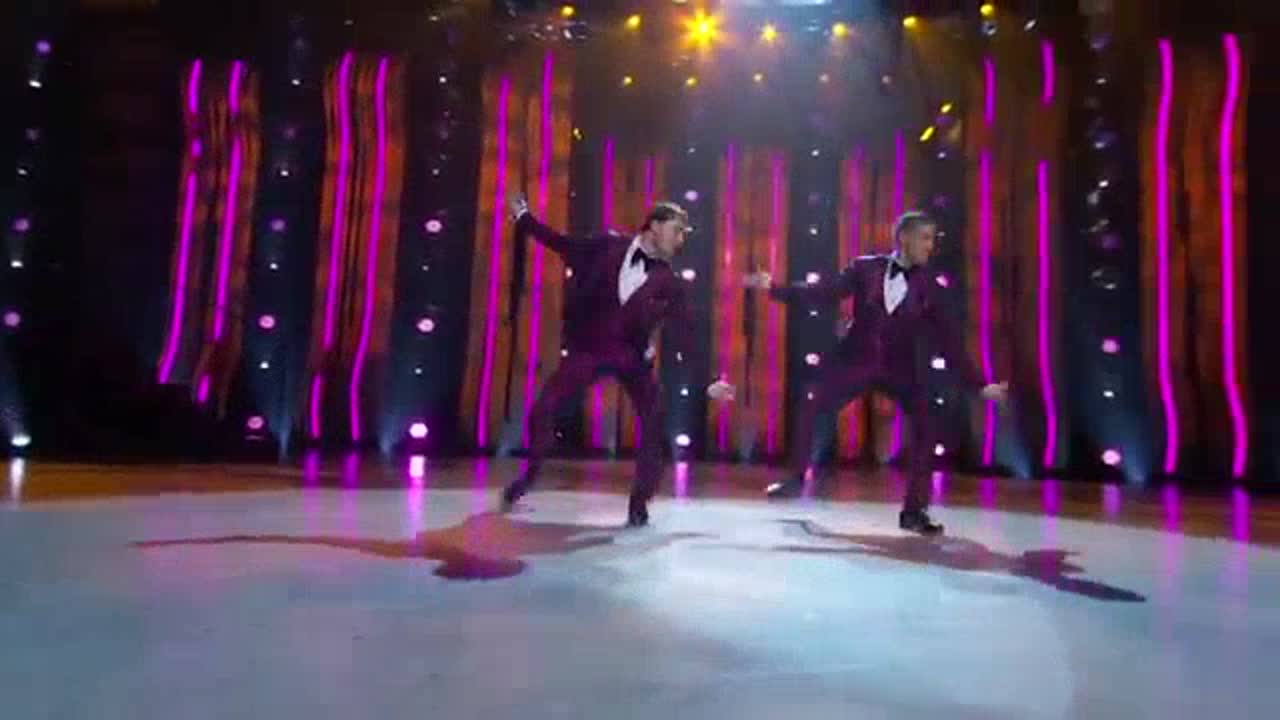
"The Safety Dance" isn't just some dusty synth-pop relic from 1982. When Ivan Doroschuk snarled that you can dance if you want to, he wasn't exactly inviting you to a polite ballroom gala. He was actually pissed off. Security guards at clubs in Ottawa and Montreal were kicking people out for pogoing—that aggressive, vertical jumping style born from punk rock. It looked dangerous to the suits. To Ivan, it was just expression.
He wrote a song about it. Then it became a global phenomenon. If you found value in this piece, you might want to look at: this related article.
Most people hear that medieval-sounding synthesizer hook and think of the goofy music video with the dwarf and the Maypole. They miss the bite. The song is actually a middle finger to conformists. It’s a manifesto about bodily autonomy and the right to exist in a space without being told how to move. Honestly, it's kinda wild how a song about being kicked out of a club for "safety" reasons became the definitive track for every wedding reception for the next forty years.
The Weird History Behind the Safety Dance
Let's look at the context of the early eighties. New Wave was exploding. Synthesizers were getting cheaper. But the tension between the old-school disco crowd and the rising punk/new wave scene was real. If you went to a club and didn't do the hustle, you were a problem. Men Without Hats—led by the deep-voiced Ivan Doroschuk—were basically the outsiders of the Canadian scene. For another perspective on this story, refer to the latest coverage from Entertainment Weekly.
They didn't have hats. That was their literal brand because, at the time, everyone in Montreal seemed to be wearing them.
When you hear the line "we can leave your friends behind," it's not just a catchy rhyme. It’s a literal instruction. If your friends are too stiff or too worried about what the bouncer thinks, they aren't your real friends. Leave 'em. The song advocates for a tribal, almost primitive connection to rhythm that ignores social hierarchy. It’s weirdly egalitarian.
Why the Video Still Confuses Everyone
You've seen it. The rolling hills of West Kington in Wiltshire, England. The jester. The blonde woman dancing through a village. It looks like a fever dream from a Renaissance fair.
The dwarf in the video, Mike Edmonds, was already a legend. He’d been in Return of the Jedi as an Ewok (Logray) and worked on Time Bandits. His presence gave the video a surreal, timeless quality that separated Men Without Hats from the neon-and-hairpray aesthetic of 1983. They weren't trying to look like Duran Duran. They were trying to look like they belonged to an ancient, pagan tradition of revelry.
By leaning into the folk imagery, they made the "pogo" dance feel like something ancestral rather than a passing fad. It worked. The video became an MTV staple, and suddenly, the "you can dance if you want to" mantra was everywhere.
The Science of Why This Song Sticks
There is a psychological reason why this track never dies. It’s the "earworm" factor. Musicologists often point to the "Safety Dance" as a prime example of a song with a high melodic expectancy. The synth riff is repetitive but slightly off-kilter.
- It uses a "call and response" structure.
- The tempo sits at roughly 100-105 BPM, which is the sweet spot for a walking pace.
- The lyrics are imperative.
When a song tells you what to do—"act like you come from out of this world"—your brain engages differently than with a passive love song. You’re being recruited into a movement. Even if that movement is just jumping up and down in your kitchen.
What Most People Get Wrong About the Lyrics
There's a persistent myth that the song is about nuclear war. People think the "Safety" in the title refers to "Duck and Cover" drills from the Cold War era.
It’s not.
Ivan has been very clear in interviews, including a famous sit-down with the Montreal Gazette, that the song is purely about the right to dance. However, the 1980s were a paranoid time. It’s easy to see why listeners projected their fears onto the lyrics. "Everything's under control" sounds a lot like government propaganda if you're in a certain headspace.
But really? It’s about bouncers. It’s about that guy at the door with the flashlight telling you to stop jumping.
The S-S-S-S A-A-A-A F-F-F-F E-E-E-E T-T-T-T Y-Y-Y-Y
The spelling out of the word "Safety" in the extended 12-inch version is a masterclass in tension and release. In the eighties, the 12-inch remix was the gold standard for club play. It allowed DJs to bridge tracks. By stuttering the letters, Men Without Hats created a rhythmic hook that felt digital and robotic, contrasting with the folk-heavy visuals of their video.
It’s that contrast that makes the song a masterpiece of New Wave. It’s high-tech and low-tech at the same time.
The Cultural Legacy: From Glee to Futurama
The song has had a massive second life. It’s been in The Simpsons, Futurama, and Glee. Each time it appears, it’s used to signal a moment of joyous, uninhibited rebellion.
When Steve Smith sings it in American Dad, it’s a joke, sure. But it’s also an acknowledgment that the song is part of our collective DNA now. You can’t escape it. The message that "you can dance if you want to" has transitioned from a punk-adjacent protest to a universal "permission slip" for people who feel awkward.
How to Actually Apply the "Safety Dance" Philosophy Today
We live in an age of constant surveillance and "cringe" culture. People are terrified of being filmed doing something "embarrassing" and ending up on TikTok. In a way, we are more restricted now than the pogo-dancers in 1982 were.
The song's core message is more relevant than ever.
- Ignore the "Bouncers" of Social Media. The people who judge your expression are the ones "left behind."
- Physicality matters. In a digital world, moving your body—truly, weirdly, without a choreographed routine—is an act of defiance.
- Find your tribe. The song isn't just about solo dancing; it's about "we." It's about finding people who won't judge your "Safety Dance."
Why the Track Still Matters in 2026
If you look at the charts today, everything is polished. Everything is tuned to perfection. "The Safety Dance" is messy. Ivan’s vocals are almost a chant. The synthesizers are bright and jagged. It reminds us that pop music doesn't have to be pretty to be powerful.
It just has to be honest.
If you want to live out the ethos of the song, stop waiting for permission. Whether it's a career change, a new hobby, or literally just dancing in a place where people are staring: do it. The world will always try to tell you to "play it safe." But as Men Without Hats proved, the real safety is found in the freedom to be completely, utterly yourself.
Actionable Takeaways for the Modern Rebel
- Audit your "friends": If the people around you make you feel small for being enthusiastic, they aren't your "Safety" circle.
- Practice spontaneous expression: Turn off the notifications, put on a track with a heavy beat, and move without looking in a mirror.
- Reclaim the Pogo: The next time you're at a concert and feel like jumping, do it. The bouncers might have changed, but the spirit of the pogo is eternal.
The next time you hear those opening synth notes, don't just roll your eyes at the 80s nostalgia. Listen to the lyrics. Realize that you have the agency. You have the control. You can dance if you want to, and honestly, you probably should. It’s the only way to make sure you don’t end up as just another face in the crowd, wondering why you never took the chance to move.



