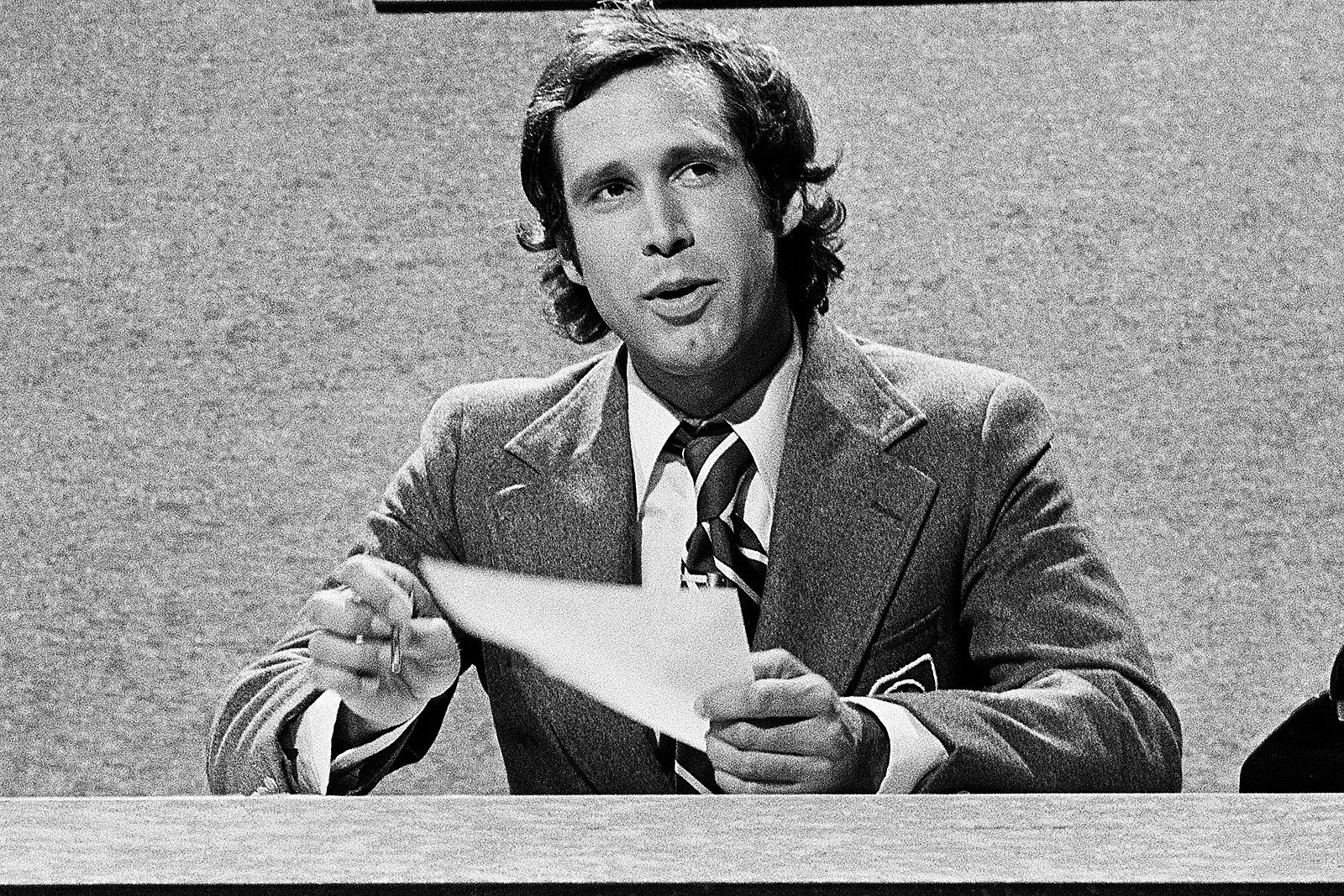
If you grew up anywhere near a television in the late eighties, you know the room. It’s pinkish-beige, stark, and feels like the waiting area of a very stylish 1986 dentist’s office. Two guys sit in folding chairs. One is a towering, deadpan Chevy Chase. The other is a tiny, visibly annoyed Paul Simon.
The Paul Simon and Chevy Chase video for "You Can Call Me Al" is basically the holy grail of "weirdly simple but it works." It’s a four-minute exercise in awkwardness that somehow saved a legendary career. But honestly? The video almost didn't exist. And the story of how Chevy Chase ended up hijacking the song is way more chaotic than the clean, minimalist set suggests.
The SNL Monologue That Failed
Paul Simon was in a weird spot in 1986. He’d just finished Graceland, an album that was musically brilliant but ethically controversial due to his decision to record in South Africa during apartheid. He needed a hit. He needed people to focus on the music.
The first attempt at a music video for "You Can Call Me Al" was, to put it mildly, a total dud. It was basically a clip of Simon performing the song during his monologue on Saturday Night Live. It was dry. It was standard. It had zero "viral" potential—not that we called it that back then. Simon hated it.
Enter Lorne Michaels.
The SNL creator and Simon’s longtime friend looked at the footage and basically said, "We can do better." He called up Gary Weis, a director who had been making short films for SNL since the beginning. They didn't have a massive budget. They didn't have a script. What they had was a spare room and a very tall comedian who was at the peak of his Fletch and Three Amigos fame.
Why Chevy Chase Was the Perfect Foil
Chevy Chase was arguably the biggest comedy star on the planet when he walked onto that set. He was also famously difficult and possessed an ego that could fill a stadium. This made him the perfect person to play the "oblivious superstar" to Paul Simon's "suffering artist."
The concept was stupidly simple: Chevy would lip-sync the entire song while Paul Simon sat there, looking like he’d rather be anywhere else.
The Gags You Might Have Missed
- The Door Entry: Watch the very beginning. They both try to walk through a door that is clearly too narrow for two people. It’s a classic vaudeville bit, but it sets the tone immediately. Simon is the "little guy" being squeezed out.
- The Pennywhistle: During the iconic whistle solo, Simon actually plays it while Chevy mimes it with a goofy, self-satisfied grin.
- The Instrument Swap: As the song progresses, Simon starts bringing in instruments—a conga, a bass—and basically does all the manual labor while Chevy just stands there "singing."
Basically, the Paul Simon and Chevy Chase video turned the typical rock star dynamic on its head. Usually, the lead singer is the god of the frame. Here, the actual singer is relegated to the role of a roadie in his own video.
Behind the Scenes Chaos
People often ask if they rehearsed those dance moves. The answer is: sorta, but mostly no. Chevy Chase supposedly learned the lyrics on the way to the shoot. If you look closely at some of the faster verses, you can tell he’s just barely keeping up, which actually adds to the charm. It feels like a guy who just hijacked a microphone at a wedding.
The set was built specifically to be small to emphasize the height difference. Chevy is 6'4". Paul is 5'3". That eleven-inch gap is the third character in the video. By making the room tiny and the chairs basic, Gary Weis forced the audience to focus on the facial expressions.
And that bass solo? You know the one. The lightning-fast riff that every bassist tries (and fails) to master. That wasn't just a great take—it’s a musical palindrome. The engineer, Roy Halee, took the first half of Bakithi Kumalo’s bass line and played it backward for the second half. It’s a literal mirror image. In the video, Chevy mimes this while looking like he’s doing something incredibly easy, which is the ultimate slap in the face to musicians everywhere.
Why This Video Still Matters in 2026
In an era of CGI and $100 million blockbuster music videos, this clip remains a masterclass in "less is more." It’s human. It feels like two friends messing around in a basement, even though it was a calculated move by some of the smartest people in show business.
It also changed how we viewed Paul Simon. Before Graceland, he was seen as this very serious, poetic, maybe even slightly pretentious folk-rocker. This video made him "the guy who can take a joke." It humanized him.
Actionable Insights for Content Creators
If you're trying to make something that sticks today, the "Al" video offers a few timeless lessons:
- Contrast is King: Putting a very tall, loud personality next to a very small, quiet one creates instant visual interest.
- Self-Deprecation Wins: Simon let himself be the butt of the joke, and it made him more likable than a thousand "cool" poses ever could.
- The "Boredom" Hook: In a world of over-stimulation, someone looking bored or unimpressed on camera (like Simon) is actually a great way to grab attention.
The next time you're scrolling through YouTube and this thumbnail pops up, don't skip it. Watch the way Chevy Chase uses his eyebrows to punctuate the word "Betty." It's a reminder that sometimes, the best way to sell a masterpiece is to stop taking yourself so seriously.
To really appreciate the technical side of the track, go back and listen to the horn section—it's a nine-piece arrangement that includes five trumpets and a baritone sax. It’s a massive, complex sound that contrasts perfectly with the low-budget, two-man-show vibe of the visuals. That’s the real secret of the Paul Simon and Chevy Chase video: the music is high-art, but the presentation is pure, unadulterated fun.



