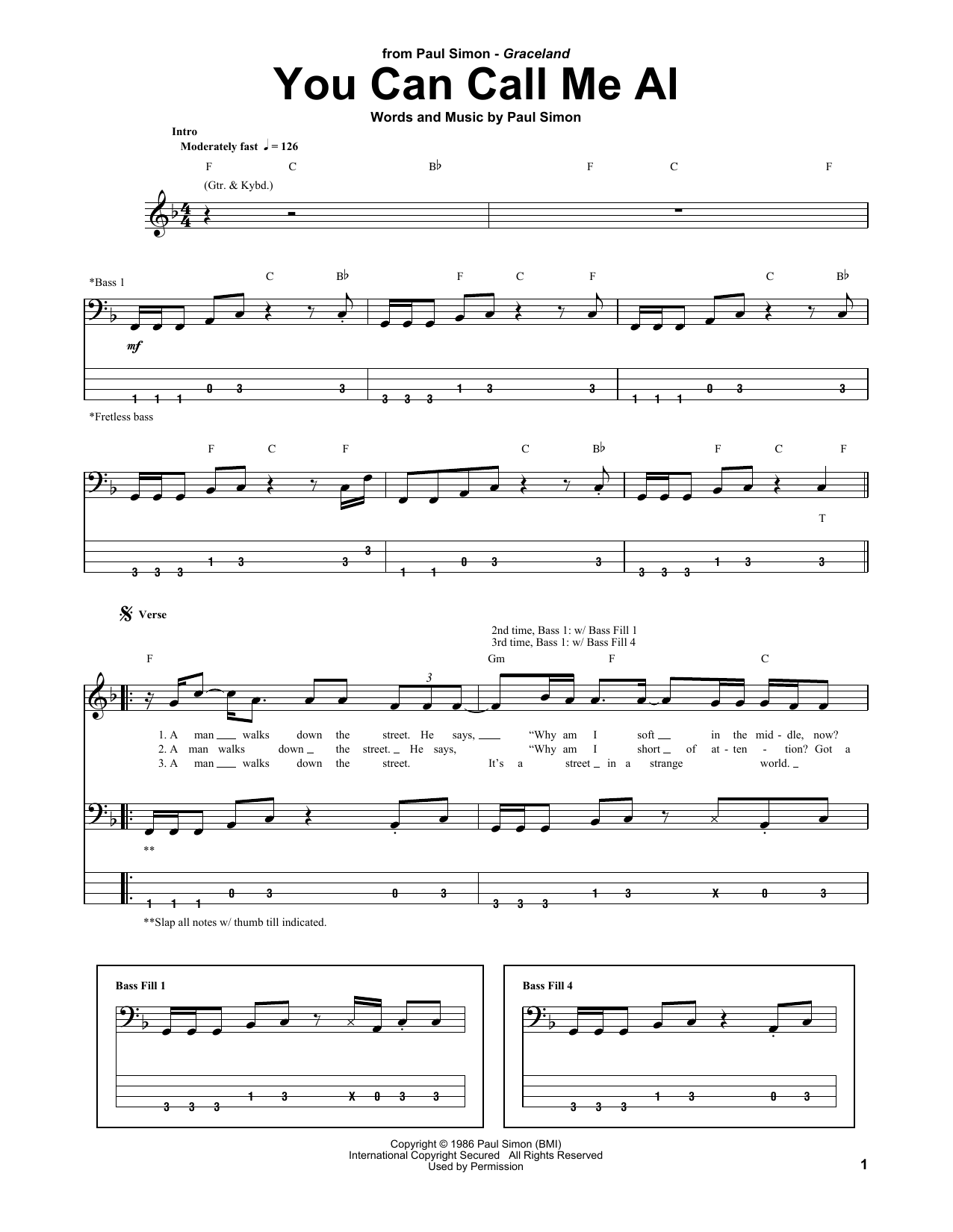
Let’s be honest. If you close your eyes and think of the 1980s, you probably hear that synth-brass riff. It’s bright, it’s punchy, and it’s basically the sonic equivalent of a neon windbreaker. Paul Simon’s "You Can Call Me Al" is one of those rare tracks that managed to be a massive pop hit while being deeply, weirdly experimental.
But here’s the thing: most people think it’s just a goofy song about a guy named Al. They remember Chevy Chase dwarfing Paul Simon in that white room in the music video. They remember the penny whistle.
In reality? This song was born out of a massive midlife crisis, a political firestorm in South Africa, and a cocktail party mistake that happened years before the song even existed. It’s a lot heavier than it sounds.
The Weird Truth Behind "Al" and "Betty"
You’ve probably wondered who Al and Betty actually are. Are they old friends? Metaphors? Characters from a forgotten novel?
Neither.
The names came from a party Paul Simon hosted back in 1970 with his first wife, Peggy Harper. A French composer and conductor named Pierre Boulez was there. As Boulez was leaving, he turned to Paul and said, "Goodbye, Al." Then he looked at Peggy and said, "Goodbye, Betty."
He just flat-out got their names wrong. Paul was Paul; Peggy was Peggy. But "Al and Betty" stuck in Simon's head for over a decade. He thought it was hilarious that this distinguished French musician had totally rebranded them on his way out the door.
When it came time to write the song, Simon used those names as a sort of "bodyguard" and "pal" dynamic. It’s about someone losing their identity and needing a familiar label to hang onto.
A Bass Solo That Is Physically Impossible to Play
If you’ve ever watched a bassist try to cover this song at a bar, you’ve probably noticed they usually mess up the solo at the 3:44 mark. There’s a reason for that.
The solo, performed by the legendary Bakithi Kumalo, is actually a bit of "studio magic."
Bakithi played a blistering run on his fretless Washburn bass, but the version you hear on the record isn't exactly what he played. Engineer Roy Halee took the first half of the lick and then played the tape backward for the second half.
Basically, the second half is a mirror image of the first.
Because of the way notes "bloom" and "decay" on a bass, you can’t actually make your hands do what the reversed tape does. It’s a sonic impossibility. Bakithi had to spend ages practicing a way to "fake" it for live shows so fans wouldn't feel cheated. He was terrified the first time he had to play it in front of a stadium crowd.
The "Graceland" Controversy and the Trip to Johannesburg
You can’t talk about "You Can Call Me Al" without talking about where it was made. 1985 was a dark time in South Africa. Apartheid was in full effect, and the United Nations had a strict cultural boycott in place.
Paul Simon went anyway.
He didn't go to support the government—he went because he’d heard a bootleg tape of South African "township" music and became obsessed with the rhythm. He ended up at a studio in Johannesburg, recording with local legends like Ray Phiri (who came up with that iconic guitar riff) and the group Stimela.
It was a massive risk. Simon was accused of breaking the boycott and "stealing" culture. But if you look at the sessions, he was paying these musicians triple the New York session rate. He gave them songwriting credits and royalties, which was unheard of at the time.
The song itself reflects this journey. The third verse is where things get real.
"A man walks down the street... maybe it's the Third World... he doesn't speak the language."
That’s Paul. He’s the "foreign man" surrounded by sounds he doesn't understand. He’s looking at "angels in the architecture" and trying to find a spiritual connection in a place that’s beautiful but broken.
Why the Music Video Saved the Song
Believe it or not, "You Can Call Me Al" was a bit of a flop at first. It stalled at #44 on the charts. People didn't quite get the "world music" vibe yet.
Then came the second music video.
The first video was just a recording of Paul on Saturday Night Live, and he hated it. He called up Lorne Michaels, who suggested bringing in Chevy Chase. They went into a plain white room with a couple of lawn chairs and a few instruments.
The concept was simple: Chevy Chase lip-syncs everything. Paul just sits there looking bored, occasionally handing Chevy a trumpet or a conga drum.
It was genius.
The height difference (Chevy is 6'4", Paul is 5'3") made it visually hilarious. MTV put it on heavy rotation, and suddenly the song shot back up the charts, eventually peaking at #23 in the US and #4 in the UK.
It’s one of the few times a music video has genuinely "saved" a legendary career.
Is It Actually About a Midlife Crisis?
Kinda.
The opening line is iconic: "Why am I soft in the middle when the rest of my life is so hard?"
It’s a joke about getting older, losing your edge, and feeling out of place. The character in the song is "all along, along," dealing with "hints and allegations." He’s a guy who has everything—money, a family, a "long-lost pal"—but he feels like a stranger in his own life.
Simon once said he structured the lyrics so they start with simple jokes and get more abstract as the song goes on. By the time you get to the "cattle in the marketplace," you’re deep in the imagery of his trip to Africa.
It’s a song about a man trying to find his soul by getting lost in a place he doesn't belong.
Actionable Takeaways for Music Nerds
If you're looking to appreciate this track on a deeper level next time it hits the radio, try these things:
- Listen for the "Hidden" Bass: Put on a pair of good headphones. About 30 seconds in, there’s a secondary, melodic bass line that most people miss because they’re focused on the horns.
- Watch the Penny Whistle: That solo isn't a synth. It’s a real penny whistle, played by Morris Goldberg. It’s a direct nod to "kwela" music, a street style from South Africa.
- Check the Lyrics Again: Notice how the narrator goes from being obsessed with his own "soft middle" in verse one to noticing "orphanages" and "scatterlings" in verse three. It’s a growth arc hidden in a pop song.
- The Reverse Solo: Try to hum the bass solo. Notice how the second half feels like it’s being "sucked" into the next note. That’s the reverse tape effect.
"You Can Call Me Al" isn't just an 80s relic. It’s a masterclass in how to take a personal crisis and turn it into a global celebration. It’s a reminder that sometimes, the best way to find out who you are is to let someone else call you by a completely different name.



