Ever had that weird dream where you’re trying to tell a story and some tall guy just walks in and starts mouth-moving your words while you sit there looking like you’ve missed your bus? That’s basically the entire vibe of the You Can Call Me Al video.
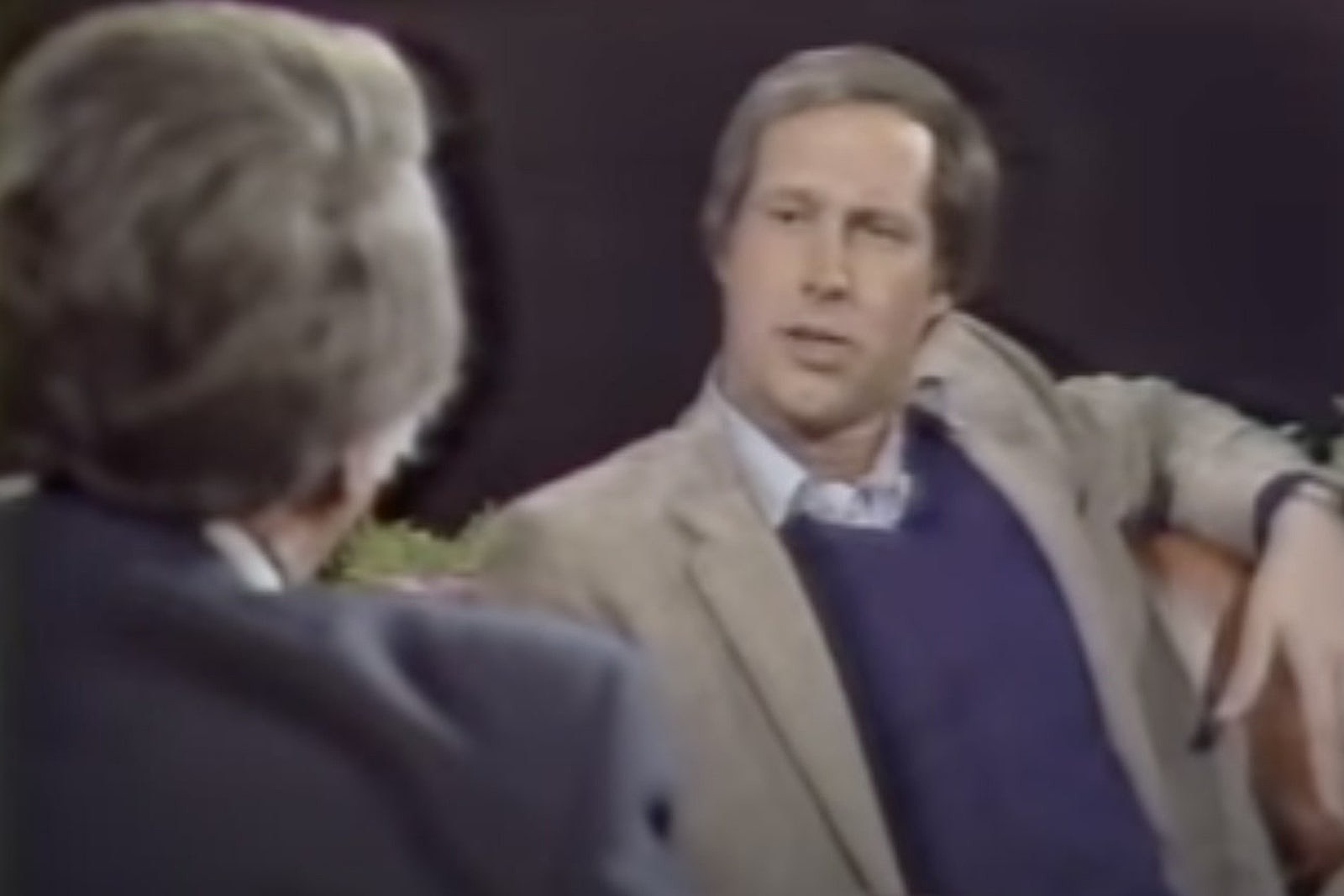
If you grew up in the 80s, or honestly if you’ve just spent more than ten minutes on YouTube, you’ve seen it. Paul Simon—the legendary songwriter, the man who gave us "Bridge Over Troubled Water"—sitting in a pink-lit room looking absolutely miserable. Beside him, a towering Chevy Chase is having the time of his life, lip-syncing every single word with a confidence that borders on the criminal.
But here’s the thing: it wasn't supposed to be like that.
The Disastrous Original Version
Before we got the iconic duo, there was another video. Nobody talks about it because, frankly, it was boring. It was basically just a recording of Paul Simon performing the song during his monologue on Saturday Night Live, viewed through the perspective of a video monitor.
Simon hated it. He thought it lacked the "spirit" of the song. And he was right. "You Can Call Me Al" is a song about a mid-life crisis, sure, but it’s also incredibly bouncy. It needed something weird. It needed a hook that didn't involve a folk singer looking earnest.
Enter Lorne Michaels.
The SNL creator is the secret architect behind this piece of pop culture history. He’s the one who looked at Paul Simon—who stands at about 5'3"— and thought, "You know what would be funny? Putting him next to a 6'4" Chevy Chase."
Why the You Can Call Me Al Video Still Works
There’s a specific kind of magic in the height difference. It’s the oldest comedy trope in the book. You’ve got Chevy, who at the time was one of the biggest (and most polarizing) stars in Hollywood, essentially "bullying" Paul Simon out of his own spotlight.
Chevy didn't just lip-sync. He committed. He did the classic Chevy mugging, the eyebrow raises, and that weirdly aggressive drink of water. Meanwhile, Paul Simon is doing the heavy lifting. Literally. He’s the one dragging out the congas and the horns while Chevy just sits there being "the talent."
The "Al and Betty" Origin Story
A lot of people think the names in the song are just random nonsense. They aren't. They’re a real-life awkward moment. Back in 1970, Paul Simon and his then-wife Peggy Harper went to a party hosted by French composer Pierre Boulez.
Boulez, apparently not a huge folk-rock fan, spent the entire night calling Paul "Al" and Peggy "Betty."
Simon loved it. He didn't correct him. He just stored it away for sixteen years until he needed a chorus for a song about a man who doesn't recognize his own life anymore.
That Bass Solo (The Palindrome)
You can’t talk about this video without talking about the music. Specifically, that lightning-fast bass break by Bakithi Kumalo.
If you listen closely, or try to play it (don't, you'll hurt yourself), it sounds impossible. That's because it sort of is. The producer, Roy Halee, took the first half of Kumalo's improvised solo and literally reversed it to create a musical palindrome. In the video, Simon "plays" it on a six-string bass, nearly conking Chevy in the head with the headstock in the process.
Behind the Scenes Chaos
The shoot was directed by Gary Weis, another SNL alum. It was filmed on a shoestring budget in a white room with a couple of painted lawn chairs and some pink floodlights.
There wasn't a massive script. A lot of it was just Chevy being Chevy.
- The Trumpet Mishap: During the horn section part, Chevy almost takes Paul’s eye out with a trumpet. You can see Simon flinch slightly in the final cut.
- The Penny Whistle: That’s a real penny whistle solo, played by Morris Goldberg, but in the video, Simon handles it with the deadpan energy of a man who’s been told he’s not allowed to speak.
- The Glass Trick: Watch the part where Chevy "drops" his glass through the table. It’s a classic low-budget camera trick that fits the "everything is slightly wrong" theme of the video.
Why Chevy?
It’s easy to forget now, but in 1986, Chevy Chase was a complicated figure. He had a reputation for being... let's say "difficult" on sets. He’d already been banned from SNL once (or was about to be, depending on who you ask).
But in the You Can Call Me Al video, he’s incredibly likable.
Maybe it’s because he’s playing a character who is so obviously a "preening egotist" that it circles back around to being funny. Or maybe it’s just the contrast. Paul Simon is the straight man, the Charlie Chaplin figure quietly enduring the indignity of his video being hijacked.
Actionable Takeaways for Superfans
If you want to truly appreciate this bit of 80s history, here is how to "read" the video next time you watch it:
Watch Paul Simon's feet. During the final conga line/shuffle out of the room, Simon and Chase are perfectly in sync. It’s the only moment where the "feud" ends and they become a duo. It took multiple takes to get that rhythm right because of the massive difference in their stride lengths.
Listen for the "Third World" lyrics. The song was part of the Graceland album, which was recorded in South Africa during apartheid. The video’s silliness actually helped "bridge the gap" for American audiences who were skeptical of Simon’s political choices at the time. It made the heavy themes of the album feel accessible.
Check the "Bodyguard" line. Notice that the only time Paul Simon actually "sings" in the video is to provide the low-pitched harmony on "If you'll be my bodyguard." It’s a subtle nod to the fact that, despite the comedy, he’s still the one in control of the sound.
The You Can Call Me Al video didn't just save a song; it defined an era of music videos where you didn't need a million-dollar budget or a complex narrative. You just needed two guys, a couple of chairs, and a very tall comedian who knew how to steal a scene.