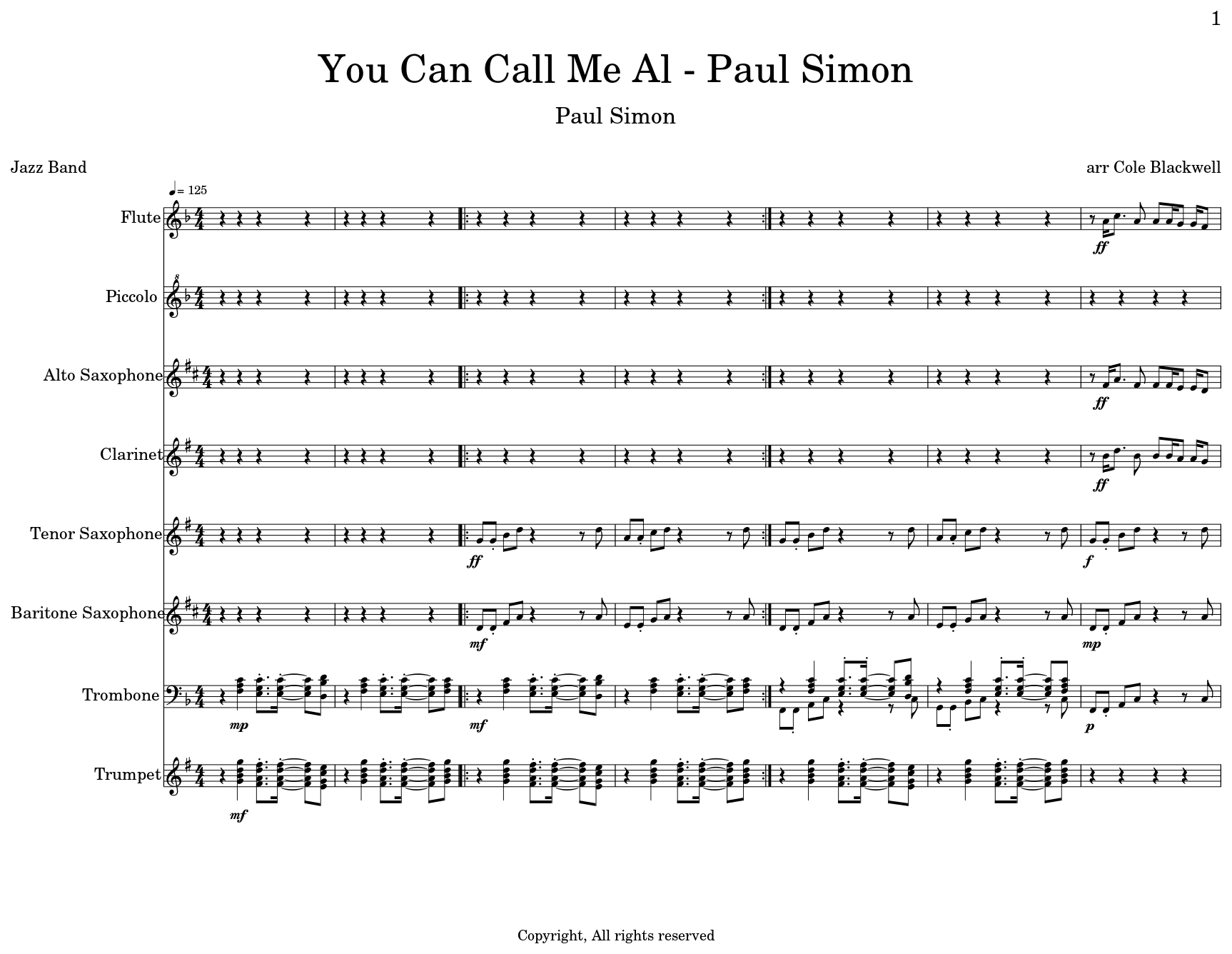
Paul Simon was in a bad spot in the early 1980s. Hearts and Bones had flopped. His marriage to Carrie Fisher was disintegrating. People thought he was a relic of the folk-rock era, someone whose best days were buried in the black-and-white footage of Central Park. Then he heard a bootleg cassette of South African township music called Gumboots. He went to Johannesburg, defied a cultural boycott, and ended up creating You Can Call Me Al, a song that basically saved his career. It’s a track that shouldn't work. It’s got a penny whistle solo, a synth-heavy bassline that plays backward halfway through, and lyrics about a midlife crisis. Yet, it became a global juggernaut.
Honestly, the song is a bit of a miracle.
The Name Change That Actually Happened
The title isn't some deep metaphor for identity or biblical rebirth. It’s literally based on a mistake. Paul Simon and his then-wife Peggy Harper were at a party hosted by the French composer Pierre Boulez. As they were leaving, Boulez—who clearly wasn't keeping up with American folk-rock—referred to Paul as "Al" and Peggy as "Betty." Most people would have just been annoyed or corrected him. Simon, being a songwriter who finds inspiration in the mundane, thought it was hilarious. He tucked it away.
Years later, when he was piecing together the Graceland album, those names became the hook. The song follows a man who is "soft in the middle" and "short of length," wandering through a foreign culture and feeling utterly lost. The chorus—"I can call you Betty, and Betty when you call me, you can call me Al"—is a hand-off. It’s a moment of connection in a song that is otherwise about feeling totally disconnected from the world.
Why the Music Sounds So "Wrong" but Feels So Right
The rhythm of You Can Call Me Al is built on mbaqanga music. Simon worked with South African musicians like Ray Phiri and Bakithi Kumalo to get that specific, driving pulse. If you listen closely to the bassline, it’s one of the most technically impressive feats in 80s pop. Bakithi Kumalo, who played a fretless Washburn bass, improvised that iconic run.
But here’s the secret: the second half of that bass solo is a recording trick.
Engineer Roy Halee took the first half of Kumalo's solo and flipped the tape. It’s a digital/analog hybrid where the notes are played, then mirrored in reverse. It creates a symmetrical "v" shape that is physically impossible to play live exactly as it sounds on the record. It’s those little studio flourishes that made the song cut through the noise of 1986.
Then there's the penny whistle solo. It’s played by Morris Goldberg. It’s high-pitched, almost frantic, and it bridges the gap between the grit of Johannesburg and the polished pop of New York City. People often forget how radical this sounded at the time. This wasn't "World Music" as a polite, background genre. This was a direct, aggressive fusion.
The Chevy Chase Video Was a Plan B
If you picture You Can Call Me Al, you picture Chevy Chase. You see him lip-syncing the words while Paul Simon sits there looking tiny and slightly bored, occasionally playing a trumpet.
This video only exists because Simon hated the first one.
The original music video was a performance piece on the set of Saturday Night Live. It was fine, but it was boring. It didn't capture the quirky, self-deprecating energy of the lyrics. Lorne Michaels, the creator of SNL and a close friend of Simon, suggested a different approach. They brought in Chevy Chase, who was at the height of his Fletch and Vacation fame.
They shot it for almost no money. Chevy didn't even know the lyrics perfectly, which is why he looks like he’s over-enunciating and having the time of his life. Simon, standing at 5'3", next to the 6'4" Chase, created a visual gag that became one of the most played clips in MTV history. It was the perfect marketing tool for a song about a man feeling out of place.
The Political Minefield of Graceland
You can't talk about the success of You Can Call Me Al without mentioning the controversy. Simon broke the UN cultural boycott of South Africa to record with black musicians during Apartheid. He was criticized by the African National Congress (ANC) and Jerry Dammers of The Specials. Artists United Against Apartheid, led by Steven Van Zandt, were not happy.
Simon’s defense was always about the music. He argued that the boycott was stifling the very artists it was supposed to support. By bringing Ray Phiri, Ladysmith Black Mambazo, and Bakithi Kumalo to the world stage, he gave them a platform they never would have had otherwise. The song wasn't political in its lyrics, but its very existence was a political statement. It forced listeners to engage with a culture that the rest of the world was trying to ignore or isolate.
Deciphering the Lyrics: A Midlife Crisis in Three Verses
The first verse is about a guy who is worried about his physical decline. He’s "soft in the middle." He’s looking for a "shot at redemption." It’s relatable, everyday anxiety.
The second verse gets weirder. He’s looking at "cattle in the marketplace" and "scatterlings and orphanages." This is Simon’s reaction to his first trip to South Africa. He felt like a "tourist in the dark." He was wealthy, white, and famous, dropped into a place with incredible beauty and horrific systemic violence.
The third verse is where the spiritual shift happens. He sees "angels in the architecture." He talks about the "street sounds" and the "man in the graveyard." By the end of the song, the narrator isn't just worried about his beer belly anymore. He’s found a sense of awe. The "Al" and "Betty" names aren't just a joke anymore; they are a way to find a name for yourself when you don’t know who you are.
The Legacy of the "Al" Bassline
For bass players, this song is the "Stairway to Heaven" of the four-string world. Bakithi Kumalo’s work on this track changed how people thought about the instrument in pop music. It wasn't just a rhythmic anchor; it was a melodic lead.
Even today, when you hear those opening synth stabs—recorded on a Yamaha DX7, the quintessential 80s keyboard—the energy in a room changes. It’s a wedding staple, a radio classic, and a masterclass in how to use "world music" influences without being condescending or exploitative.
Simon’s career was "dead" in 1984. By 1987, Graceland had won Album of the Year at the Grammys. This song was the engine.
How to Listen Like a Pro
If you want to actually appreciate the complexity of the track, don't just listen to the radio edit on a phone speaker.
- Check the panning: The percussion is spread wide. You can hear the talking drums and the specific "pop" of the snare.
- Focus on the Horns: The horn section (The Phenix Horns, who worked with Earth, Wind & Fire) provides a punchy, staccato energy that contrasts with the fluid bass.
- The Breakdown: At roughly 3:40, listen for the transition back into the main riff after the whistle solo. It’s one of the cleanest production moments of the decade.
You Can Call Me Al isn't just a fun 80s song. It’s the sound of an artist reclaiming his identity by getting lost in someone else’s culture. It’s proof that sometimes, the best way to find yourself is to let someone else call you by a different name.
Actionable Insights for the Music Nerd
- Explore the Source: If you like the rhythm of this song, go listen to The Indestructible Beat of Soweto. It’s the compilation that originally inspired Paul Simon and features the raw, unpolished version of the sound he refined on Graceland.
- Watch the "Classic Albums" Documentary: There is an episode specifically about Graceland where Paul Simon and Roy Halee sit at the mixing board and isolate the tracks for You Can Call Me Al. Seeing Bakithi Kumalo explain the bass part is a revelation for any musician.
- Compare the Versions: Listen to the live version from the Concert in Africa. The tempo is usually faster, and you can hear how the band adapted the studio trickery for a live stage. It loses the "reversed" bass solo but gains a raw, percussive power that the studio version lacks.



