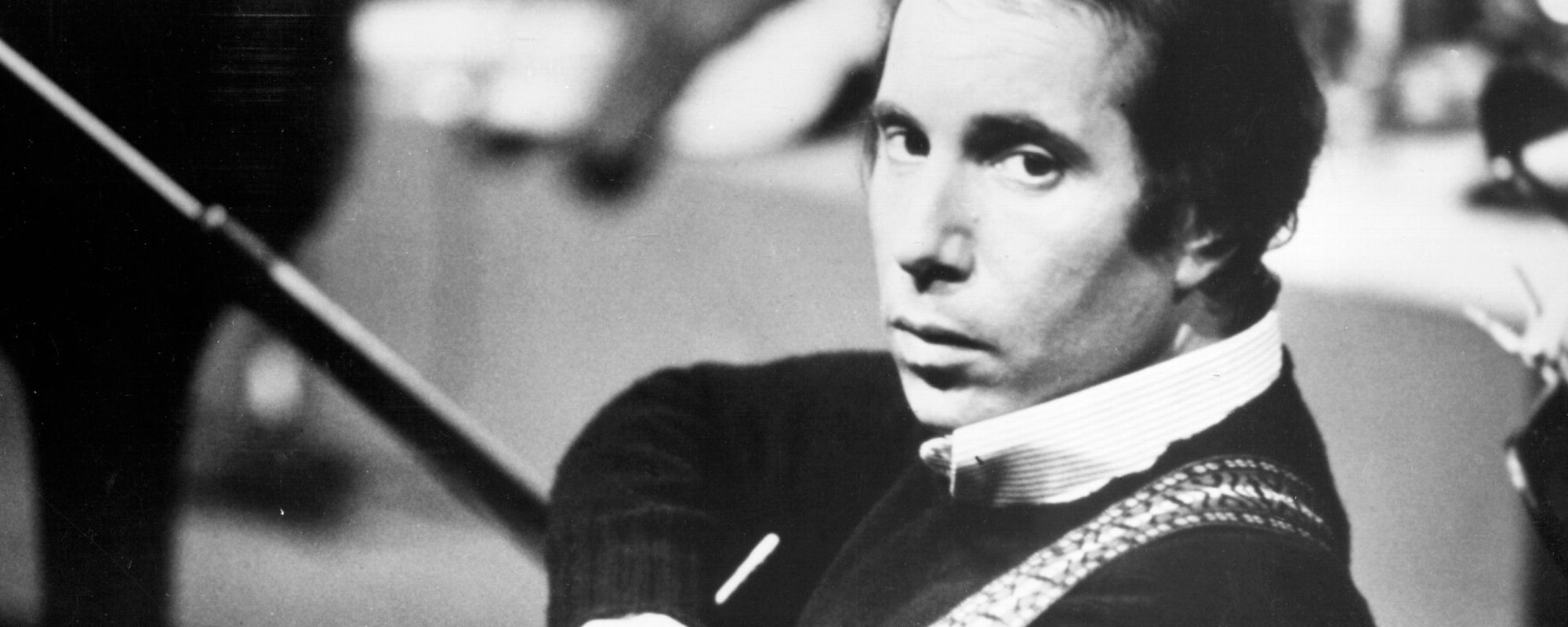
Ever walk into a party where nobody knows your name? Paul Simon did. And honestly, it turned into the biggest comeback of his career.
Most people know the horn riff. They know the bass solo. They definitely know the video where Chevy Chase towers over a grumpy-looking Paul Simon. But the actual story of the Paul Simon song Call Me Al is a weird mix of a high-society blunder, a midlife crisis, and a massive political risk that almost backfired on everyone involved.
The Pierre Boulez Blunder
It started at a party. Paul Simon and his then-wife, Peggy Harper, were at a gathering in New York. The host was Pierre Boulez, a legendary French conductor and composer. As they were leaving, Boulez—who apparently didn't spend much time listening to 60s folk-rock—shook Simon’s hand and called him "Al." Then he turned to Peggy and called her "Betty."
Simon didn't correct him. He just thought it was hilarious. Basically, the most famous songwriter in America had just been rebranded by a classical music snob. That tiny moment of mistaken identity became the hook for the chorus. "I can call you Betty, and Betty, when you call me, you can call me Al."
It’s a funny anecdote, but the song itself isn't just a joke about names.
Why Am I Soft in the Middle?
The opening line is iconic. It’s also incredibly vulnerable. Simon was in his mid-40s when he wrote this. His marriage to Carrie Fisher had recently imploded. His previous album, Hearts and Bones, had flopped. He felt washed up.
When he sings about being "soft in the middle" while the rest of his life is "so hard," he’s not just talking about a beer gut. He’s talking about losing his edge. He’s the guy walking down the street wondering where his role model went.
The song moves through three distinct phases:
- The Midlife Crisis: A man obsessed with his own physical decline and lack of attention span.
- The Cultural Shock: The protagonist finds himself in a "strange world"—likely a reference to Simon's trip to South Africa.
- The Spiritual Awakening: By the third verse, the lyrics shift. He sees "angels in the architecture." He’s no longer looking at his own belly; he’s looking at the world.
That Impossible Bass Solo
If you’ve ever tried to play the bass solo in the Paul Simon song Call Me Al, you’ve probably failed. Don't feel bad. It’s actually physically impossible to play exactly like the record.
Bakithi Kumalo, the South African bassist who played on the track, laid down a killer fretless run. But the producer, Roy Halee, decided to get experimental. He took the first half of Kumalo’s solo and literally flipped the tape. The second half of that fast, percussive break is just the first half played backward.
Because of the way the notes "bloom" when played in reverse, no human can replicate that exact sound live. Kumalo had to spend weeks practicing just to get a version of it that worked for the Graceland tour. It’s a studio trick that became one of the most famous moments in bass history.
The Chevy Chase Connection
The music video is probably the only reason some people under 40 know who Paul Simon is.
The original video was just a recording of Simon performing on Saturday Night Live. It was boring. Simon hated it. So, he called up his buddy Chevy Chase and Lorne Michaels. They went into a plain white room with two chairs and a few instruments.
The concept was simple: Chevy Chase lip-syncs the entire song while Paul Simon sits there looking like he’d rather be anywhere else. Chase, being 6'4", makes Simon (who is 5'3") look like a child. They didn't even have a script. They just improvised. When you see them doing the "shuffle" with the horns, that was just two friends messing around.
It worked. MTV put it on heavy rotation, and suddenly, the Paul Simon song Call Me Al wasn't just a radio hit; it was a visual icon of the 80s.
The South African Controversy
We can't talk about this song without mentioning Graceland.
Simon went to Johannesburg in 1985 to record with black South African musicians. This was during Apartheid. There was a strict UN cultural boycott in place. People were furious. Organizations like Artists United Against Apartheid slammed him for breaking the boycott.
Simon's defense was that he wasn't supporting the government; he was highlighting the music of the oppressed. He paid the South African musicians triple the standard New York session rates and gave them songwriting credits (though some, like the band Los Lobos, later disputed how fairly they were treated on other tracks).
The song itself is a bridge. It blends American pop sensibilities with mbaqanga (South African street music). The penny whistle solo, played by Morris Goldberg, is a direct nod to the kwela music of the townships.
Actionable Insights for Music Fans
If you want to appreciate the Paul Simon song Call Me Al on a deeper level, try these steps:
- Listen for the "Second" Bassline: There is a secondary melodic bass line that comes in around the 30-second mark. It’s buried in the mix, but once you hear it, it changes the whole vibe of the verse.
- Watch the "Classic Albums" Documentary: If you want to see how the track was built layer by layer, the Graceland episode of Classic Albums is essential viewing. It shows the raw tapes and Simon’s thought process.
- Check out Bakithi Kumalo’s Solo Work: The man is a genius. Understanding his background helps you see that "Call Me Al" wasn't just a Paul Simon song—it was a collaboration that changed the trajectory of world music in the West.
- Analyze the Verse Structure: Notice how the first two verses start with the exact same line: "A man walks down the street." This is a classic songwriting trick to ground the listener before taking them somewhere abstract in the third verse.
The song is a masterclass in turning a social "oops" into a global anthem. It’s funny, it’s political, and it’s deeply human. It reminds us that even when we're feeling "soft in the middle," there's usually a way to find the "angels in the architecture" if we just stop looking at ourselves for a second.



