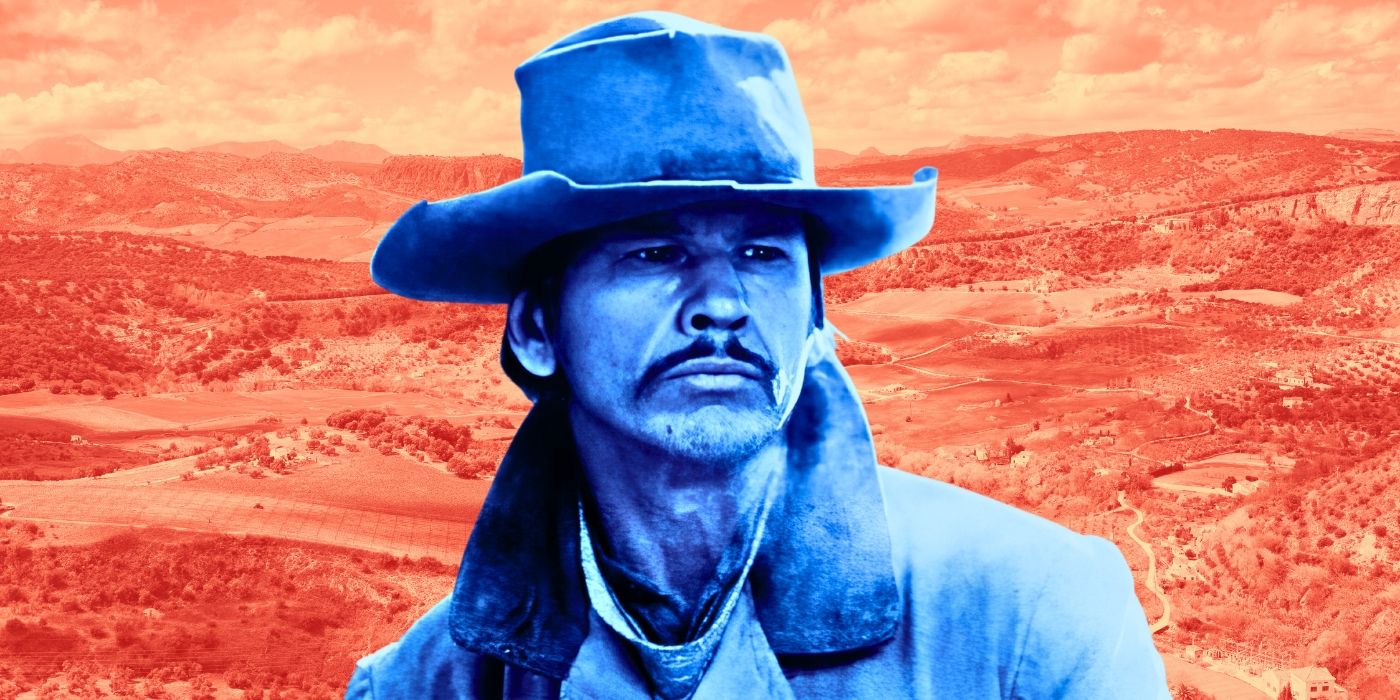
Cinema is mostly noise. We live in an era of quippy superheroes and massive, exploding set pieces where characters feel the need to narrate their own internal monologues just so the audience doesn't get bored. But in 1968, Sergio Leone decided to do the opposite. He gave us ten minutes of a squeaking windmill, a buzzing fly, and a man with a harmonica.
When Charles Bronson finally speaks, it isn't a speech. It’s a math problem.
"You brought two too many."
If you haven’t seen Once Upon a Time in the West, or if you've only caught that clip on a "Hardest Movie Lines" compilation, you might miss why those five words basically redefined the Western hero. It wasn't just about being a tough guy. It was about the complete, icy certainty of a man who knew exactly how many people were about to die.
The Setup: Pure Cowboy Zen
The scene starts at a desolate train station called Cattle Corner. Three gunmen—played by Jack Elam, Woody Strode, and Al Mulock—are waiting. They are "dusters," named for their long, grime-caked coats. They aren't there for a chat. They're there to kill a man they don't even know.
The train pulls in. It pulls out. The station seems empty.
Then, the harmonica starts.
Bronson’s character, known simply as Harmonica, appears on the other side of the tracks. He’s looking for Frank, the movie's primary antagonist (played against type by a terrifying Henry Fonda). But Frank didn't show up. He sent these three instead.
Harmonica looks at the three men. He looks at their horses. "Did you bring a horse for me?" he asks. Snaky, the gunman played by Elam, chuckles. "Well... looks like we’re shy one horse."
Most action stars would have lunged for their gun then. They would have made a face or spat on the ground. Bronson just shakes his head, almost disappointed by their lack of preparation.
"No," he says. "You brought two too many."
Why the Math Matters
Think about the logic for a second. There are three gunmen and three horses. If they were "shy one horse" for Harmonica, it means they expected him to live and ride away with them—or perhaps they just wanted to taunt him before the kill.
By saying they brought "two too many," Harmonica is doing some quick subtraction. He’s telling them that within thirty seconds, two of those horses won't have riders anymore. And since he only needs one horse for himself, the third horse is redundant too.
He’s not just predicting a win. He’s predicting a massacre.
It’s a terrifyingly efficient bit of dialogue. Honestly, it’s arguably the coolest thing Bronson ever did on screen, even considering his later Death Wish years where he was basically a one-man army. In this moment, he wasn't a vigilante; he was a force of nature.
The Power of the "Quiet" Badass
Bronson wasn't the first choice for this role. Leone originally wanted Clint Eastwood, hoping to reunite the "Man with No Name" from his previous trilogy. Eastwood turned it down.
In hindsight? Thank God.
Eastwood has a certain irony to him. He smirks. He has a glint in his eye. Bronson, on the other hand, looks like he was carved out of a canyon wall. There is no humor in his delivery of you brought two too many. He’s stating a fact, like a weather man predicting rain.
He was 46 when the film came out. He had those deep-set eyes and a face that suggested he’d already seen everything worth seeing and was bored by the rest. That stillness is what makes the line work. If a younger, more energetic actor said it, it would feel like bragging. Coming from Bronson, it feels like a death sentence that’s already been signed and notarized.
Behind the Scenes of the Greatest Opening Ever
The tension in this scene wasn't accidental. Leone was a maniac for detail.
- The Fly: That’s a real fly. Jack Elam actually trapped it in the barrel of his gun during filming.
- The Sound: There is no music for the first ten minutes. Just the ambient noise of the desert. This makes the eventual explosion of gunfire feel ten times louder.
- The Casting: Woody Strode and Jack Elam were legendary Western character actors. Killing them off in the first ten minutes was Leone’s way of saying, "The old West is dead. Something much darker is coming."
Why It Still Ranks Today
If you search for the best movie lines of all time, you’ll usually find "I'll be back" or "Here's looking at you, kid." But for cinema purists, you brought two too many is the gold standard for subtext.
It tells us everything we need to know about Harmonica without a single flashback (those come later, and they’re heartbreaking). We know he’s fast. We know he’s observant. We know he has zero fear.
Most importantly, it sets the stakes. This isn't a movie about a hero who might lose. It’s a movie about a man who is a walking graveyard, just waiting for people to give him a reason to dig a hole.
Actionable Insights for Movie Buffs
If you’re looking to revisit this classic or dive into the Bronson catalog for the first time, here’s how to do it right:
- Watch the Italian Cut: If you can find it, the extended version of Once Upon a Time in the West preserves the pacing Leone intended. Don't rush it.
- Listen to the Score: Ennio Morricone wrote the music before the scenes were filmed. Leone played the music on set to help the actors find their rhythm.
- Pay Attention to the Dusters: The long coats became so iconic after this movie that they basically became a trope in every Western that followed, from The Long Riders to Unforgiven.
The genius of Charles Bronson wasn't in how much he said, but in how much he left out. He knew that in a world of loudmouths, the man who can count his enemies' horses is the one who usually walks away.
Next time you’re watching a modern action flick and the hero is giving a three-minute speech about justice, just remember Harmonica. Five words. Three bodies. One horse. That’s all you really need.
To truly appreciate the nuance of this era, your next move should be looking into the "Man with No Name" trilogy to see how Leone evolved from the style of Clint Eastwood to the grit of Bronson. Compare the final duels—the difference in how they use silence will change how you watch movies forever.



