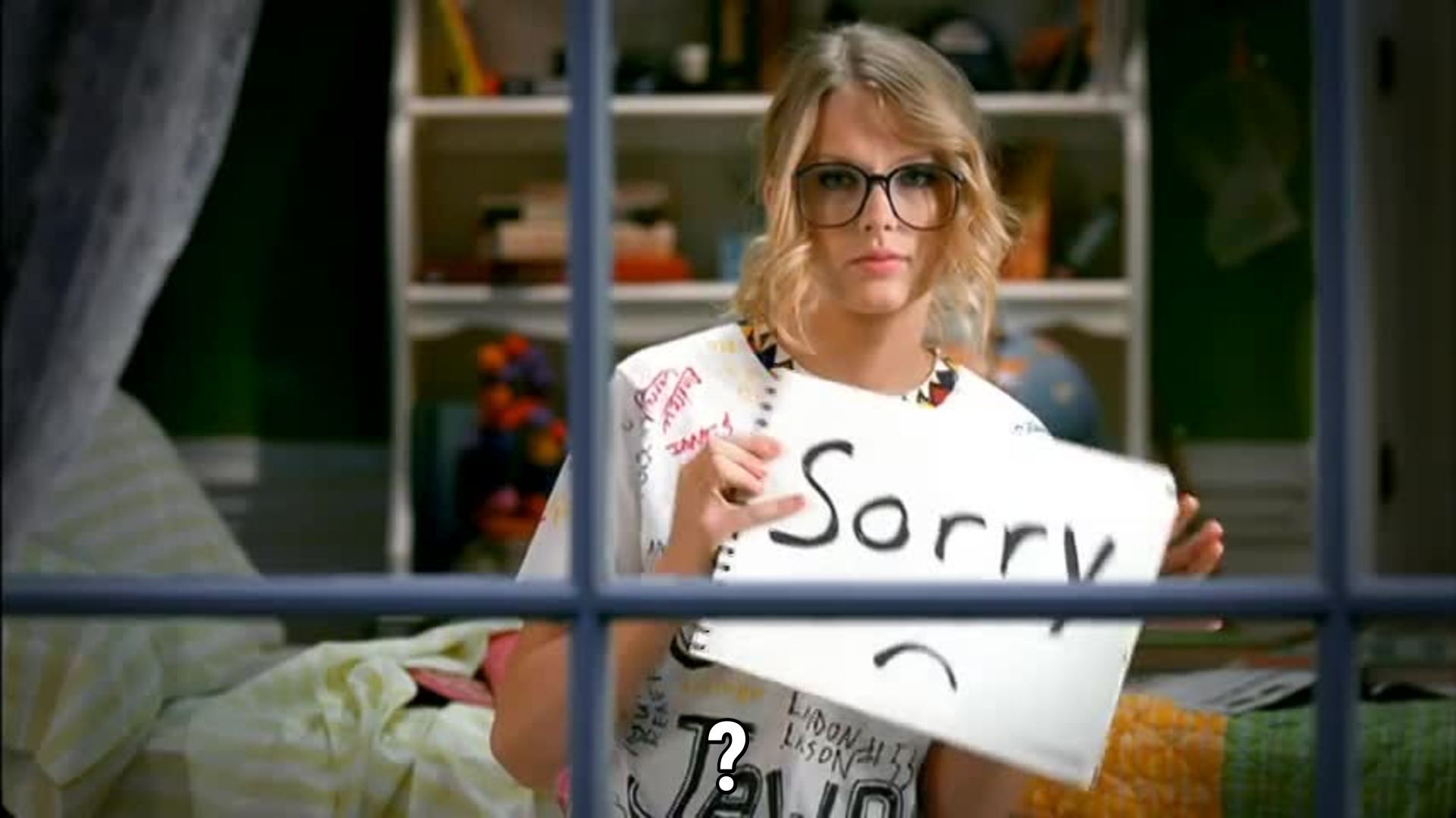
It’s 2009. You’re sitting in your room, maybe wearing a t-shirt you’ve doodled on with a Sharpie, and a blonde girl is holding up a piece of paper to a window. That image is basically burnt into the collective retina of an entire generation. You Belong With Me wasn't just a hit song; it was a cultural shift that cemented Taylor Swift as the patron saint of the "unseen" girl. Honestly, it’s wild to think about how a song about high school bleachers and short skirts managed to redefine the landscape of country-pop forever.
People think they know this song. They’ve screamed it at karaoke. They’ve seen the music video a thousand times. But when you look at the mechanics of why it worked—and why it still works—it’s more than just a catchy hook. It’s about the specific way Swift leveraged the "underdog" trope right before the world decided she was the ultimate prom queen.
The Story Behind the Lyrics
Swift wrote the track after overhearing a phone call between a male friend and his girlfriend. The guy was clearly being berated, and Swift felt he deserved better. That’s the spark. It’s a classic "pick me" narrative, but written with such earnestness that it avoided the cynicism we often see in modern pop. She teamed up with Liz Rose, her frequent collaborator in those early Nashville days, to polish the narrative. Rose has often mentioned in interviews how Swift would come in with these incredibly specific lines—like the one about the girl wearing high heels while the narrator wears sneakers—and that specificity is exactly why it stuck.
The song landed on Fearless, which went on to win Album of the Year at the Grammys. It peaked at number two on the Billboard Hot 100. It couldn't quite nudge past The Black Eyed Peas' "I Gotta Feeling," but in terms of longevity, Swift’s anthem has arguably outlasted almost everything else from that summer.
That Music Video and the Kanye Incident
We have to talk about the video. Directed by Roman White, it featured Taylor playing both the protagonist, "the girl next door," and the antagonist, "the popular cheerleader." It was a masterclass in branding. By playing both roles, she visually represented the internal conflict many teenagers feel.
Then came the 2009 MTV Video Music Awards.
Swift won Best Female Video for You Belong With Me. You know the rest. Kanye West walked on stage, took the mic, and told the world that Beyoncé had one of the best videos of all time. It was a moment of pure, unscripted chaos. But what’s fascinating is how that moment actually fueled the song’s legacy. It transformed Taylor from a successful country singer into a global figure of sympathy and resilience. The song became the backdrop for one of the most famous feuds in music history.
Why the Production Works (The Technical Stuff)
Musically, the song is a bit of a chameleon. Is it country? Is it pop? Is it rock? It’s basically a power-pop track disguised with a banjo. Nathan Chapman, the producer, did something really clever here. The verses are relatively sparse, focusing on that driving acoustic rhythm. But then the chorus hits.
It’s a wall of sound.
The layering of guitars—both electric and acoustic—creates this massive, anthemic feel that feels like a stadium even when you’re listening on cheap headphones. It’s in the key of F# Major, which is a bright, optimistic key. The tempo sits right around 130 beats per minute. That’s the "sweet spot" for a radio hit. It’s fast enough to be energetic but slow enough that you can still process every single word of the story she’s telling.
- The Banjo: It provides the rhythmic "glue" that keeps the country roots alive.
- The Drums: They have a heavy, almost 80s-rock influence during the chorus.
- The Vocal Stacking: Swift’s harmonies are layered to sound like a crowd, which encourages the listener to sing along.
The "Pick Me" Narrative in 2026
Looking back at the lyrics through a modern lens, some critics have pointed out that the song leans into "not like other girls" tropes. It pits two women against each other for the attention of a man. In 2026, we’re a lot more sensitive to that kind of horizontal hostility. However, if you dismiss the song because of that, you’re missing the point of teenage psychology.
High school feels like a competition. It feels like a binary choice between being the "cool girl" and being yourself. Swift wasn't trying to write a feminist manifesto; she was writing a diary entry. That’s why the song persists. It’s a time capsule of a specific, messy, insecure stage of life.
Impact on the Eras Tour
If you went to the Eras Tour, you saw the power of this song firsthand. When the Fearless set begins and those first few chords of You Belong With Me ring out, the energy shifts. It’s one of the few moments in the three-hour show where literally every person, from the 5-year-olds to the 60-year-olds, knows every single syllable.
Swift also released "Taylor’s Version" in 2021. The re-recording was a massive middle finger to the industry executives who sold her masters. Hearing a 31-year-old Taylor sing about high school bleachers was a trip. Her voice was richer, the production was crisper, but she kept the "heart" of the original. She even kept the slight country twang that she’s largely moved away from in her newer work like Midnights or The Tortured Poets Department.
Actionable Takeaways for Music Fans and Creators
If you’re a songwriter or just a fan of the craft, there are real lessons to be learned from this track. It didn't become a diamond-certified classic by accident.
- Specificity is everything. Don't just say "she's pretty." Say "she wears short skirts."
- Visual storytelling matters. The music video wasn't just a promo; it was a short film that defined Taylor's persona for years.
- Cross-genre appeal is a superpower. By mixing country instruments with a pop structure, the song reached twice as many people.
- Embrace the underdog. Everyone has felt overlooked at some point. Tapping into that universal feeling is the fastest way to a hit.
You can still find the original video on YouTube, which currently has over 1.5 billion views. That’s not a typo. Billion. It’s a testament to the fact that while trends change and "short skirts" might go out of style, the feeling of wanting to be seen by someone you love is pretty much permanent.
Listen to the 2021 re-recording to hear the subtle differences in vocal maturity. Watch the 2009 VMA performance to see a piece of pop culture history in the making. Analyze the bridge of the song—the way the music drops out and builds back up—if you want to understand how to create tension in a three-minute pop song. It's a masterclass in commercial songwriting that still holds up nearly two decades later.



