You know that feeling when you're wearing sneakers on the bleachers while someone else is in high heels? It’s a specific brand of teenage yearning that basically defined an entire generation’s emotional baseline. Taylor Swift didn't just write a song when she penned You Belong With Me; she accidentally created a cultural shorthand for the "girl next door" trope that we’re still dissecting over a decade later.
It’s catchy. It’s loud. It’s arguably one of the most successful country-pop crossovers in the history of the Billboard charts.
But why are we still talking about it? Honestly, it’s because the song is a masterclass in relatable storytelling, even if some of the lyrics haven't aged perfectly in the eyes of modern "pick-me girl" discourse. Let’s get into what really happened during the Fearless era and why this track remains the ultimate karaoke staple.
The Backstory You Probably Forgot
The year was 2008. Taylor Swift was a rising star, but she wasn't the global titan she is today. She overheard a male friend of hers talking on the phone to his girlfriend. He was clearly being treated poorly, or at least that was Taylor's perspective. He was apologizing, sounding defeated, and Taylor—being a songwriter with an eye for drama—thought, "Why are you with her when you could be with someone who actually understands you?"
She took that kernel of an idea to Liz Rose.
They wrote the song in about two hours. It wasn't some overproduced, committee-led project. It was just a teenager and her co-writer sitting on a floor, trying to capture the frustration of being "the friend." When you listen to the demo versions, you can hear that raw, acoustic energy before the banjo-heavy production of Nathan Chapman turned it into a radio monster.
The song hit the airwaves in April 2009. It peaked at number two on the Billboard Hot 100. It couldn't quite nudge out "I Gotta Feeling" by the Black Eyed Peas, which, if you remember 2009, was basically playing on a loop in every grocery store and mall in America.
That Music Video and the 2009 VMAs Drama
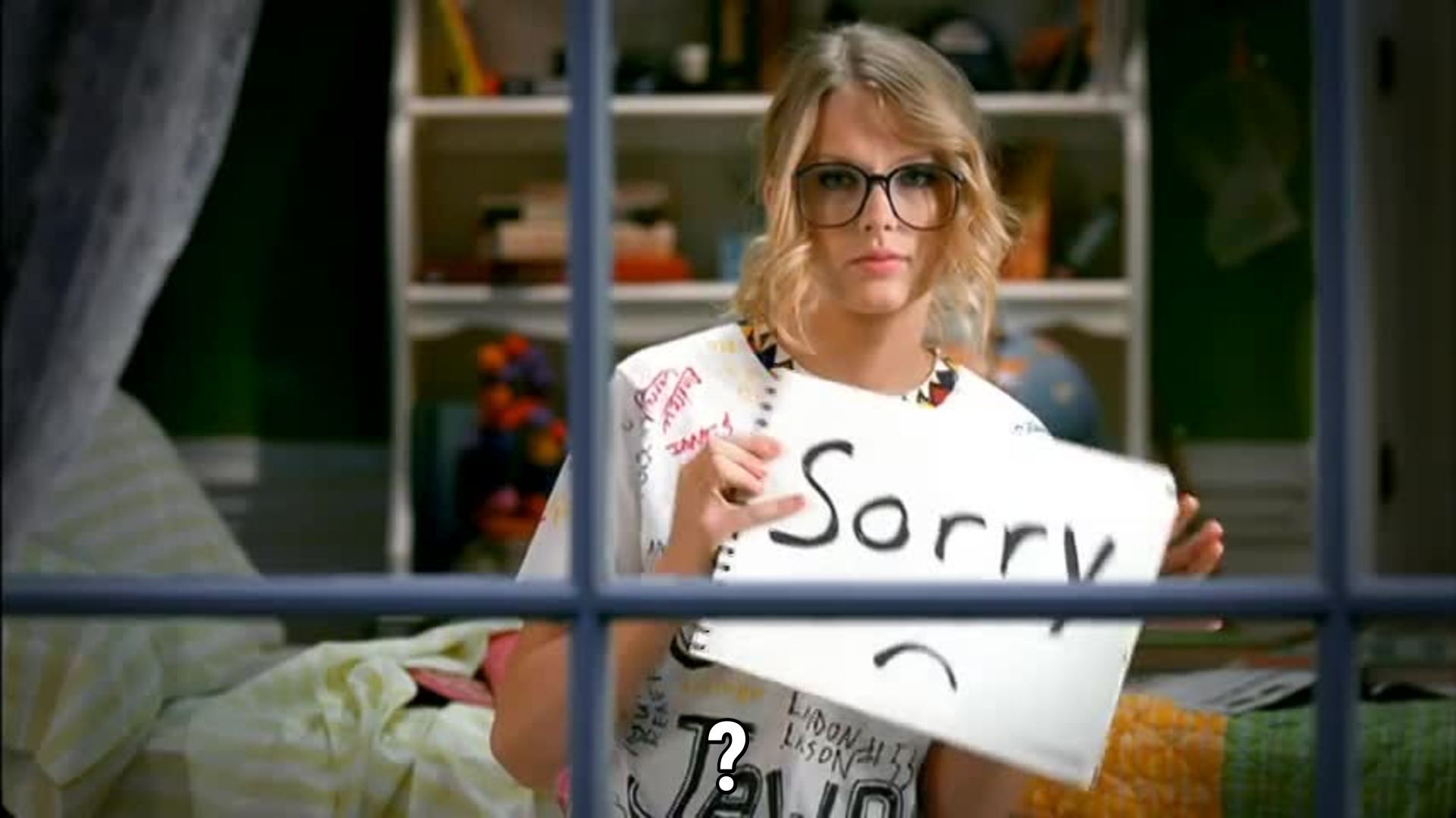
We have to talk about the video. Roman White directed it, and it features Taylor playing two roles: the protagonist (the dorky girl with the glasses) and the antagonist (the popular cheerleader). It’s the ultimate high school movie condensed into four minutes.
The Iconic Paper Note Scene
Remember the "You OK?" written on a piece of paper? It’s become a meme, a Halloween costume, and a recurring motif in Swift's later work. It tapped into the pre-smartphone era of communication where passing notes was the height of romantic tension.
The Kanye West Incident
You can't discuss You Belong With Me without mentioning the 2009 MTV Video Music Awards. Taylor won Best Female Video for this track. As she started her speech, Kanye West famously jumped on stage, grabbed the mic, and declared that Beyoncé had "one of the best videos of all time" for "Single Ladies (Put a Ring on It)."
It was the "imma let you finish" heard 'round the world.
That moment shifted the trajectory of Swift's career. It turned her from a successful country singer into a household name and a sympathetic figure. It also started a decade-long feud that would eventually lead to the Reputation album. If she hadn't won for this specific song, the landscape of modern pop music might look completely different.
The "Pick-Me" Discourse: How the Song Aged
Look, if we’re being real, the lyrics to You Belong With Me have faced some scrutiny lately. The whole "she wears short skirts, I wear T-shirts" thing is a bit... 2009. It plays into the idea that being "one of the boys" or being less conventionally feminine makes you "better" or more deserving of love.
Modern critics often point to this as an example of internalised misogyny.
However, context matters. Taylor was 18 when she wrote it. At that age, everything feels like a binary choice between being "cool" and being "yourself." The song isn't necessarily an attack on feminine women; it’s a projection of a teenager's insecurity. She felt invisible, and she used the "cheer captain" as a foil for her own perceived flaws. It’s a classic underdog narrative.
Swift herself has acknowledged how her perspective on these themes has evolved. You can see the shift in songs like "The Man" or "Mad Woman," where she tackles the very structures she was unintentionally playing into during her teens.
Musicology: Why the Hook Works
Why does it stay in your head for three days after you hear it?
The song is built on a very specific chord progression: I - V - ii - IV in the verses. But the magic happens in the chorus. The melody jumps an entire octave when she hits the word "belong." It creates a literal sense of yearning.
- The Banjo Layer: Even though it’s a pop song, the banjo keeps it grounded in the "Nashville" sound that Taylor was known for at the time.
- The Syncopation: The way the lyrics "She's cheer captain and I'm on the bleachers" are phrased creates a rhythmic hook that’s almost impossible not to tap along to.
- The Call and Response: In the bridge, the "Hey, isn't this easy?" section acts as a direct address to the listener, pulling you into the narrative.
It's a "loud" song. It’s meant to be yelled in a car with the windows down. That's the secret sauce of Swift's early writing—she writes for the communal experience of being frustrated by love.
The Fearless (Taylor’s Version) Era
When Taylor re-recorded the song for Fearless (Taylor’s Version) in 2021, fans were curious to see if she’d change the vibe. She didn't. She kept the production almost identical to the 2009 version, but her voice is noticeably richer.
Listening to a 31-year-old Taylor sing "You Belong With Me" is a trip. It turns the song from a present-tense complaint into a nostalgic reflection. It’s like she’s looking back at her younger self with a "yeah, I remember that feeling" smirk.
The re-recording was a massive success, helping Fearless (Taylor's Version) debut at number one. It proved that the song's appeal wasn't just a product of 2009 radio play; it’s a piece of pop-country DNA that people genuinely love.
Real-World Impact: More Than Just a Song
The song has been covered by everyone from Butch Walker to Selena Gomez. It’s been used in countless rom-com trailers. It basically solidified the "Taylor Swift Formula":
- Specific details (drawings in a notebook, Tuesday nights).
- A clear protagonist and antagonist.
- A bridge that builds to a massive emotional payoff.
For many young songwriters, this track was the blueprint. It showed that you didn't need to write about abstract concepts; you could write about your friend's shitty girlfriend and turn it into a multi-platinum hit.
What Most People Get Wrong
People think You Belong With Me is about a specific guy who Taylor ended up with. Honestly? It’s not. It was a composite of feelings she had at the time. The "guy" in the song is less of a person and more of a symbol for the validation we all want when we're young.
Also, a lot of people think she's playing a "nerd" in the video because she's wearing glasses. If you look closely at the video for "You Belong With Me," the "nerdy" Taylor is just... Taylor without a blowout and a sequined dress. The video was a clever bit of branding that made her feel accessible to millions of girls who also felt like they were "on the bleachers."
Actionable Insights for Fans and Creators
If you're a songwriter or just someone who wants to appreciate the track on a deeper level, here’s what you can take away from it:
- Specificity is Key: Don't just say you're sad. Say you're "sitting on a park bench" or "listening to the kind of music she doesn't like." The details make the listener believe the story.
- Embrace the Bridge: The bridge is the heart of a Swift song. In this track, it’s where the emotional climax happens. If you’re creating anything—a video, a story, a song—make sure your "middle" leads to a satisfying "peak."
- The Power of the Underdog: Everyone feels like an outsider sometimes. Tapping into that universal feeling is why this song survived the transition from the CD era to the streaming era.
- Revisit the Classics: Go back and listen to the Taylor's Version of the track. Pay attention to the vocal control in the second verse. It’s a great lesson in how an artist can mature while staying true to their original "spark."
The song isn't just a relic of the late 2000s. It’s a reminder that pop music is at its best when it’s honest, a little bit dramatic, and incredibly catchy. Whether you're a die-hard Swiftie or just someone who remembers the Kanye drama, there’s no denying the staying power of those four chords and a dream.



