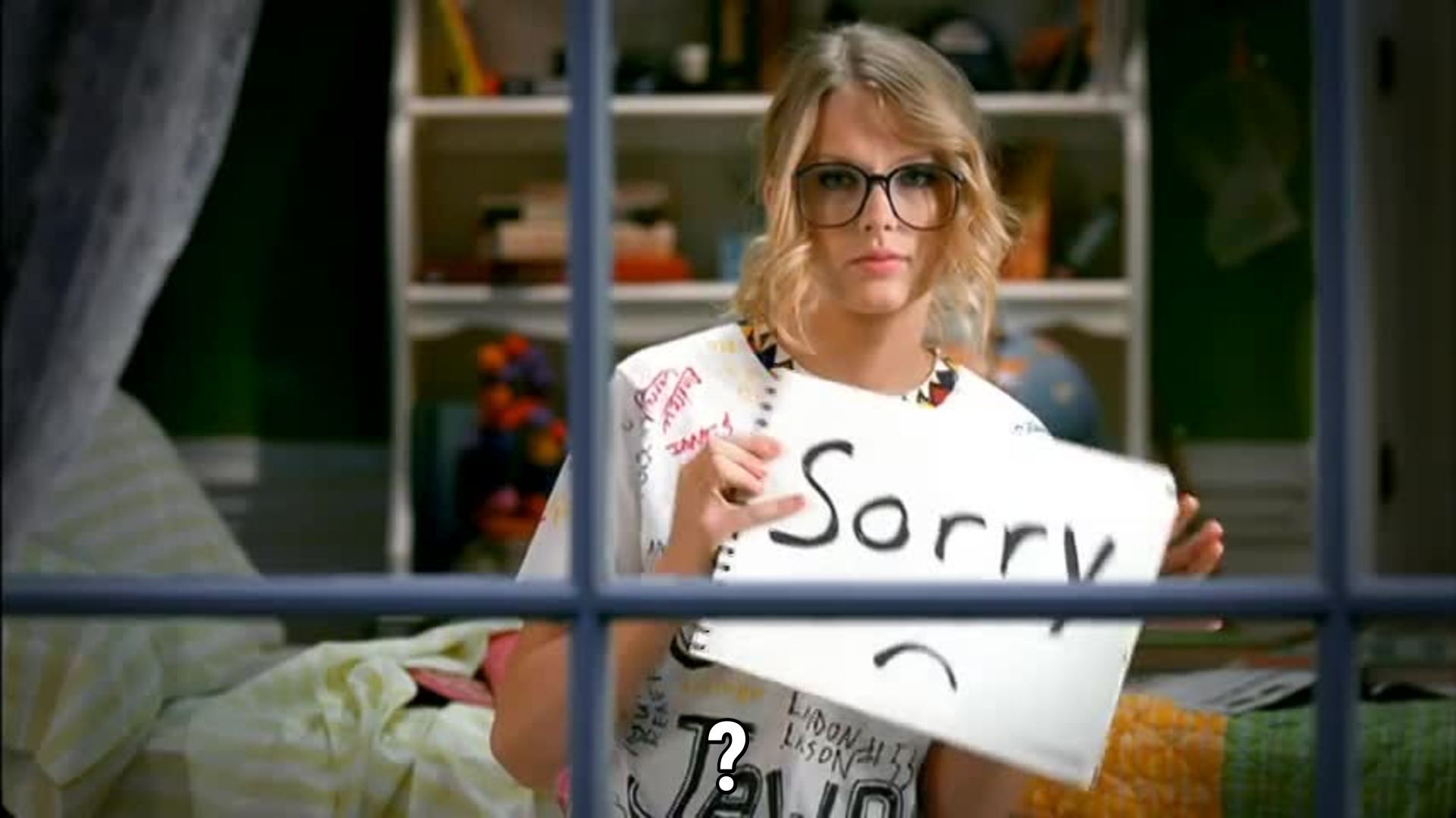
You’ve seen the video. A blonde girl with glasses holds up a notebook to her window, pining for the boy next door while a mean cheerleader ruins his life. It’s the definitive 2009 vibe. But honestly, looking back at the you belong taylor swift lyrics through a 2026 lens feels a bit like reading your own middle school diary. It’s cringey, it’s intense, and it’s surprisingly complicated.
Most people think of this song as just a cute "nerd gets the guy" anthem. In reality, it was the spark that ignited a decade of "pick me" discourse and a career-defining feud that literally involved the President of the United States.
The Phone Call That Started Everything
Taylor didn’t just pull these lyrics out of thin air. She was actually listening to a friend—one of her touring band members—arguing with his girlfriend on the phone.
He was being defensive. She was yelling. Taylor heard him say, "No, baby... I’m so sorry," and she felt a huge wave of sympathy for him. She sat down with co-writer Liz Rose and basically vented. She thought, Why is he with a girl who doesn't get his humor? That’s where that famous opening line comes from: "You're on the phone with your girlfriend, she's upset."
It wasn't even about Taylor’s own crush. It was about "girl-next-door-itis." It was about that feeling when you know someone better than their actual partner does. We've all been there. You're the one who knows their story, their favorite songs, and their "wildest dreams," yet you’re stuck on the bleachers while someone else gets the trophy.
Why the "Short Skirts" Line Still Stings
If you want to start a fight in a room full of music critics, just bring up the pre-chorus.
"But she wears short skirts, I wear T-shirts She's Cheer Captain and I'm on the bleachers"
Back in the day, this was the ultimate "relatable" moment. Today? It’s often cited as the anthem of internalized misogyny. The idea that wearing a T-shirt makes you "better" or more "genuine" than a girl who likes fashion is a trope that has aged... poorly.
But here’s the thing: Taylor was eighteen.
She was capturing a very specific, very raw kind of teenage insecurity. It’s that "I’m not like other girls" phase that almost everyone goes through before they realize that other girls are actually pretty great. The song isn't necessarily a dig at skirts; it’s a snapshot of a girl using whatever she has—sneakers, humor, a shared history—to prove she’s enough.
The Lucas Till Factor and the VMA Chaos
The music video turned the song into a cinematic event. Taylor played both roles—the "nerd" protagonist and the "mean girl" antagonist.
She cast Lucas Till, whom she had met on the set of Hannah Montana: The Movie, as the lead. He was the perfect "dreamy guy" for the role. But the video’s success led to one of the most infamous moments in pop culture history.
When "You Belong With Me" won Best Female Video at the 2009 VMAs, Kanye West jumped on stage. He grabbed the mic and told the world that Beyoncé had one of the best videos of all time. It was a mess. Even Barack Obama ended up calling Kanye a "jackass" in an off-the-record comment that went viral.
That single moment of unrequited victory for Taylor solidified her status as the industry's ultimate underdog. It mirrored the lyrics perfectly: she was the girl on the bleachers, finally getting her moment, only to have the "popular" world try to shut her down.
What Most People Miss in the Lyrics
There is a subtle sadness in the second verse that gets lost in the upbeat, banjo-heavy production.
"I haven't seen it in a while since she brought you down."
This isn't just about wanting a boyfriend. It’s about watching someone you care about lose their spark. The narrator isn't just obsessed; she’s observant. She notices the shift in his smile. She sees him pretending to be fine.
Key Lyrical Themes
- The Shared Language: "She doesn't get your humor like I do." Relationships in Taylor’s world are built on inside jokes and "typical Tuesday nights," not just prom dates.
- The Underdog Narrative: It’s a classic David vs. Goliath story, but with high heels and sneakers.
- Possessive vs. Mutual: Interestingly, the title isn't "You Belong To Me." It’s "With Me." It implies a fit, a partnership, rather than ownership.
Is "You Belong With Me" Still Relevant?
Totally.
In 2021, Taylor released "Taylor’s Version" of the track. It hit a billion streams on Spotify shortly after. Why? Because unrequited love doesn't have an expiration date.
Even if the "short skirts vs. T-shirts" comparison feels dated, the core feeling—why can’t you see that I’m the one who actually knows you?—is universal. We’ve all felt like we were standing by the back door while someone else walked through the front.
Actionable Next Steps for Fans
- Compare the Versions: Listen to the 2009 original and the 2021 "Taylor's Version" back-to-back. You can hear the literal decades of growth in her voice, turning a teenage plea into a nostalgic reflection.
- Watch the "Fearless" Tour Footage: If you can find clips of her performing this live in 2009, the energy is completely different from the Eras Tour. It’s fascinating to see her go from a girl "on the bleachers" to the person owning the entire stadium.
- Check the Credits: Look up Liz Rose. She co-wrote many of Taylor's early hits. Understanding their partnership explains why these lyrics feel so tightly structured and narrative-driven.