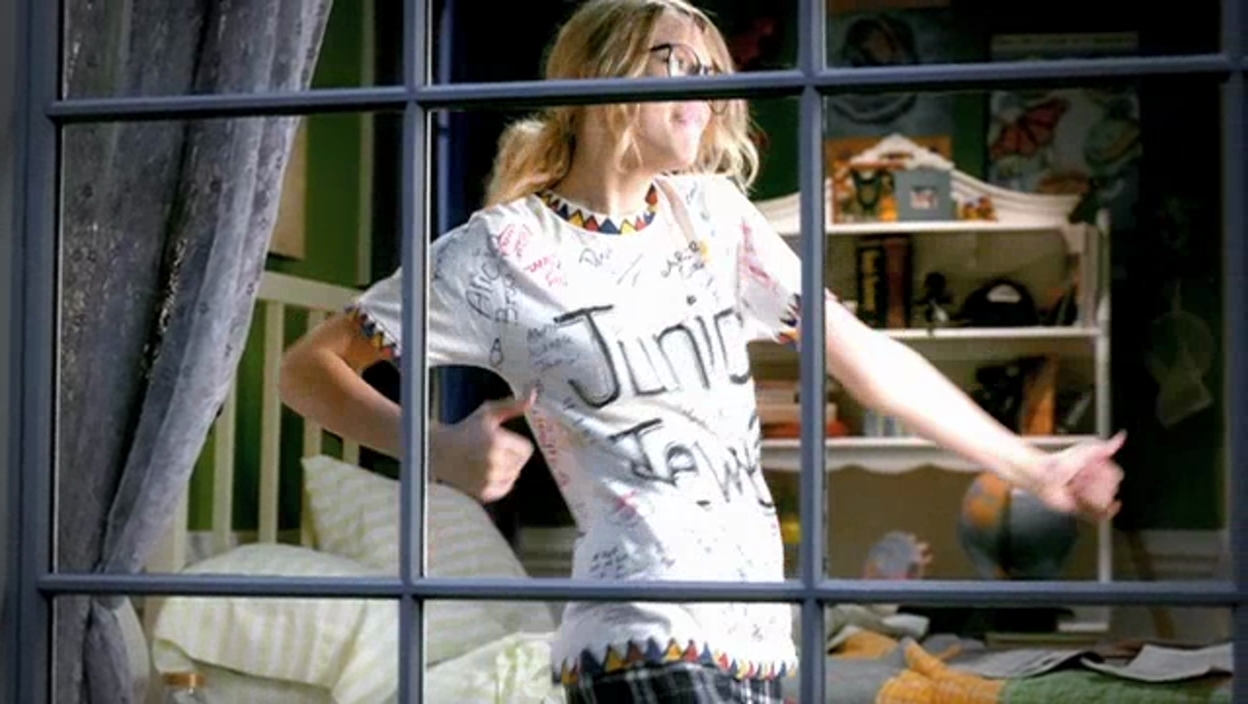
It’s been over fifteen years. Since 2008, Taylor Swift’s "You Belong With Me" has been a permanent fixture in the cultural psyche. You know the drill. You hear that opening guitar riff, and suddenly you’re screaming about short skirts and T-shirts. It’s unavoidable. But why? Why does this specific track from Fearless still hold so much weight when thousands of other pop songs have faded into the digital abyss?
Honestly, it’s because it’s the blueprint.
Before the stadium tours and the billionaire status, Taylor was just a girl from Pennsylvania by way of Nashville who figured out a universal truth: everyone feels like the underdog sometimes. She tapped into a specific kind of high school longing that doesn't actually go away when you graduate. It just changes shapes.
The Secret Sauce of You Belong With Me Taylor Swift
The magic isn't just in the melody. It’s the narrative. Liz Rose, who co-wrote the song with Taylor, has often spoken about how Taylor came in with a very specific concept. She’d overheard a male friend on the phone with his girlfriend, and he was clearly being pushed around. Taylor’s immediate thought was, "You’re with the wrong person."
That’s the core.
Musically, it’s a masterclass in tension and release. The verses are palm-muted, frantic, and claustrophobic. They mimic the feeling of sitting in your room, overthinking every interaction. Then the chorus hits. It’s an explosion. It’s a literal shout into the void. This contrast is what makes You Belong With Me Taylor Swift work so well in a live setting. It forces a physical reaction.
The Music Video That Changed Everything
We have to talk about the video. Roman White directed it, and it basically cemented Taylor’s "girl next door" persona. It also gave us the "Junior Jewels" T-shirt, which is still a staple at every Eras Tour stop.
Taylor played both characters: the protagonist, "neighbor girl" Taylor, and the antagonist, "cheerleader" Taylor. It was a brilliant marketing move. It allowed her to be both the relatable victim and the glamorous star simultaneously. This was also the video that led to the infamous 2009 MTV Video Music Awards incident with Kanye West. That moment didn't just change Taylor’s career; it changed the trajectory of pop culture for the next two decades.
Beyond the High School Bleachers
A lot of critics back in the day tried to dismiss the song as "pick-me" energy. They argued it pitted women against each other. While those conversations are interesting through a 2026 lens, they often miss the point of the era. In 2008, the "not like other girls" trope was the dominant language of female adolescence.
Taylor wasn't inventing a divide; she was reporting from the front lines of it.
The song’s longevity also comes from its adaptability. Have you heard the Taylor’s Version? Released in 2021 as part of Fearless (Taylor’s Version), the vocal maturity changes the context. In the original, she sounds desperate and hopeful. In the re-recording, she sounds nostalgic. It’s like an adult looking back at their younger self with a "yeah, I remember that feeling" smirk. It’s less about the boy and more about the intensity of the emotion itself.
Why the Production Still Slaps
Nathan Chapman produced the original version, and he leaned heavily into the "Country-Pop" crossover sound. You’ve got the banjo buried in the mix, giving it that earthy, rhythmic drive, but the drums are pure arena rock. It’s loud. It’s bright.
Interestingly, if you look at the technical specs of the track, it’s relatively simple. It’s a basic I-V-ii-IV chord progression in the key of F# Major. It doesn't try to be "smart" or "experimental." It tries to be infectious.
- BPM: 130
- Time Signature: 4/4
- Vibe: Unrequited longing but make it a party.
Most people don't realize how much the bridge contributes to the song's success. "Oh, I remember you driving to my house in the middle of the night..." It breaks the rhythm. It provides a moment of cinematic storytelling before slamming back into the final chorus. It's a formula she’d go on to perfect in songs like "All Too Well," but this was the prototype.
The Cultural Impact of the Eras Tour
When Taylor Swift performs "You Belong With Me" now, the energy is different. It’s no longer a song about a girl who can’t get the guy. It’s an anthem for a global community.
During the Eras Tour, the "double clap" during the bridge became a mandatory fan ritual. If you don't do it, you're clearly a casual. This kind of fan-driven lore keeps a song alive far longer than any radio play could. It turns a three-minute pop song into a shared experience.
It’s also one of the few songs from the early 2000s that doesn't feel dated. Sure, we don't really wear "short skirts" and "T-shirts" in the same binary way anymore, but the feeling of being "on the bleachers" while someone else is "captain of the team" is a permanent human condition. Social media has only made it worse. Now, we’re all on the bleachers watching everyone else’s highlight reels.
Common Misconceptions About the Lyrics
People often misquote this song. For years, listeners thought she was saying "she wears short skirts, I wear sneakers." She actually says "I wear T-shirts."
Another one? The boy in the video isn't just a random actor. Lucas Till was actually a rising star at the time (later of X-Men fame). Their chemistry was real enough that fans speculated they were dating, which they briefly did. This blurred line between her real life and her art started right here.
How to Appreciate the Song Today
If you want to dive deeper into the world of You Belong With Me Taylor Swift, don't just stream it on repeat. Look at the influences.
Compare it to Shania Twain’s "You’re Still The One" or even some of the pop-punk tracks of the mid-2000s like Avril Lavigne’s "Girlfriend." You can see where Taylor pulled the country storytelling and where she pulled the pop-rock aggression. It’s a hybrid.
To really get the most out of the track now:
- Listen to the original 2008 version to hear the raw, teenage "twang" that defined her early career.
- Switch immediately to Taylor's Version to notice the difference in the mix—the bass is much clearer, and the "Junior Jewels" spirit is refined.
- Watch the 2009 VMA performance (the one on the subway). It’s a masterclass in staging and shows how much she leaned into the New York aesthetic even years before 1989.
The reality is that You Belong With Me Taylor Swift isn't just a song anymore. It’s a landmark. It marks the moment a country singer became a global pop architect. It’s the song that taught an entire generation how to scream-sing in the car, and honestly, that’s a legacy worth having.
Whether you're a "Swiftie" or just someone who enjoys a solid hook, you can't deny the craft. It's tight, it's emotional, and it's built to last. It’s about the vulnerability of being seen for who you really are, rather than the version of you that fits into a specific social box. And as long as people feel misunderstood, this song will stay on the charts.
To dive deeper into the Taylor Swift discography, start by analyzing the lyrical parallels between Fearless and Folklore. You'll find that the "neighbor girl" in "You Belong With Me" eventually grew up into the complex narrator of "betty" or "cardigan." The themes of window-watching and unrequited love never really left her songwriting; they just got more poetic. Check out the "Long Pond Studio Sessions" for a look at how she stripped back her newer hits, then apply that same critical ear to the acoustic versions of her early work. You'll see the same structural brilliance across the board.



