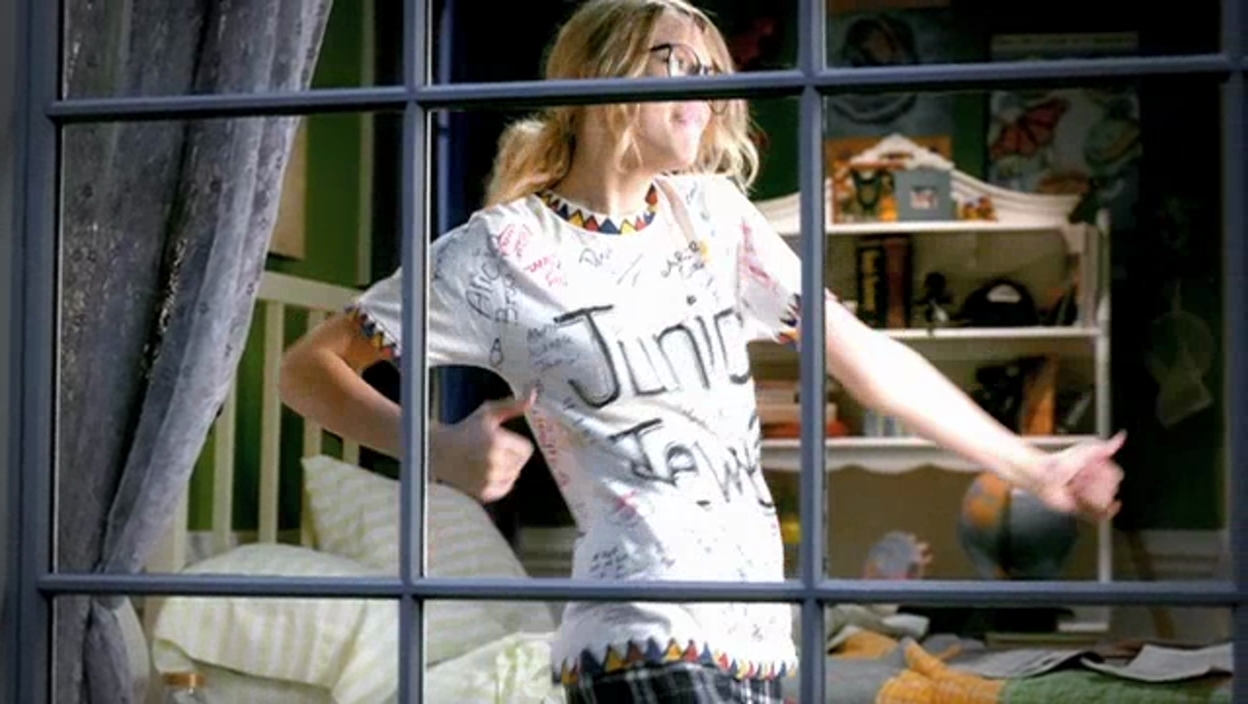
Everyone remembers the glasses. Those thick, black-rimmed frames Taylor Swift wore while holding up a "You OK?" sign to her neighbor through a bedroom window. It’s been well over a decade since You Belong With Me first hit the airwaves, yet the song remains a massive cultural touchstone that basically defined an entire era of pop-country crossover. If you were alive in 2009, you couldn't escape it. Honestly, even if you weren't, you’ve probably screamed the lyrics at a karaoke bar or during the Eras Tour. It's just one of those tracks.
But there’s a lot more to the story than just a catchy chorus and a high school crush. When Taylor sat down to write this for her second studio album, Fearless, she wasn't just trying to write a hit. She was documenting a very specific, very painful feeling that most teenagers—and, let's be real, most adults—know all too well. The feeling of being the "invisible" one while the person you love is chasing someone who doesn't actually appreciate them.
It’s a classic trope. The girl next door versus the cheer captain.
The Real Story Behind the Song
So, where did You Belong With Me actually come from? Taylor has been pretty open about the inspiration. She reportedly overheard a male friend of hers talking to his girlfriend on the phone. He was clearly being treated poorly, getting yelled at and having to apologize for things that weren't his fault. Taylor felt a surge of frustration on his behalf. She wondered why he stayed with someone who didn't understand him when there was someone right there who did.
She took that spark to a writing session with Liz Rose. Liz has been a long-time collaborator of Taylor’s, helping craft early hits like "Teardrops on My Guitar" and "White Horse." They knocked out the lyrics quickly. It’s interesting because Taylor often writes from a place of personal experience, but here, she was acting as a narrator for someone else's drama, even though she injected her own "outcast" persona into the narrative.
The song works because it’s relatable. It’s a simple premise. You’re the one who knows their favorite songs, their quirks, and their bad habits. The other person? They just wear short skirts and high heels. It’s a bit of a cliché, sure, but clichés exist because they’re true for a lot of people.
Impact on the Charts and Taylor's Career
When the song was released as a single in April 2009, it didn't just do well. It exploded. It peaked at number two on the Billboard Hot 100. That was huge for a country artist at the time. It proved that Taylor Swift wasn't just a Nashville darling; she was a global pop star in the making.
Critics were mostly on board, too. While some pointed out the "pick me" energy of the lyrics (a critique that has grown louder in recent years), most praised the songwriting. The bridge, in particular, is a masterclass in tension and release. "Oh, I remember you driving to my house in the middle of the night..." It builds perfectly into that final, explosive chorus.
Fearless went on to win Album of the Year at the Grammys, and You Belong With Me was a massive part of that success. It was nominated for Song of the Year, Record of the Year, and Best Female Pop Vocal Performance. Even though it didn't take home those specific trophies, the cultural win was already secured.
The Music Video and the VMAs
We have to talk about the video. Directed by Roman White, it featured Taylor playing two roles: the protagonist, "Taylor," and the antagonist, "Juliet." It’s a literal representation of the lyrics. The nerdy girl in the "Junior Jewels" t-shirt wins the guy (played by Lucas Till) at the prom.
But the video is famous for a reason that has nothing to do with the plot.
The 2009 MTV Video Music Awards. Taylor won Best Female Video for You Belong With Me. She was on stage, mid-speech, when Kanye West famously walked up, took the mic, and said, "Beyoncé had one of the best videos of all time!"
It was a "where were you when" moment in pop culture history. It sparked a feud that would last for over a decade and heavily influence Taylor’s later work, especially the reputation album. But in the immediate aftermath, it actually endeared Taylor to the public even more. She was the young, innocent girl who got her moment ruined. The song became even more of an anthem.
Why We Still Care About the Taylor's Version
Fast forward to 2021. Taylor is re-recording her entire back catalog because of a massive dispute over her master recordings with Scooter Braun and Big Machine Records. Fearless (Taylor's Version) was the first re-recorded album she released.
Listening to You Belong With Me (Taylor’s Version) is a trip. Her voice is deeper, more mature. The production is almost identical, but it feels sturdier. It’s a fascinating look at how a song evolves over time. When she sang it at 18, it was about a current crush. When she sings it in her 30s, it’s a nostalgic look back at a version of herself that she’s long since outgrown.
The fans, of course, went wild. The re-recording debuted at the top of the charts, proving that the demand for her early work hadn't faded. It also gave her the chance to own the song that arguably made her a household name.
Lyrical Analysis and the "Pick Me" Critique
In recent years, modern listeners have analyzed the lyrics through a more critical lens. Some argue the song pits women against each other. The "short skirts vs. t-shirts" and "cheer captain vs. bleachers" imagery suggests that being a "tomboy" or "intellectual" makes you superior to someone who is traditionally feminine.
It’s a valid point.
However, it’s also important to remember the context. This was written by a teenager in the mid-2000s. High school is often a place of binary choices and perceived rivalries. The song isn't necessarily a manifesto against cheerleaders; it’s an expression of the insecurity felt by someone who feels they don't fit the "popular" mold.
The Legacy of the "Junior Jewels" Shirt
One of the coolest things about the song’s longevity is the "Junior Jewels" t-shirt from the music video. It’s become a staple of fan culture. At every Taylor Swift concert, you will see dozens, if not hundreds, of people wearing handmade replicas of that shirt with their friends' names written on it in colorful markers.
It’s a symbol of community.
What started as a costume for a dorky character in a music video has become a badge of honor for the "Swifties." It represents the early days of the fandom, back when Taylor was still writing "T" on her hand and talking about her cats on MySpace.
How to Appreciate the Song Today
If you want to dive back into You Belong With Me, there are a few ways to really experience it.
First, compare the original 2008 version with the 2021 Taylor’s Version. Notice the subtle differences in the guitar mixing and the way she hits the high notes in the bridge. It’s a great exercise in understanding vocal growth.
Second, watch the music video again. It’s a time capsule of 2009 fashion and cinematography. The lighting, the transitions, the "handwritten notes" gimmick—it’s all very of its time but still incredibly charming.
Finally, look at the live performances. The version from the Eras Tour is particularly grand. She performs it during the Fearless set, usually wearing a gold flapper-style dress that pays homage to her look from that era. Seeing tens of thousands of people do the double-clap during the bridge is a testament to the song's enduring power.
Key Takeaways for Fans and New Listeners
- Check out the "Taylor's Version" first. It’s the version Taylor actually owns, and the vocal quality is significantly better than the original recording.
- Don't take the lyrics too seriously. While the "girl vs. girl" tropes are a bit dated, the core emotion of unrequited love is universal.
- Look for the Easter eggs. Taylor is famous for hiding clues in her work. Even in the Fearless era, she was leaving secret messages in the liner notes of her physical CDs.
- Understand the history. Knowing about the 2009 VMAs adds a whole new layer of meaning to the song's success and Taylor's resilience in the industry.
You Belong With Me isn't just a pop song. It’s a piece of music history that helped bridge the gap between country and pop, launched a superstar into the stratosphere, and provided a soundtrack for a generation of people who felt like they were stuck on the bleachers. Whether you’re a die-hard fan or a casual listener, there's no denying the craft and the impact of this four-minute masterpiece.
To truly understand the song's impact, listen to it in the context of the full Fearless (Taylor's Version) album. It fits perfectly into the narrative of teenage longing, heartbreak, and eventual self-discovery that defines Taylor's early career. Pay close attention to the transition between this track and "Breathe"—it showcases the emotional range that made her a star.



