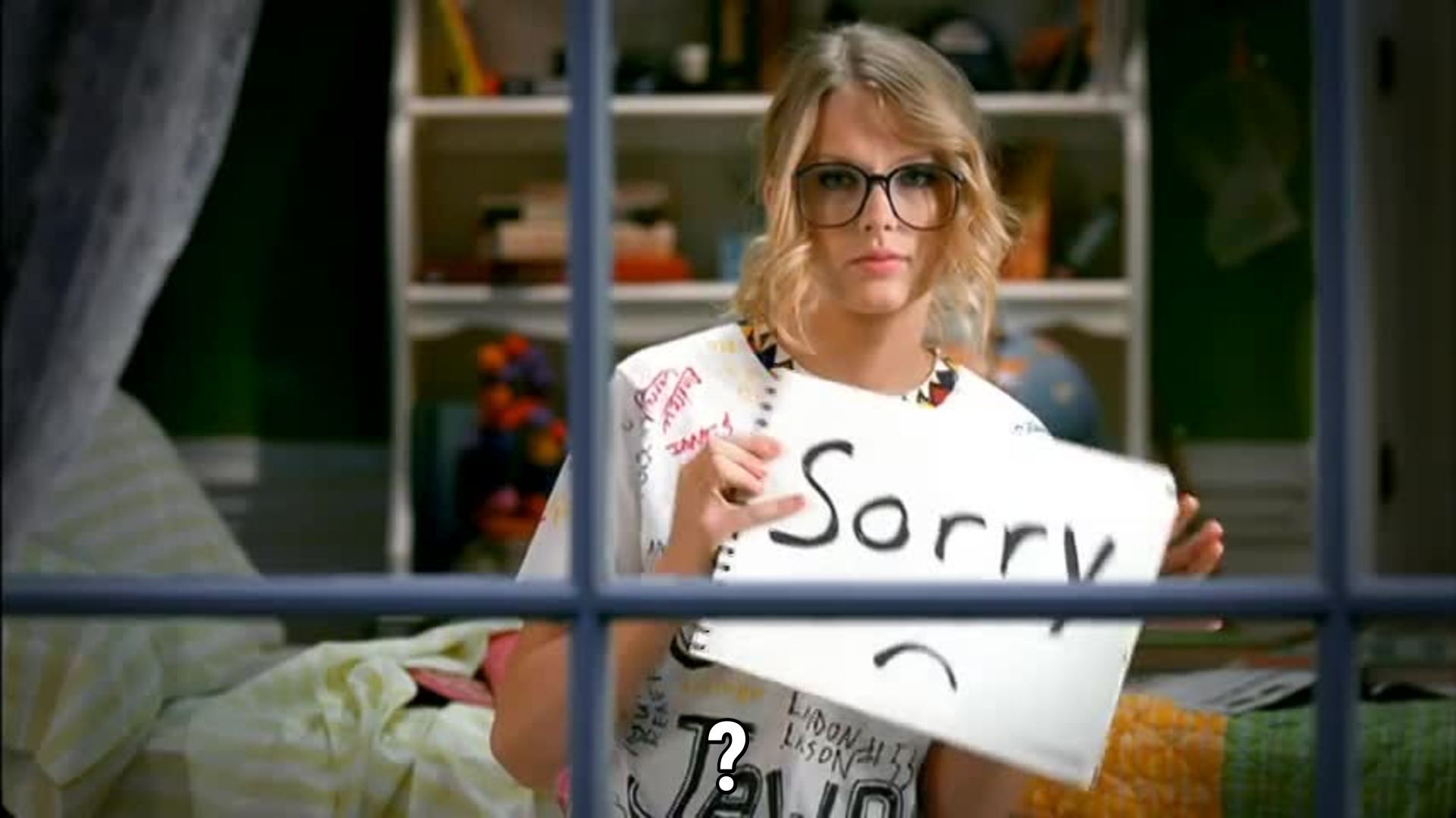
Let’s be real for a second. If you grew up in the late 2000s, you didn't just hear the You Belong With Me lyrics; you lived them. You probably stood in front of your bedroom mirror with a hairbrush, screaming about bleachers and short skirts while your parents wondered why you were being so dramatic. But looking back at Taylor Swift’s 2008 breakout hit from Fearless, there’s a lot more bubbling under the surface than just a "pick-me" anthem or a high school trope.
It’s iconic. It’s messy. It’s a time capsule of 2008 teenage angst that still somehow fills stadiums during the Eras Tour.
The Story Behind the Song Everyone Thinks They Know
Most people assume Taylor wrote this about a specific guy she was pining over in high school. That’s partially true, but the spark actually came from overhearing a phone call. Taylor was in a room with co-writer Liz Rose when she heard a male friend of hers getting yelled at by his girlfriend over the phone. He was making excuses for her, saying things like, "No, honey, I had to get off the phone really fast... I'll call you back... I love you more than anything."
Taylor felt for him. She saw a guy who was clearly with the wrong person, someone who didn't appreciate his quirks or the way he talked. That frustration—that "why are you with her when I'm right here?" energy—became the foundation for the You Belong With Me lyrics.
Interestingly, this wasn't some calculated pop experiment. It was a raw reaction. Taylor and Liz Rose knocked the song out in about two hours. Think about that. One of the most recognizable songs in the history of modern country-pop was written in the time it takes to watch a Marvel movie.
Analyzing the "Short Skirts vs. T-Shirts" Narrative
The opening lines are burned into our collective memory: "You’re on the phone with your girlfriend, she’s upset / She’s going off about something that you said." It sets the stage instantly. You have the "antagonist" (the girlfriend) and the "protagonist" (Taylor, or the narrator).
Critics in recent years have poked holes in the lyrics, calling them a bit "anti-feminist" because they pit two women against each other based on their fashion choices. You know the line: "She wears short skirts, I wear T-shirts / She's cheer captain and I'm on the bleachers."
But honestly? That’s looking at it through a 2026 lens. In 2008, Taylor was seventeen. She was writing from the perspective of a girl who felt invisible. The "short skirts" and "cheer captain" mentions aren't necessarily insults to the other girl; they represent the social hierarchy of high school. It’s about the feeling of being the "other," the one who likes "typical Tuesday nights" and doesn't fit the polished, popular mold.
The brilliance of the You Belong With Me lyrics lies in the specificity. The mention of "worn-out jeans" and "your sister’s coming in" makes the world feel lived-in. It’s not a generic love song. It’s a script.
Why the Music Video Changed the Song's Legacy
You can't talk about these lyrics without talking about the video directed by Roman White. This is where the "You Belong With Me" lore really solidified. Taylor played both characters: the nerdy protagonist (who we now affectionately call "You Belong With Me Taylor") and the dark-haired, popular antagonist.
- The Lucas Till Factor: Casting Lucas Till as the boy next door was a stroke of genius. Their chemistry felt real because, well, they were teenagers.
- The Sign Language Scene: Communicating through bedroom windows with hand-written signs? Pure cinema for 2009. It’s a trope we’ve seen a thousand times, but Taylor made it feel like she invented it.
- The Prom Reveal: When the "nerdy" Taylor shows up in a white dress and the "popular" Taylor realizes she’s lost, it’s the ultimate underdog victory.
This video didn't just win Best Female Video at the 2009 VMAs—it sparked the most infamous moment in award show history. When Kanye West interrupted Taylor’s speech to say Beyoncé had "one of the best videos of all time," he inadvertently tied the You Belong With Me lyrics to a moment of public sympathy that would propel Taylor into a different stratosphere of fame.
Technical Mastery in the Songwriting
If you strip away the high school drama, the song is a masterclass in pop construction. It’s written in the key of F# Major, which is bright and energetic. The tempo sits right at 130 beats per minute—perfect for tapping your steering wheel.
Look at the pre-chorus: "And you've got a smile that can light up this whole town / I haven't seen it in a while since she brought you down."
This is where the emotional stakes are raised. Taylor isn't just saying "I like you." She's saying "She is actively making you a worse version of yourself." It’s a rescue mission disguised as a crush. The bridge, with its driving rhythm and the repetition of "Have you ever thought just maybe / You belong with me?" builds the tension until it finally explodes back into that final, soaring chorus.
It’s also one of the few songs where Taylor uses a very distinct "Nashville" twang in the original recording, which she smoothed out a bit for Fearless (Taylor’s Version) in 2021. If you listen to the 2021 version, her voice is richer, more mature, but she manages to keep that teenage yearning intact. That’s not easy to do when you’re in your 30s.
The Cultural Impact and Modern Re-evaluations
Is it a "pick-me" song? Some people say yes. They argue that the lyrics suggest a woman should change or judge others to get a guy's attention. But most fans—and musicologists—see it as an authentic expression of teenage jealousy.
When we’re young, we aren't always enlightened. We’re petty. We’re insecure. We think that if we just liked the same music as our crush, they’d finally realize we’re "the one." The You Belong With Me lyrics capture that specific brand of delusion perfectly. It’s why the song has stayed relevant for nearly two decades.
In the Eras Tour, this song is a highlight of the Fearless set. Seeing 70,000 people do the double-clap during the bridge is proof that the song has transcended its original context. It’s no longer just about a boy next door; it’s a communal celebration of Taylor's origins.
Things You Might Have Missed in the Lyrics
Sometimes we sing along so fast we miss the little nuances.
- The Introversion: "Walking the streets with you and your worn-out jeans / I can't help thinking this is how it ought to be." The narrator isn't asking for a grand stage. She's asking for the mundane. That’s a recurring theme in Taylor’s later work too, like in folklore or evermore.
- The Lack of Confidence: "And she'll never know your story like I do." There’s a desperation there. It’s the belief that intimacy and shared history should trump "short skirts" and "cheer captains."
- The Rhyme Scheme: The way she rhymes "sneakers" with "bleachers" is simple, but effective. It’s the kind of internal rhyming that makes the song incredibly catchy.
How to Appreciate the Song in 2026
If you're revisiting this track, do yourself a favor and listen to Fearless (Taylor’s Version). The production is crisper, and the banjo—a key element of the original "country-pop" blend—is much more pronounced.
You should also pay attention to how this song paved the way for her future "storytelling" hits. Without the success of "You Belong With Me," we might not have gotten the narrative depth of "All Too Well" or the satirical bite of "Blank Space." It was the proof of concept that Taylor Swift could write a story that felt universal while being intensely personal.
To truly understand the You Belong With Me lyrics, you have to embrace the cringe of your own teenage years. You have to remember what it felt like to be convinced that you were the only person in the world who "got" someone.
Actionable Next Steps for Swifties
- Compare the Versions: Listen to the 2008 original and the 2021 Taylor’s Version back-to-back. Focus on the vocal delivery of the line "Why can't you see?" You'll hear the shift from teenage desperation to nostalgic storytelling.
- Watch the VMA 2009 Performance: If you haven't seen Taylor perform this in the NYC subway and then on top of a taxi, go find it on YouTube. It’s a piece of pop culture history that explains the song's massive scale.
- Read the Fearless Liner Notes: Taylor’s secret messages in the Fearless CD booklet used to be legendary. For this song, the message was "LOVE IS SO BLIND." It adds a whole other layer to the lyrics when you realize she was commenting on the guy's inability to see what was right in front of him.
- Analyze the Bridge: Next time you hear the song, pay attention to the percussion in the bridge. It mimics a heartbeat, slowly speeding up as the narrator gets more confident in her plea. It’s a subtle production trick that makes the emotional payoff much stronger.



