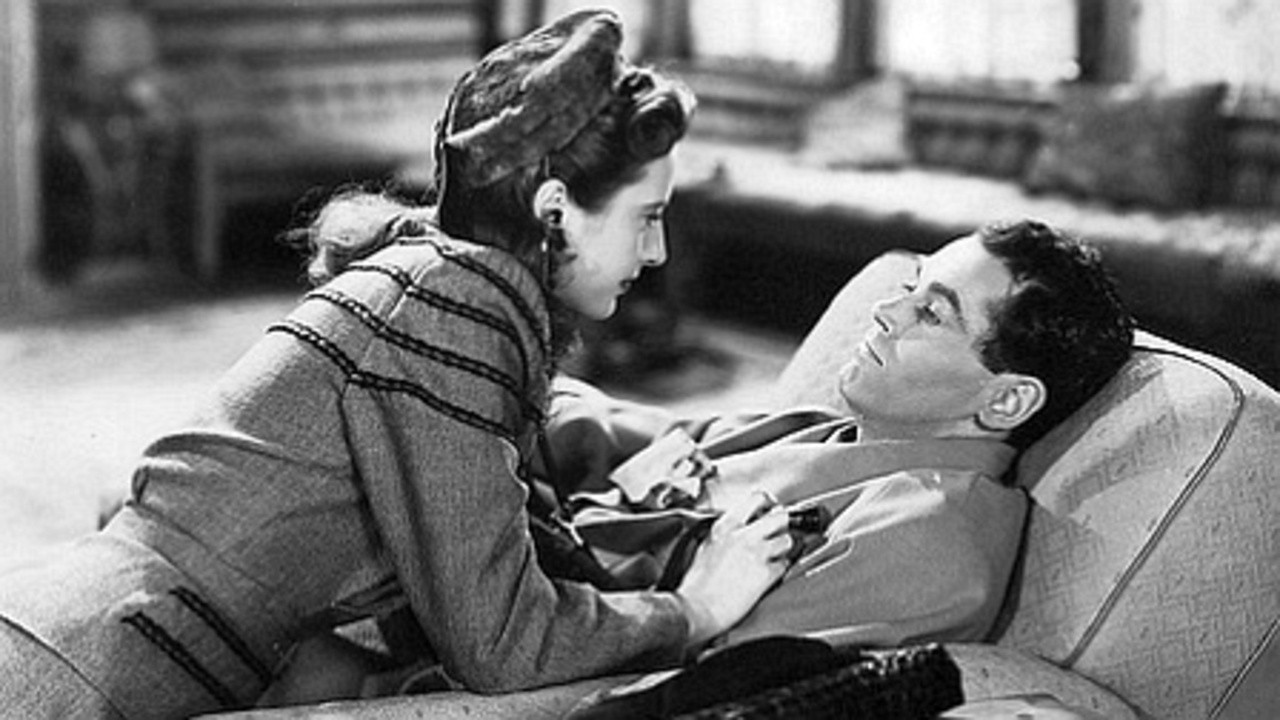
Honestly, if you go looking for You Belong to Me 1941 today, you might get a little confused. There are about a dozen things with that title, including a famous pop standard and a thriller or two. But we’re talking about the Columbia Pictures romantic comedy starring Barbara Stanwyck and Henry Fonda. It’s their third outing together. It’s weird. It’s charming. And frankly, it’s a fascinating look at gender roles right before the U.S. fully committed to World War II.
Most people remember The Lady Eve when they think of the Stanwyck-Fonda pairing. That’s a masterpiece. This? This is more like a quirky cousin. It doesn’t have the biting satire of Preston Sturges, but it has something else: a genuine, almost modern frustration with the "idle rich" male archetype.
The Setup: A Doctor, a Playboy, and a Garden Wall
The plot is basically a reverse of the era's tropes. Henry Fonda plays Peter Kirk, a man who has never worked a day in his life because he’s worth about $70 million. He’s a professional "vagabond." Barbara Stanwyck is Dr. Helen Hunt. Yes, she’s a doctor. In 1941. That’s a big deal. She’s competent, busy, and completely uninterested in being a trophy wife.
They meet when Peter literally crashes into her life—he falls over a wall while trying to find his gloves. He gets a bill for $50. He’s smitten. She’s annoyed. It’s the perfect setup for a screwball comedy, except the movie pivots into something much more interesting once they actually get married. Usually, the wedding is the end of the movie. Here, it’s where the real trouble starts.
Why the Gender Flip Matters
In the early 40s, seeing a woman who prioritized her career over her husband’s ego was rare. Helen doesn't quit her practice when she marries Peter. Why would she? She spent years training. But Peter can’t handle it. He’s jealous of her male patients. He’s bored. He’s a house-husband who doesn't know how to be a house-husband.
It’s hilarious but also kind of pathetic. Fonda plays the "mopey husband" role with a specific kind of soft-edged desperation that only he could pull off. He’s not a villain; he’s just a guy who has no purpose in a world where his wife is the one saving lives.
Behind the Scenes: The Wesley Ruggles Touch
Wesley Ruggles directed this one. He wasn’t a flashy director. He wasn't Hitchcock or Ford. But he knew how to handle light comedy. He’d previously directed Cimarron, which won Best Picture, so he had clout. He kept the pacing of You Belong to Me 1941 brisk, even when the script—penned by Dalton Trumbo and Claude Binyon—started to lean a bit too hard into the jealousy plotline.
Wait. Dalton Trumbo?
Yes, the same Dalton Trumbo who would later be blacklisted and write Roman Holiday. You can see his fingerprints on the dialogue. It’s sharper than your average 1941 rom-com. There’s an edge to the way Helen defends her right to work. She isn't asking for permission. She’s stating a fact.
The Stanwyck Factor
Barbara Stanwyck was arguably the most versatile actress of her generation. She could do Double Indemnity and then turn around and do this. In You Belong to Me 1941, she brings a groundedness that prevents the movie from becoming too silly. She plays Helen as a woman who genuinely loves her husband but refuses to let his insecurity dictate her life.
It’s a performance that feels surprisingly 21st-century. She doesn’t do the "damsel" thing. Even when Peter tries to buy the hospital just to keep her away from other men—which, let's be real, is a total "toxic billionaire" move by today’s standards—she handles it with a mix of exasperation and wit.
What Most People Get Wrong About the Film
People often dismiss this as "The Lady Eve Light." That’s a mistake. While The Lady Eve is about deception and con artistry, You Belong to Me 1941 is about the domestic struggle of two people trying to figure out what a marriage looks like when the traditional power dynamic is flipped.
- The jealousy isn't just a gag. It’s a symptom of Peter’s lack of identity.
- The ending isn't a total surrender. Usually, these movies end with the woman staying home. This one... well, it finds a middle ground that involves Peter actually getting a job.
- It’s not a musical. Despite the title sharing a name with a famous song (which wasn't written until 1952 anyway), there are no big musical numbers here. It’s a straight-up comedy of manners.
The Supporting Cast: Roger Clark and Ruth Donnelly
You can't talk about this movie without mentioning the character actors. Ruth Donnelly plays the maid, Emma, and she’s a scene-stealer. She has that classic fast-talking, no-nonsense delivery that defines 1940s cinema. Then there’s Roger Clark as Frederick Vandemer, the "other man" who fuels Peter’s jealousy. He’s the perfect foil because he’s everything Peter isn’t: productive.
Is It Worth Watching Today?
Absolutely. If you’re a fan of "The Golden Age of Hollywood," this is a must-watch for the chemistry alone. Stanwyck and Fonda had a shorthand that few duos could match. They genuinely seem to like each other, which makes the bickering feel like a real relationship rather than just a script requirement.
However, you have to watch it through a 1941 lens. There are moments where Peter’s possessiveness feels a bit "yikes" by modern standards. But the movie knows he’s being ridiculous. That’s the point. It’s mocking the idea that a man’s worth is tied to how much he controls his wife.
Where to Find It
Because it’s a Columbia film and not a huge blockbuster like Gone with the Wind, it’s not always on the major streaming platforms. You usually have to catch it on Turner Classic Movies (TCM) or find a physical copy. It was released as part of various "Barbara Stanwyck Collection" DVD sets over the years. If you see it on a schedule, DVR it.
Actionable Insights for Classic Film Buffs
If you’re planning to dive into You Belong to Me 1941, here’s how to get the most out of the experience:
- Watch the "Stanwyck-Fonda Trilogy" in order. Start with The Mad Miss Manton (1938), then The Lady Eve (1941), and finish with You Belong to Me. It’s a fascinating evolution of their on-screen relationship.
- Pay attention to the costume design. Edith Head did the costumes for Stanwyck. The transition from Helen’s professional lab coats to her elegant evening wear tells a story of its own about the duality of women’s roles at the time.
- Compare it to "Woman of the Year." Released just a year later with Hepburn and Tracy, it handles similar themes of a high-powered woman and a husband who feels sidelined. Seeing how Columbia handled it versus MGM is a masterclass in studio-era differences.
- Look for the Trumbo wit. Try to spot the lines that feel a bit more cynical or socially conscious—that’s likely Dalton Trumbo’s influence peaking through the romantic fluff.
This movie reminds us that even in the 1940s, Hollywood was grappling with what it meant to be a "modern woman." It didn't always get the answers right, but watching Stanwyck and Fonda argue about it is a lot more fun than reading a history book.
Next Steps for Your Movie Night
To truly appreciate this era of film, your next move should be exploring the work of Dalton Trumbo before the blacklist era. Look for Kitty Foyle (1940) to see how he handled another strong female lead. If you want more of the Stanwyck/Fonda magic, go straight to The Lady Eve—it is widely considered one of the greatest comedies ever made. Finally, check the TCM schedule; they often run these Columbia comedies in blocks during "Summer Under the Stars," which is the best way to see them in high quality.



